The
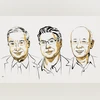
Nobel Prize in Economic Sciences 2025 has been awarded to Joel Mokyr, Philippe Aghion, and Peter Howitt for their work on “innovation-driven economic growth”. The Nobel Committee said that the prize has been awarded in two parts: one half to economic historian Joel Mokyr for explaining that technological innovation is a precondition for sustained economic growth, and the other half to Philippe Aghion and Peter Howitt for developing a mathematical model of ‘creative destruction’.
But what do these heavy economic terms actually mean? Here’s a quick explanation on the work behind this year’s Nobel winners.
What is innovation-driven economic growth?
Innovation-driven economic growth is an economic theory that states that a nation’s long-term growth depends on its ability to innovate.
The definition of economic growth has evolved since classical economists such as Adam Smith and David Ricardo laid out the basics of production and capital accumulation. However, Joseph Schumpeter was the first economist to highlight technological innovation as a key driver of growth.
In modern frameworks like endogenous growth theory, innovation is viewed as an internal force that sustains long-term expansion.
Joel Mokyr: Linking science and progress
Joel Mokyr has received half of the prize for explaining how science and practical inventions feed each other. Scientific discoveries lead to new technologies, and those technologies inspire further discoveries, creating a cycle that keeps growth going.
He also showed that for this cycle to work, societies must be open to new ideas and willing to accept change, even when it challenges established interests.
What is ‘creative destruction’?
The term ‘creative destruction’ was coined by economist Joseph Schumpeter in 1942. He argued that technological innovation is the fundamental force of capitalism.
Creative destruction describes the process of new innovations replacing existing ones, disrupting old markets and creating new ones.
For example, wireless communication and smartphones made wired telephones obsolete. While that destroyed industries like public call offices (PCOs), it also created entirely new markets, from mobile internet to app-based businesses, contributing to economic growth.
Aghion and Howitt: The mathematics of innovation
The other half of the Nobel Prize has been awarded to Philippe Aghion and Peter Howitt for developing a mathematical model for creative destruction.
In 1992, they formalised how companies drive economic growth by constantly trying to make better products and processes. When newer, more efficient products emerge, older ones lose value and eventually disappear.
Their model helped economists understand how innovation can simultaneously create and destroy value, keeping the economy dynamic.
Global growth happened after 1800
Joel Mokyr stated that the world started growing after 1800. According to Mokyr, the world’s steady economic growth began only after the 1800s. Before that, discoveries didn’t translate into continuous progress, and ideas didn’t build on one another as they do today.
Between the 1300s and 1700s, countries like Sweden and Britain saw incomes rise and fall, but there was little long-term advancement despite discoveries.
That changed during the 19th century, especially in industrialising Britain, where open exchange between inventors, engineers, and scientists created self-sustaining progress.
Beyond GDP: Redefining progress
Before Nobel laureate Amartya Sen expanded the idea of development, economists largely measured growth by gross domestic product (GDP), the total output of goods and services.
But Mokyr, Aghion, and Howitt’s work reminds us that real progress includes qualitative improvements, new medicines, safer transport, cleaner energy, better food, and faster communication, all of which enhance human well-being.
Growth isn’t automatic
The three economists’ research shows not only how economies grow, but also why growth can stall.
Mokyr suggests that technologies like artificial intelligence (AI) could strengthen the feedback loop between science and application, speeding up innovation and the spread of knowledge.
But continuous growth also brings challenges: pollution, climate change, inequality, and antibiotic resistance. Mokyr believes technology can sometimes help solve these issues, but only when guided by strong public policy.
When the “machine” stops
The Nobel Committee said the key message from all three laureates is that economic growth must never be taken for granted. For most of human history, stagnation was the norm, and progress is an exception that must be protected.
Growth could slow or stop if...
A few companies gain too much power
Academic research is restricted
Knowledge remains local instead of global
Groups resist change because they feel left out
If that happens, the “machine” of creative destruction could grind to a halt, and with it, the progress that sustains modern prosperity.
The 2025 Nobel laureates remind us that innovation drives prosperity, but only if societies stay open to ideas, competition, and change.

 "Why 'creative destruction' defines this year's Economics Nobel Prize")


