


Nobel Prize In Economics
A Nobel for shocks
Models of macro management are being tested


Nobel Economics Prize 2026: How Hall and Woodford changed policymaking
Robert E Hall and Michael Woodford's research helped explain how expectations shape spending, inflation and interest rates, transforming the way policymakers respond to economic shocks
Robert E Hall, Michael Woodford win Nobel Prize in Economics 2026
Their research has strengthened economists' ability to understand and respond to economic shocks, including energy crises and sudden shifts in household consumption

Nobel memorial prize in economics to be awarded in Stockholm today
The Nobel memorial prize in economics, the final award in this year's cycle, will be announced Monday by the Royal Swedish Academy of Sciences in Stockholm. Last year, three researchers who study business innovation won for explaining how new products and inventions promote economic growth and human welfare, even as they leave older companies in the dust. The economics prize is formally known as the Bank of Sweden Prize in Economic Sciences in Memory of Alfred Nobel. The central bank established it in 1968 as a memorial to Nobel, the 19th-century Swedish businessman and chemist who invented dynamite and established the five Nobel Prizes. Nobel purists stress that the economics prize is technically not a Nobel Prize, but it is always presented together with the others on Dec. 10, the anniversary of Nobel's death in 1896. Nobel honors were announced last week in medicine, physics, chemistry, literature and peace. The prize money this year is 12 million Swedish kronor (about $1.2 ...

Nobel-winning economist Edmund Phelps reshaped modern thinking on inflation
The Nobel laureate's work on inflation expectations and unemployment transformed economic policymaking and influenced central banks around the world

A Nobel for innovation: Without a creative culture, growth will not happen
The lesson from last year's Nobel, which was awarded to scholars of institutional economics, was that long-term growth emerges from the institutional basis of an economy
Why 'creative destruction' defines this year's Economics Nobel Prize
They won the prize for explaining the Innovation-driven economic growth, which is a theory that states that a nation's long-term growth depends on its ability to innovate

Joel Mokyr, Philippe Aghion, Peter Howitt win Nobel Prize in Economics
Mokyr won half the prize for identifying factors behind sustained growth via technological progress, while Aghion & Howitt shared the other half for their theory of growth through creative destruction

Nobel Prize 2025 announcements begin today: Full list of winners, schedule
Nobel Prize 2025 covers six categories: medicine, physics, chemistry, literature, peace and economics. All announcements will be live on the official YouTube channel
Institutions rule: COCD's path to the Nobel in economics this year
Why Colonial Origins of Comparative Development is Nobel-worthy

Daron Acemoglu, Simon Johnson, James Robinson win Economics Nobel for 2024
Nobel Prize 2024 in Economic Sciences: Acemoglu, Johnson, and Robinson's research delves into the formations of different political and economic institutions and how they affect a nation's prosperity

Life wouldn't have been wasted if I didn't get the Nobel: Amartya Sen
There are greater goals in life than winning the Nobel Prize. At least, there ought to be. Or so, feels Nobel laureate thinker-philosopher-welfare economist Professor Amartya Sen who dubbed the award as a "nice thing to have", but opined that his life wouldn't have been wasted even without it. Sen said that the money he received from the prize helped him start Pratichi Trust, a research-based charity focussing on education and healthcare of children. "Nobel is an award I received but I don't think my life would have been wasted even if I didn't get it. It was nice to have received it. I got some money and could start a charity called Pratichi Trust involving education and healthcare elements of children," Sen said while speaking to PTI in an exclusive interview at his ancestral abode in Bolpur in Birbhum district of West Bengal. "There's also a little bit of luck involved in whether or not you end up getting one of these prizes... I do not think I had a goal to get the Nobel or any

Claudia Goldin wins the Economics Nobel for work on gender pay gap
The economic sciences award was added by Sweden's central bank in 1968, called the Sveriges Riksbank Prize in Economic Sciences in Memory of Alfred Nobel
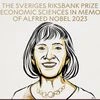
Nobel Prize 2023 in Economic Sciences awarded to Claudia Goldin
Economic historian and labour economist, Claudia Goldin was recognised 'for having advanced our understanding of women's labour market outcomes'

Robert Lucas, winner of the 1995 Nobel Prize in Economics, dies at 85
The news was confirmed on Monday by the University of Chicago where Lucas had been teaching since 1975

Former Fed chair Bernanke shares Nobel economics for research on banks
With their research in the early 1980s, the laureates laid the foundations for regulating financial markets and dealing with financial crises, the panel said

Top headlines: TCS Q2 net rises 8%; Nobel economics for research on banks
The firm's consolidated revenue from operations rose 18% to Rs 55,309 crore in Q2FY23 as against Rs 46,867 crore in Q2FY22

From physics to literature, all about the winners of the Nobel Prize 2022
Swedish geneticist Svante Pääbo won the first Nobel of the year, for initiating the field of ancient DNA studies

Nobel Prize season is here: 5 facts to know about the prestigious awards
The beginning of October means Nobel Prize season. Six days, six prizes, new faces from around the globe added to the world's most elite roster of scientists, writers, economists and human rights leaders. This year's Nobel season kicks off Monday with the medicine award, followed by daily announcements: physics on Tuesday, chemistry on Wednesday and literature on Thursday. The 2022 Nobel Peace Prize will be announced on Friday and the economics award on Oct 10. Here are five other things to know about the coveted prizes: WHO CREATED THE NOBEL PRIZES? The prizes in medicine, physics, chemistry, literature and peace were established by the will of Alfred Nobel, a wealthy Swedish industrialist and the inventor of dynamite. The first awards were handed out in 1901, five years after Nobel's death. Each prize is worth 10 million kronor (nearly $900,000) and will be handed out with a diploma and gold medal on Dec. 10 -- the date of Nobel's death in 1896. The economics award - officially
Nobel economics prize goes to natural experiments pioneers
The trio reshaped empirical work in the economic sciences, said the Royal Swedish Academy
