Reserve Bank likely to help states to analyse, frame their capex numbers

As of now, the states are handicapped because there is no format they can borrow from the centre to guide them on tracking their capex except the financial support
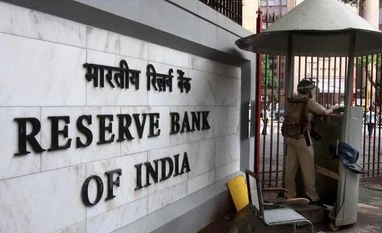
Reserve Bank of India, RBI
Reserve Bank of India
Subhomoy Bhattacharjee New Delhi
6 min read Last Updated : Apr 11 2023 | 11:56 AM IST
The Reserve Bank of India (RBI) could help the state governments to frame their capital expenditure budgets so that they provide more base for growth in their economies.

The stakes are high for both the states and the RBI as their banker. In FY23, the states had a combined headroom to borrow about Rs 9 trillion from the markets, mostly to finance their projects. The central government’s support of Rs 1 trillion in FY23 and Rs 1.3 trillion in FY24 is also a soft loan. While the actual borrowing fell short on both heads, the RBI is concerned that a jump in the interest cost of these states should come with the promise of adequate returns.

Data from the Economic Review of the Rajasthan government shows most of the incremental capex made by the state was for the construction of buildings. Under the head Gross Fixed Capital Formation (GFCF), the budget for construction increased 31 per cent, year on year in FY22.

But, in a recognition of the role of planning instead of “potluck from the general budget” as Madhya Pradesh chief minister put it, almost all the states have changed the structure of their Economic Surveys in recent years. As the Madhya Pradesh document shows, there is a clear analysis of how the government money will be spent and making the constraints within the state evident. The state document is also a good template for the states to adopt in making their expenditures transparent.

There are exceptions like Bihar, which has blamed over-population and interspersed most of the document with inter-state comparison. Other states have sharply reduced this trend, a common trait earlier.

As of now, the states are handicapped because there is no format they can borrow from the centre to guide them on tracking their capex except the financial support. The annual Economic Surveys of the centre had very little to say on the numbers till those began to rise from FY19. So as of now, the RBI has found that the states have few organised thoughts on their capex budget.

This is significant as investors in India have also asked many of the state governments their definition of capex. Budgets of state governments carry no data on what has been the outcome of the money spent by them in any year. An India Ratings estimate shows the combined capital expenditure of the states was 2.5 per cent of the national GDP in FY23, which is expected to go up to 2.8 per cent in FY24. These are big numbers. At the beginning of the last decade, FY11, the share of capex in state GDPs had dipped to 2.2 per cent.

In this context the detailing of the same in the annual Economic Survey or Review could come in useful. Just as in the Centre, the document is tabled in the state legislatures in the same week as the budget is presented. The expectation is also high because several of them have appointed economists or former central government secretaries to advise them on their economic trajectories. Even a state with a weak development record like Jharkhand has brought in experts from universities in the state, with acknowledgements, to write specific chapters of the report.

What do the states understand as their capital investment or capex programmes? As public finance had run dry, states had for decades put all their efforts to maximise the impact of revenue expenditure instead of capex.

So even a sophisticated and India’s largest state economically Maharashtra has a peculiar commentary on its capex in its Survey. “Capital expenditure is categorised into development capital expenditure and non-development capital expenditure”. As an example of the latter the state means the interest payments, which too it has categorised as capex. “Out of the total capital expenditure, Rs 51,700 crore (42.9 per cent) is expected to be incurred on repayment of internal debt of the State government”. However, definitionally the latter should not have entered into the measurement of capital flows.

The state that does not issue such a volume is Tamil Nadu. All of its neighbours do. Tamil Nadu finance minister PTR Thiagarajan has, however, promised to bring out one.

The Kerala document notes that there is a reason why the capex in the state has been low. “As most of State expenditure on human capital is categorised as revenue expenditure, the outlay in capital expenditure has been relatively small”. The revised estimates for FY23 for capex is Rs 17,535 crore, 6.1 per cent higher than the budget estimates. But for FY24 the numbers are budgeted to decline to Rs 16,728 billion, a fall of 4.6 per cent year on year. Within this, the Survey notes, that “public works continued to remain the major segment of capital outlay with 24.43 per cent of the total capital outlay in 2021-22 followed by, industries and labour 3.81 per cent, agriculture and allied activities 3.37 per cent, and irrigation 3.10 per cent”.

Karnataka, by comparison, is quite gung-ho on the level of its capex. “the state has a capital outlay of 93.12 per cent in the gross fiscal deficit as compared to deterioration to 79.73 per cent for all states average in 2019-20 (accounts). these numbers suggest that almost all of fiscal deficit is channeled towards government capital expenditure…and this is expected to help in achieving rapid economic growth in the state”.

Considering that Uttar Pradesh has a large debt overhang (FY20 debt as a percentage of GSDP was 29.6) its Arthik Samiksha makes a detailed analysis on how the annual interest burden has accrued. “Even though borrowings are necessary for development, if there is a lack of financial discipline, those can impact the state finances adversely. Public finance dictum says borrowings are not bad provided those are used for the development of assets. For instance, in the year 2002-03, only 46 per cent of the borrowings were used for creation of assets…by FY17 and FY18  the picture has reversed and more than 100 per cent of the borrowings were used for creation of assets.

Assam, which is highly hamstrung on generating revenue, has also tried to show it is keen to push with capex. But as of now, it has satisfied itself with essentially listing out the budget announcements for capex than making an assessment of how it has been spent. The state understandably does not have too much to compare with, previously. This is where a sort of tutorial from RBI could come in useful. 

One subscription. Two world-class reads.

Already subscribed? Log in

Subscribe to read the full story →
*Subscribe to Business Standard digital and get complimentary access to The New York Times

Smart Quarterly

₹900

3 Months

₹300/Month

SAVE 25%

Smart Essential

₹2,700

1 Year

₹225/Month

SAVE 46%
*Complimentary New York Times access for the 2nd year will be given after 12 months

Super Saver

₹3,900

2 Years

₹162/Month

Subscribe

Renews automatically, cancel anytime

Here’s what’s included in our digital subscription plans

Exclusive premium stories online

  • Over 30 premium stories daily, handpicked by our editors

Complimentary Access to The New York Times

  • News, Games, Cooking, Audio, Wirecutter & The Athletic

Business Standard Epaper

  • Digital replica of our daily newspaper — with options to read, save, and share

Curated Newsletters

  • Insights on markets, finance, politics, tech, and more delivered to your inbox

Market Analysis & Investment Insights

  • In-depth market analysis & insights with access to The Smart Investor

Archives

  • Repository of articles and publications dating back to 1997

Ad-free Reading

  • Uninterrupted reading experience with no advertisements

Seamless Access Across All Devices

  • Access Business Standard across devices — mobile, tablet, or PC, via web or app

Topics :Reserve Bank of IndiaCapital ExpenditureRBICapexCapex spending in IndiaIndia economy

Next Story



