1 min read Last Updated : Mar 26 2023 | 9:36 PM IST
A number of economic indicators are showing signs of the coming slowdown as the current financial year draws to a close, though India is relatively better placed than much of the world.
The US Federal Reserve’s decision to continue increasing rates despite troubles in the banking system has reduced the interest rate differential with India, diminishing India’s relative attractiveness for foreign investors.
Foreign portfolio investors have been net sellers and have sold assets worth ~38,000 crore so far this financial year. Rising yields have increased the cost of borrowing for companies. The highest rated companies as well as others are facing higher cost of borrowing in March 2023 compared to 2020.
Manufacturing companies are showing a more sluggish rate of activity. Services companies have been more resilient with signs of rising output as late as January. The February services number was slightly lower than before.
The growth in private sector projects under implementation is showing signs of slowing down. Companies typically invest in setting up new factories and other similar projects when existing capacity is closer to being fully utilised. Capacity utilisation has been around 74 per cent as of September 2022, shows data from the Reserve Bank of India’s Order Books, Inventories and Capacity Utilisation Survey (OBICUS), released with a lag in February 2023. While an improvement over the previous quarter, this is lower than 75.3 per cent in March 2022.
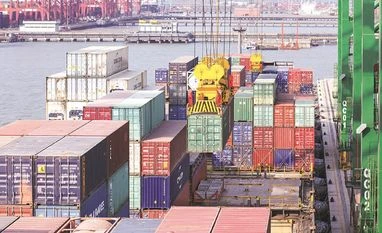
The market for exports has also been lacklustre amid a global slowdown. Exports have seen negative growth for three months in a row as of February, as have imports.
However, India is expected to remain a relative outperformer. According to World Bank forecasts, India will grow at 6.6 per cent in 2023 and 6.1 per cent in 2024. Both figures are higher than other emerging markets as well as other large economies.
The Indian equity market has thus far outperformed the world, China, and the US in 2022-23.

 "Statsguru: Six charts show an uncertain year amid global headwinds")











