
Aadhaar not mandatory for EWS admission in private schools: Delhi HC
The government counsel also clarified that the authorities have no intention of compromising the privacy or security of the candidates
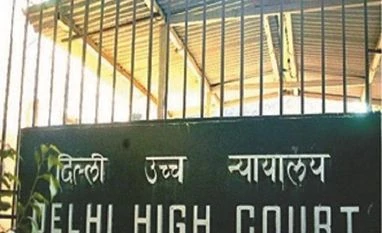 "Aadhaar not mandatory for EWS admission in private schools: Delhi HC")
Explore Business Standard

Associate Sponsors
Co-sponsor
The government counsel also clarified that the authorities have no intention of compromising the privacy or security of the candidates
The Delhi High Court has refused to interfere with an order that has suspended the enforcement of the city government's decision that a child's Aadhaar card would have to be mandatorily furnished for his admission to a private unaided recognised school under any of the three categories of economically weaker section (EWS), disadvantaged group (DG) and children with special needs (CWSN).
A bench headed by Chief Justice Satish Chandra Sharma dismissed an appeal filed by the Delhi government against the interim order of a single-judge bench, and said the requirement is prima facie in conflict with the constitutional provisions pertaining to privacy.
"The issue of obtaining sensitive personal details of a child, as observed in the K S Puttaswamy case (by the Supreme Court), would have the potential of infringing their right to privacy under Article 21 of the Constitution of India," the bench, also comprising Justice Sanjeev Narula, said in an order passed last week.
It noted that the top court has asserted that making submission of Aadhaar mandatory would contravene the fundamental rights safeguarded by Article 21 and any such limitation cannot be constitutionally justified.
"It would thus suffice to state that the impugned circulars are prima facie in conflict with the constitutional provisions, effect whereof has rightly been stayed by the learned single judge," the court concluded.
The order of the single judge was passed on a petition filed by a man who had alleged that his five-year-old child was unable to participate in the computerised lottery scheme for allocation of seats in schools for the 2023 academic year as he did not have an Aadhaar card.
The Delhi government, through circulars issued on July 12, 2022 and February 2, 2023, mandated the requirement of an Aadhaar card or number for admission to private unaided recognised schools in the national capital under the EWS, DG, CWSN categories.
The court noted that the single judge is yet to take a final view on the petition and there is no merit in the appeal.
"Dismissed, along with other pending applications," it ruled.
In appeal against the single judge's order passed on July 27, the Delhi government's standing counsel Santosh Kumar Tripathi argued that the judge failed to adequately understand the intent and objectives behind the circulars.
He said the requirement for an Aadhaar card served a practical purpose and aimed at eliminating duplicate applications and was a policy initiative designed to modernise the admission process for the EWS and DG categories in entry-level classes in private, unaided, recognised schools.
It was also argued that mandating an Aadhaar card did not violate a child's right to free and compulsory education, rather it served as a safeguard against fraudulent applications and admissions based on false identities.
The government counsel also clarified that the authorities have no intention of compromising the privacy or security of the candidates.
(Only the headline and picture of this report may have been reworked by the Business Standard staff; the rest of the content is auto-generated from a syndicated feed.)
First Published: Sep 21 2023 | 11:01 PM IST

