IT capital Bengaluru sees 22 per cent decline in voters aged 20-29

While voter numbers in the age group have dipped across Karnataka, 13 districts saw double-digit decline
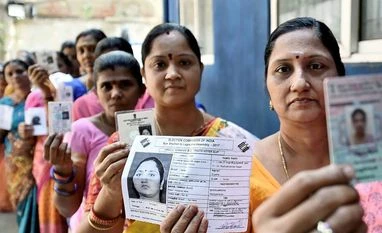
Karnataka elections
Photo: PTI | Representative
Vikram Gopal New Delhi
4 min read Last Updated : May 09 2023 | 5:17 PM IST
In a worrying trend for Karnataka, which goes to the polls on Wednesday, India’s IT capital, Bengaluru city, has seen a 22 per cent decline in voters in the 20-29 age group from the previous election.

In the absence of the decennial Census, experts feel this could indicate a slowdown in the state and its inability to generate enough jobs to retain its workforce, and is a cause for concern much beyond the current elections.

Numbers have dipped in absolute terms in all 33 voting districts in Karnataka in the age group, but 13 districts have seen double-digit declines. Overall, there has been a 10.5 per cent decline in this age group since 2018, from 11.1 million voters last time to 9.9 million in this election.

According to data provided to Business Standard by the office of the Chief Electoral Officer, Karnataka, the steepest decline in voters aged between 20 and 29 was in the Bruhat Bengaluru Mahanagara Palike (BBMP) South district at 27 per cent. This was followed by BBMP Central at 23.4 per cent and BBMP North at 22.7 per cent. Overall, Bengaluru saw a 21.8 per cent decline in voters in the age group.

The office of the Chief Electoral Officer has divided Karnataka into 34 districts — the state has 31 administrative districts. For the purpose of comparing the data with the 2018 numbers, the number of electoral districts has been retained at 33, as in the previous election. This includes four voting districts in Bengaluru city. Besides, Ballari district, which was bifurcated into Ballari and Vijayanagara in 2021, has been considered a single entity.

Among other districts that recorded a double-digit decline in the age group are Gadag (-15.9 per cent) and Dharwad (-10.39 per cent) in the Kittur Karnataka region; Raichur (-17.1 per cent), Yadgir (-15.5 per cent), Kalaburagi (-12.7 per cent), and Bidar (-10.8 per cent) in the Kalyana Karnataka region; Davanagere (-10 per cent) in Central Karnataka; and Chamarajanagar (-13.7 per cent) and Ramanagara (-10.6 per cent) in the Old Mysuru region. The lowest decline was recorded in Kodagu district, which has two constituencies, at 3.8 per cent.

This is the only age cohort that has seen an absolute decline in all the districts. Numbers in the 30-39 age group, for instance, declined in 23 districts, while the 18-19 cohort fell in eight districts, and the 40-49 age group in three districts. The cohorts above the age of 50 increased in almost all 33 voting districts. The highest percentage increase was in voters aged above 80 in the BBMP North district at 81.3 per cent.

AV Surya Sen, special commissioner (IT & media), Chief Electoral Officer, Karnataka, said the decline in voters in this group was the result of migration, but there were two divergent trends at play.

“In the non-Bengaluru districts, migration appears to be towards the state capital. In Bengaluru, there have been a lot of deletions because voters have moved out of the state,” Sen said. 

According to the state’s Economic Survey for 2022-23, Bengaluru Urban district contributes 35.6 per cent to the gross state domestic product (GSDP) at current prices, followed by Dakshina Kannada district at 5.7 per cent, and Belagavi at 4.2 per cent.

Economist and political analyst Narendar Pani, who is dean of the National Institute of Advanced Studies, Bengaluru, said the data portends a worrying trend, especially considering the state’s overdependence on Bengaluru for its growth. “This could perhaps indicate a slowdown, but one cannot draw definitive conclusions in the absence of other data,” he said.

Pani said the fact that Karnataka’s GSDP growth was higher than the national average was not in itself an indication of a robust economy. According to data from the Ministry of Statistics and Programme Implementation, Karnataka’s GSDP grew 10.96 per cent in 2021-22, compared with the national figure of 8.7 per cent.

“In the absence of the Census, the reduction in voters in the 20-29 age group in Bengaluru perhaps indicates that it is unable to generate enough jobs to retain that workforce,” he said. Pani added that even in some of the non-Bengaluru districts, the migration could be towards other states.


One subscription. Two world-class reads.

Already subscribed? Log in

Subscribe to read the full story →
*Subscribe to Business Standard digital and get complimentary access to The New York Times

Smart Quarterly

₹900

3 Months

₹300/Month

SAVE 25%

Smart Essential

₹2,700

1 Year

₹225/Month

SAVE 46%
*Complimentary New York Times access for the 2nd year will be given after 12 months

Super Saver

₹3,900

2 Years

₹162/Month

Subscribe

Renews automatically, cancel anytime

Here’s what’s included in our digital subscription plans

Exclusive premium stories online

  • Over 30 premium stories daily, handpicked by our editors

Complimentary Access to The New York Times

  • News, Games, Cooking, Audio, Wirecutter & The Athletic

Business Standard Epaper

  • Digital replica of our daily newspaper — with options to read, save, and share

Curated Newsletters

  • Insights on markets, finance, politics, tech, and more delivered to your inbox

Market Analysis & Investment Insights

  • In-depth market analysis & insights with access to The Smart Investor

Archives

  • Repository of articles and publications dating back to 1997

Ad-free Reading

  • Uninterrupted reading experience with no advertisements

Seamless Access Across All Devices

  • Access Business Standard across devices — mobile, tablet, or PC, via web or app

Topics :Karnataka AssemblyKarnataka electionsAssembly ElectionBengaluru

Next Story



