Brics crucial forum amid geopolitical challenges: EAM S Jaishankar
The minister said India's approach to the chairship of BRICS is 'humanity first' and 'people-centric'
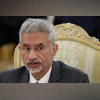
Archis Mohan New Delhi Hours after the White House announced that any country “doing business” with Iran will have to pay a 25 per cent tariff on its trade, External Affairs Minister S Jaishankar on Tuesday said that the current global environment presents complex and interlinked challenges, and the BRICS grouping—comprising Brazil, Russia, India, China, and South Africa— remains an important forum for dialogue and cooperation.
India is set to host this year’s BRICS Summit, and Jaishankar on Tuesday formally unveiled the logo, inspired by the lotus flower, as was the logo for India’s hosting of the G20 Summit in 2023, the theme and website for India’s chairship of BRICS for 2026.
“At a time, when the world is also navigating multiple complex challenges —the call for a reinvigorated, inclusive, and effective multilateral order has never been more urgent,” Jaishankar said.
The External Affairs Minister said BRICS must commit to a reformed multilateralism that reflects contemporary realities — one where institutions like the United Nations, the World Trade Organisation, International Monetary Fund, and World Bank are representative and inclusive. He said the New Development Bank (NDB), founded by BRICS, has emerged as an important instrument of economic cooperation. India remains committed to supporting activities and efforts to further strengthen the NDB as a credible, responsive, and financially sustainable institution, he said.
Jaishankar said, “geopolitical uncertainties, complicated economic landscapes, climate-related risks, technological changes, and persistent development gaps continue to affect countries across regions.” “In this context”, he said, “BRICS remains an important forum that encourages dialogue and cooperation, and practical responses, taking into account national priorities and different stages of development.”
The minister said India’s approach to the chairship of BRICS is ‘humanity first’ and ‘people-centric’. The theme of India’s BRICS chairship is ‘Building for Resilience, Innovation, Cooperation and Sustainability’. It reflects our belief that cooperation among BRICS members can help address shared challenges in a balanced and in an inclusive manner,” he said.
Under the ‘resilience’ pillar, India “will endeavour to build structural institutional strengths capable of weathering global shocks, especially in agriculture, health care, disaster risk reduction, energy and supply chains, including through cooperative frameworks that enhance collective preparedness and response, Jaishankar said.
In 2026, BRICS will complete twenty years since its inception during which it has steadily evolved into a significant platform for cooperation among emerging markets and developing economies, Jaishankar said.
India’s chairship of BRICS will also focus on enhanced cooperation in new and emerging technologies, promoting clean energy, and supporting sustainable development pathways in a manner that is fair and sensitive to national circumstances, he said.
Jaishankar said India views BRICS as a constructive platform for dialogue and development, complementing the broader multilateral system. Guided by the principles of mutual respect, sovereign equality and consensus, India will seek to make its chairship inclusive, practical, people-centric and outcome-oriented, he said.

 "Brics crucial forum amid geopolitical challenges: EAM S Jaishankar")


 Connect with us on WhatsApp