
Ethnic armed group 'captures' Myanmar town, controls border with Bangladesh
The capture by the Arakan Army makes the group's control of the northern part of Rakhine state complete, and marks another advance in its bid for self-rule there
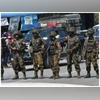 "Ethnic armed group 'captures' Myanmar town, controls border with Bangladesh")
WebinarsNew
Deep DiveNew
Explore Business Standard
The capture by the Arakan Army makes the group's control of the northern part of Rakhine state complete, and marks another advance in its bid for self-rule there
One of the most powerful ethnic minority armed groups battling Myanmar's army has claimed the capture of the last army outpost in the strategic western town of Maungdaw, gaining full control of the 271-kilometer (168-mile) -long border with Bangladesh.
The capture by the Arakan Army makes the group's control of the northern part of Rakhine state complete, and marks another advance in its bid for self-rule there.
Rakhine has become a focal point for Myanmar's nationwide civil war, in which pro-democracy guerrillas and ethnic minority armed forces seeking autonomy battle the country's military rulers, who took power in 2021 after the army ousted the elected government of Aung San Suu Kyi.
Khaing Thukha, a spokesperson for the Arakan Army, told The Associated Press by text message from an undisclosed location late Monday that his group had seized the last remaining military outpost in Maungdaw on Sunday.
Outpost commander Brig. Gen. Thurein Tun, was captured while attempting to flee the battle, Khaing Thukha said.
The situation in Maungdaw could not be independently confirmed, with access to the internet and mobile phone services in the area mostly cut off.
Myanmar's military government did not immediately comment.
Maungdaw, about 400 kilometers (250 miles) southwest of Mandalay, Myanmar's second-largest city, has been the target of an Arakan Army offensive since June. The group captured Paletwa and Buthidaung, two other towns on the border with Bangladesh, earlier this year.
Since November 2023, the Arakan Army has gained control of 11 of Rakhine's 17 townships, along with one in neighboring Chin state.
Ann, a town in Rakhine that hosts the strategically important military headquarters overseeing the western part of the country, appears to be on the verge of falling entirely to the Arakan Army.
The group posted on the Telegram messaging app late Friday that it had taken more than 30 military outposts, except the army's western command, which controls Rakhine and the southern part of neighboring Chin state, as well as the country's territorial waters in the Bay of Bengal.
Recent fighting in Rakhine has raised fears of a revival of organised violence against members of the Muslim Rohingya minority, similar to that which drove at least 740,000 members of their community in 2017 to flee to neighbouring Bangladesh for safety.
The Arakan Army, which is the military wing of the Buddhist Rakhine ethnic group in Rakhine state, where they are the majority and seek autonomy from Myanmar's central government, denies the allegations, though witnesses have described the group's actions to the AP and other media.
Rohingya have lived in Myanmar for generations, but they are widely regarded by many in the country's Buddhist majority, including members of the Rakhine minority, as having illegally migrated from Bangladesh. The Rohingya face a great amount of prejudice and are generally denied citizenship and other basic rights.
The border between Myanmar and Bangladesh extends from land to the Naf River and offshore in the Bay of Bengal.
The Arakan Army said Sunday it had ordered the suspension of transport across the Naf River because police and local Muslims affiliated with the army were attempting to escape by boat to Bangladesh.
The rebel group has been accused of major human rights violations, particularly involving its capture of the town of Buthidaung in mid-May, when it was accused of forcing an estimated 200,000 residents, largely Rohingyas, to leave, and then setting fire to most of the buildings. It was accused of attacking Rohingya civilians fleeing fighting in Maungdaw in August.
The Arakan Army is also part of an armed ethnic alliance that launched an offensive in northeastern Myanmar last year and gained strategic territory along the border with China.
(Only the headline and picture of this report may have been reworked by the Business Standard staff; the rest of the content is auto-generated from a syndicated feed.)
First Published: Dec 10 2024 | 8:24 AM IST

