Govt bolsters self-reliance in warfighting with indigenous weapon purchases
Latest acquisition drive appears to focus on Indian Navy's modernisation
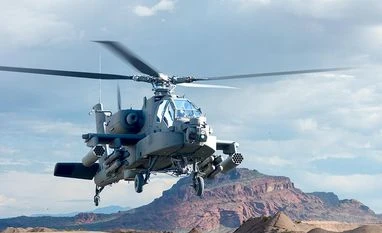
The Defence Acquisition Council, which is chaired by Defence Minister Rajnath Singh, has approved the acceptance of necessity — a term applied to capital acquisitions — for 10 such proposals worth some ₹1.05 trillion. (Representative image: BOEING)
3 min read Last Updated : Jul 06 2025 | 11:02 PM IST
The government has greenlit the purchase of a large tranche of weapons and systems through a completely indigenous route. The measure is expected to bolster the armed forces’ modern-warfighting capability and boost Indian industry.
The Defence Acquisition Council, which is chaired by Defence Minister Rajnath Singh, has approved the acceptance of necessity — a term applied to capital acquisitions — for 10 such proposals worth some ₹1.05 trillion.
The goods to be bought under the “indigenously designed, developed and manufactured” category include armoured recovery vehicles, electronic warfare suites, an integrated common inventory-management system for the three services and surface-to-air missiles.
While the Army will get most of these items, some sets of missiles will go to the Indian Air Force, according to two government sources. The new inventory-management system will link defence depots across the country.
“These procurements will provide higher mobility, effective air defence, better supply chain management and augment the operational preparedness of the armed forces,” a Ministry of Defence (MoD) media statement said on Thursday.
A focus of this acquisition drive appears to be the Indian Navy’s modernisation through increased self-reliance, especially as it seeks to tackle the Chinese Navy’s reach in the Indian Ocean region, which is of strategic significance to India.
The Navy will get more or new moored mines, mine countermeasure vessels, super rapid gun mounts and submersible autonomous vessels. The MoD statement said such procurements would help to mitigate potential risks posed to Naval and merchant vessels.
The moored mines and the mine countermeasure vessels will ensure the safety of warships and merchant ships, especially during navigation around harbours or through heavy- traffic sea lanes, another government source said.
The production of the moored mines, which have been developed by the Defence Research and Development Organisation, will be given to domestic companies, for instance.
Although Indian ships have not witnessed any publicly known sea-mine attack -- and laying sea mines is usually a wartime activity, with international law requiring countries to declare such areas –future threat assessments have propelled the Navy to enhance its defensive and offensive capabilities.
The super rapid gun mount, a primary weapon system of the Indian Navy with anti-aircraft and anti-missile capabilities, and so far, made in collaboration with an Italian company, is expected to be produced completely locally in the future. “The idea is to have a total solution at home -- whether related to upgrades of the existing system or new installations,” the source said.
The Navy is also keen to induct as many submersible autonomous vessels as possible. They are used for detection and surveillance of enemy vessels.
Competitive bidding could be expected for most items on the new list of acquisitions, one of the sources said. It could take up to seven years to deliver all the goods to the three services, according to estimates, based on the stages of their development.
Despite the success of Operation Sindoor, the country “is still in catch-up mode” on drones and electronic warfare, Laxman Kumar Behera, associate professor, national security studies, Jawaharlal Nehru University, said.
“The government should fund more defence research in India’s private sector,” Behera said. Some 5 per cent of of India’s defence budget is spent on research, according to official data.

 "Govt bolsters self-reliance in warfighting with indigenous weapon purchases")


