After providing more than 60 years of service, the MiG-21 fighter jet is scheduled for formal retirement, with a ceremonial send-off planned for September, according to a report by The Economic Times.
The last batch of aircraft, belonging to the 23 Squadron, will be decommissioned at a ceremony at the Chandigarh airbase on September 19.
The MiG-21 leaves behind a mixed legacy: it was India’s first supersonic jet, granting a technological edge in the 1960s and 1970s, but later became infamous for frequent accidents, earning nicknames such as “the flying coffin".
Air Force strength to hit historic low
Following the retirement of the MiG-21, the Indian Air Force’s combat strength will drop to 29 squadrons, the lowest since the 1960s. Notably, even during the 1965 war, the Air Force maintained 32 squadrons of fighter jets.
MiG-21 used by 60 countries worldwide
India’s longest-serving fighter jet, the MiG-21 was originally developed by the Mikoyan-Gurevich Design Bureau in the former Soviet Union and took its maiden flight in 1955. The supersonic aircraft has been used by nearly 60 countries worldwide. India became its largest operator.
Why MiG-21 is dubbed 'the flying coffin'
The MiG-21 has a troubled history of accidents. Reports indicate that more than 200 pilots and 50 civilians have lost their lives in crashes involving the jet. The first such incident was recorded in 1963. Of the 840 aircraft built between 1966 and 1984, more than half were lost due to accidents.
Maintenance challenges and the quality of replacement parts have been cited as contributing factors.
As a result of its poor safety record, the aircraft has earned grim nicknames including “the flying coffin” and “the widow-maker".
The 2006 film 'Rang De Basanti' referenced the MiG-21, depicting an accident involving the jet and the subsequent death of a pilot. The film highlighted systemic corruption, further fueling public discourse around the aircraft’s safety.

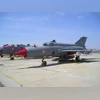 "India's iconic MiG-21 fighter jet to retire in Sept after 60 yrs of service")


 Connect with us on WhatsApp