India's success in capturing 'China-Plus-One strategy' limited: NITI report
It said that India is seen as an attractive destination for companies looking to shift their bases out of China and this shift offers the country a chance to enhance its manufacturing capabilities
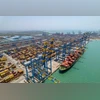
In recent years, it said, India's share in global trade has fallen for labour-intensive sectors. | Representational Image: Bloomberg
India has seen limited success so far in capturing the 'China Plus One strategy', while Vietnam, Thailand, Cambodia, and Malaysia have become bigger beneficiaries, according to a report of government think tank Niti Aayog.
It said that factors such as cheaper labour, simplified tax laws, lower tariffs and pro-activeness in signing Free Trade Agreements (FTAs) have played a critical role in helping these countries expand their export shares.
The US has implemented stricter export controls and higher tariffs on Chinese goods to limit China's growth and expenditure towards technological progress.
This has led to a fragmentation of global supply chains, prompting multinational corporations to seek alternatives to Chinese manufacturing.
It said that India is seen as an attractive destination for companies looking to shift their manufacturing bases out of China and this shift offers the country a chance to enhance its domestic manufacturing capabilities, particularly in high-tech industries.
"However, India has seen limited success so far in capturing the China Plus One strategy so far," said the report - 'Trade Watch Quarterly'.
In recent years, it said, India's share in global trade has fallen for labour-intensive sectors despite significant endowment.
"China is the main competitor in several key product categories highlighting the need for India to enhance competitiveness in these products. India has a solid foothold in developed markets like the USA, UK, and Germany, across top product categories but there are opportunities to explore emerging markets," it said.
It also said that several studies assessing the EU's Carbon Border Adjustment Mechanism (CBAM) identify African and Asian countries as the "most" vulnerable to its effects.
CBAM (or carbon tax), is aimed at preventing carbon leakage and will apply to high-risk imports such as cement, iron and steel, aluminium, fertilizers, electricity, and hydrogen starting January 2026. It requires the purchase of CBAM certificates, reflecting the carbon emissions linked to these goods.
For India, the iron and steel industry, representing 23.5 per cent of its EU exports, faces the highest exposure under CBAM, it added.
"Indian firms may incur tariffs of 20-35 per cent, leading to higher costs, reduced competitiveness, and lower demand in the EU market. Additionally, compliance costs will rise due to the need for detailed emissions reporting," the report said.
The European Union (EU) is India's second-largest trading partner. In 2023-24, the EU accounted for 17.4 per cent ($ 76 billion) of the country's total exports.
(Only the headline and picture of this report may have been reworked by the Business Standard staff; the rest of the content is auto-generated from a syndicated feed.)


 "India's success in capturing 'China-Plus-One strategy' limited: NITI report")


