Want to be mid-sized bank with pan-India presence by 2030: CSB Bank chief

We are revamping our entire technology platform, almost there will be nothing in the bank which was there two years back, Pralay Mondal, MD & CEO of CSB Bank
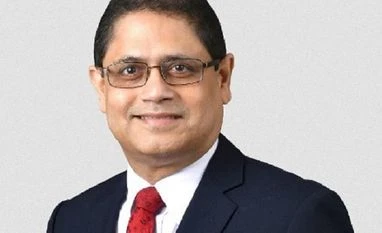
Pralay Mondal, CSB Bank
Pralay Mondal, MD & CEO of CSB Bank
Manojit Saha
7 min read Last Updated : Jun 25 2023 | 3:29 PM IST
Pralay Mondal, MD & CEO of CSB Bank talks about the bank’s medium term growth plans, more specifically the SBS 2030, to Manojit Saha in a video interview in the Business Standard’s The Banking Show. Edited excerpts:

Q) You will be completing the first year of your three-year term this September. What are the milestones that you want to achieve?

A) I think three years is a small period compared to what we want to achieve in the long run for the bank. But yes, we do have milestones - one is for the next three years and then more importantly for SBS 2030, which will end that year, by which we want to be in the mid-sector category.

We will then take the growth plans further. What we have done is to divide these seven-years (2023 to 2030) phase into three parts and we call it SBS 2030--Sustain, which is sustaining what you have done well so far. Then in parallel, we build for the future and Scale it up from there from FY26 onwards.

In these three years, we will grow faster than the system at least by 30-50 per cent on our balance sheet.

We are revamping our entire technology platform, almost there will be nothing in the bank which was there two years back. We are putting everything new and are heavy lifting the investment in the next two years on technology. On the leadership front, we are almost done, with 70-80 per cent of the team having already joined, and with 20 per cent more to go. All of that will be over by end of this calendar year, not even financial year. By the end of this calendar year, our entire new leadership team including some of our great leaders will be a part of this journey and will continue till SBS 2030 and beyond.

On the service framework and distribution, we are adding 100 branches every year. This year also, we will add 100 branches. Sixty per cent of these will come in the North and West because we are now becoming a PAN India bank, and we are going to launch all products and services, be it on retail, be it on SME or be it on wholesale. The plan business mix is already strong on gold loan. The plan business mix, SBS 2030 is to have 20% gold, 30% retail, 20% SME and 30% wholesale in the near future, the real heavy lifting on the retail will happen FY 26-27 onwards because we'll launch these products, stress on these products etc. and in the short term the gold loan will continue to be our heavy lifting in terms of revenue so that we can invest to the bank.

Q) One area of concern is the CASA--Current and Savings Account deposit--which is slightly lower than your peers, at 32 per cent. What are the strategies the bank will take to increase the CASA?

A) CASA growth will continue its momentum. Because we are growing the balance sheet at a faster pace, so you can understand that retaining the same CASA ratio itself was a task because you have to grow the CASA also at a similar pace.

Given that perspective, as long as the balance sheet growth is much faster, we will be happy to retain the CASA ratio at around 32 per cent for the next 2-3 years.

We hope that it will start doing better than that in the next one or two years, because we have invested in a very large sales team, which will bring in new customers.

Q) Now coming to gold loans, which make up about 44 per cent of your total loan portfolio, and your long term plqn is to reduce it to 20 per cent. But gold loans is a secured business. Why would you want to reduce it?

A) No, no, I think I'll put it differently. We don't want to reduce it, we want to grow it at the same pace, if not at a faster pace. Our other businesses in the overall pie will grow faster because in retail, we have a very small portfolio and are launching all products--we will scale up the retail business.

Q) The other issue was when RBI permitted Fairfax to take a 51 per cent stake in the bank in 2018, there was a roadmap to bring down the promoter stake by another 5 per cent by 2023. Right now the promoter shareholding is at 49.72 per cent. Are you in talks with the investor to bring down the promoter stake?

A) This is in the domain of Fairfax. I would not know because I've been given the job of running the bank which I'm doing. The conversation between Fairfax and RBI is in their domain. But what I know in public domain is 26 per cent is for all private sector banks in 15 years, I think from the investment standpoint, it is still a long way, say, another 10 years. What happens in between is a conversation between RBI and Fairfax, to which I'm not privy.

Q) You're sitting on a 27 per cent capital adequacy ratio with 26 per cent tier-1 capital. Why so much  capital?  Because capital after all, has a cost.

A) The risk weight on gold loans is zero effectively. Our portfolio quality has continuously improved across all our businesses and hence, you can understand that last year when we grew our asset group by 30 per cent, our capital adequacy actually went up. So it is not coming at the cost of growth, it is coming in spite of growth. What this means is that (a) we are doing businesses where on one side our portfolio quality is improving and so our risk rates are coming down and (b) gold is 47 per cent of our portfolio where effectively risk is zero. But this is too good to be true for the long run. As you see that as the trajectory of SME and retail starts going up where risk weights are much higher, automatically this will come down.

But that does not mean that it's a bad business to do because with those, ROA becomes better as you have the ability to cross-sell multiple products, nut in gold loans, it is very difficult to cross-sell multiple products. So risk weights we will have but our ability to garner multiple revenues across cross sell including liability will be higher. It's pure-play banking business. So, this will come down over a period of time.

Q) Finally, RBI recently issued a discussion paper on expected credit loss framework, how prepared is CSB Bank to adopt those framework? If it comes, say from first April 2025, what kind of capital requirement will you have?

A) We have discussed this internally, and are looking at the various discussion points. We have done some amount of detailed understanding of this. We cannot really discuss that, as it is neither in public domain nor do we exactly know what it will turn out to be. So, we have done various scenario analyses, but it will not have too much of an impact on us primarily because of two-three reasons. One is our balance sheet is still small, B is our risk weights, our expected credit loss, generally credit loss in gold loans is very low and also we have taken accelerated provisions and very conservative provisions. As we're sitting, we're sitting on a contingency provision of around 106 crores. So at this point of time, we have enough dry powder in our stable to take care of anything, but more than this, it is difficult to tell at this point of time because we really don't know what the rules of the game will be.

Q Overall, you have a sense that the bank is adequately capitalised…

A) Absolutely! Not only capitalized, I think in terms of P&L, the impact will be reasonably limited because we are sitting on excess provisions at this point in time. Our PCR today is more than 90%. So to that extent, I think we have reasonable coverage there.


One subscription. Two world-class reads.

Already subscribed? Log in

Subscribe to read the full story →
*Subscribe to Business Standard digital and get complimentary access to The New York Times

Smart Quarterly

₹900

3 Months

₹300/Month

SAVE 25%

Smart Essential

₹2,700

1 Year

₹225/Month

SAVE 46%
*Complimentary New York Times access for the 2nd year will be given after 12 months

Super Saver

₹3,900

2 Years

₹162/Month

Subscribe

Renews automatically, cancel anytime

Here’s what’s included in our digital subscription plans

Exclusive premium stories online

  • Over 30 premium stories daily, handpicked by our editors

Complimentary Access to The New York Times

  • News, Games, Cooking, Audio, Wirecutter & The Athletic

Business Standard Epaper

  • Digital replica of our daily newspaper — with options to read, save, and share

Curated Newsletters

  • Insights on markets, finance, politics, tech, and more delivered to your inbox

Market Analysis & Investment Insights

  • In-depth market analysis & insights with access to The Smart Investor

Archives

  • Repository of articles and publications dating back to 1997

Ad-free Reading

  • Uninterrupted reading experience with no advertisements

Seamless Access Across All Devices

  • Access Business Standard across devices — mobile, tablet, or PC, via web or app

Topics :Q&ACSB BankBanksBankingBanking sector

Next Story



