Pause now, lower later: Rate cuts may start this year, say economists

RBI projection on GDP growth optimistic, say analysts
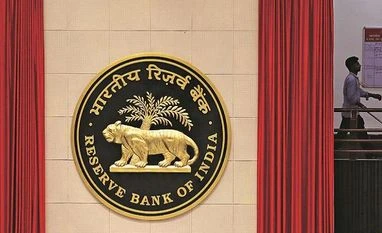
reserve bank of india, rbi
“We believe the RBI’s GDP growth projection of 6.5 per cent YoY in FY24 is too optimistic, and we expect more than 1 percentage point downside,” Nomura said in a note
Manojit Saha Mumbai
4 min read Last Updated : Apr 10 2023 | 11:38 PM IST
‘Higher for longer’ may be the narrative in the developed markets, but interest rates might not stay high for very long in India, with a section of the market expecting rate cuts to begin this year.

The six-member Monetary Policy Committee of Reserve Bank of India (RBI) decided to keep interest rates unchanged at 6.5 per cent in the April review – after hiking the policy repo rate in six previous meetings.

RBI Governor Shaktikanta Das emphasised that the pause was only for the April policy and that the central bank was ready to act if the situation demanded.

“The RBI decision to pause has effectively punctured the debate of ‘higher for longer’ so that we eventually lead to ‘lower for later/longer’,” said Soumya Kanti Ghosh, group chief economic advisor of State Bank of India.

“As of now, we expect a data dependent policy hereon. However, as headline inflation is expected to stay below 6 per cent for almost most of FY24, an extended pause could be a pragmatic outcome. But we must also remember that any overhang of global slowdown could have a domestic feedback loop, and that could spark counter-cyclical rate action,” Ghosh told Business Standard.

It is the global slowdown that prompted some analysts not to agree with the RBI’s growth projection. The RBI seems to be more sanguine on growth, and has projected gross domestic product (GDP) growth of 6.5 per cent for FY24, revised upward from 6.4 per cent projected in February, on the assumption of lower oil price of $85 per barrel, as compared to $95 per barrel earlier.

“We believe the RBI’s GDP growth projection of 6.5 per cent YoY in FY24 is too optimistic, and we expect more than 1 percentage point downside,” Nomura said in a note.

“In our view, the 0.1 percentage point GDP growth upgrade owing to the lower oil price assumption has not taken into account the weakness in global growth that is behind these lower oil price forecasts,” the note said.

Nomura expects a significant disappointment on growth and said it expects cumulative rate cuts of 75 basis points, starting from October.

Economists at Citi Bank said their baseline view was that the RBI would take a long pause to evaluate the effect of the previous rate hikes. “Barring financial stability issues, the risk view is asymmetric, any rate hike will emerge if inflation diverges from the forecast, while the rate cut option can be triggered by a sharper-than-expected slowdown in growth.”

Jayanth Varma, the external member of MPC, which voted for a rate hike in the February policy, had said that growth was still fragile.

Goldman Sachs sees two repo rate cuts in the first and second quarter of 2024.

“We expect headline CPI inflation to come in below 6 per cent (the upper end of the target band) for the rest of the year, and now expect the RBI to remain on hold till end-2023… For 2024, we now forecast two repo rate cuts of 25 bps each in Q1 and Q2 of CY24,” economists at Goldman Sachs said.

In the April policy, the RBI revised the inflation projection downward to 5.2 per cent for FY24 from 5.3 per cent projected in February. Importantly, the inflation projection for the fourth quarter of FY24 was reduced by 40 bps, from 5.6 per cent to 5.2 per cent. As a result, the real policy rate – the difference between repo rate and year-ahead inflation – is 130 bps, which is seen as high for an emerging economy like India.

Broking firm Motilal Oswal, which also feels the central bank’s growth projection is optimistic, said muted external demand, geopolitical tensions and rising volatility in global financial markets pose downside risks to growth.

“…with inflation projected at 5.2 per cent in FY24, the real policy rate is already at 1.3 per cent. It seems more probable now that the RBI will remain on pause in June as well, and thus we believe the next action is more likely to be a cut, probably in late 2023, as the global economy weakens considerably,” Motilal Oswal said.


One subscription. Two world-class reads.

Already subscribed? Log in

Subscribe to read the full story →
*Subscribe to Business Standard digital and get complimentary access to The New York Times

Smart Quarterly

₹900

3 Months

₹300/Month

SAVE 25%

Smart Essential

₹2,700

1 Year

₹225/Month

SAVE 46%
*Complimentary New York Times access for the 2nd year will be given after 12 months

Super Saver

₹3,900

2 Years

₹162/Month

Subscribe

Renews automatically, cancel anytime

Here’s what’s included in our digital subscription plans

Exclusive premium stories online

  • Over 30 premium stories daily, handpicked by our editors

Complimentary Access to The New York Times

  • News, Games, Cooking, Audio, Wirecutter & The Athletic

Business Standard Epaper

  • Digital replica of our daily newspaper — with options to read, save, and share

Curated Newsletters

  • Insights on markets, finance, politics, tech, and more delivered to your inbox

Market Analysis & Investment Insights

  • In-depth market analysis & insights with access to The Smart Investor

Archives

  • Repository of articles and publications dating back to 1997

Ad-free Reading

  • Uninterrupted reading experience with no advertisements

Seamless Access Across All Devices

  • Access Business Standard across devices — mobile, tablet, or PC, via web or app

Topics :RBIInterest Ratesmonetary policyrepo rateInterest rate cutRate cuts

Next Story


