Escalating geopolitical tensions in the Middle East are beginning to ripple through global financial markets and commodity prices, raising fresh concerns for India’s economy given the country’s heavy reliance on energy imports and trade with the Gulf region.
A report by Shriram Wealth warns that the ongoing conflict involving the US, Israel and Iran could create short-term volatility in oil prices, financial markets and supply chains. However, it notes that India’s strong macroeconomic position could help cushion the broader impact.
The report highlights that the Middle East remains strategically critical for India. Nearly 9 million Indians live in the region, contributing roughly 38% of India’s total remittances, while the region accounts for around 15% of India’s exports and 21% of imports.
Oil shock risks and inflation impact
Energy prices are among the biggest transmission channels through which geopolitical tensions affect India’s economy.
The report noted that crude oil prices jumped about 8.1% after the escalation of tensions, reflecting concerns about supply disruptions. Precious metals also rallied, with gold rising 2.15% and silver gaining 1.63%, as investors sought safe-haven assets amid rising uncertainty.
India, which imports nearly 85% of its crude oil requirements, remains highly vulnerable to such price shocks.According to the analysis, the Reserve Bank of India has assumed an average crude oil price of $70 per barrel for the second half of FY26, while the Indian crude basket has averaged around $65 per barrel so far. However, even moderate increases could affect the domestic economy.The report estimates that a 10% rise in crude prices above the baseline could increase inflation by about 30 basis points while lowering GDP growth by around 15 basis points, assuming a full pass-through of higher fuel costs to consumers.
Currency pressure and market volatility
Financial markets reacted quickly to the rising tensions. Equity markets across Asia declined following the geopolitical developments. India’s Nifty 50 fell 1.24%, while other Asian indices also posted losses during the period.
The Indian rupee also weakened, depreciating 0.43% against the US dollar, reflecting global risk aversion and a strengthening dollar.
A weaker currency can further amplify inflationary pressures by making imported commodities such as crude oil more expensive.
The report estimated that a 5% depreciation in the rupee to around ₹92.4 per dollar could increase inflation by roughly 35 basis points, although it could provide a slight boost to GDP growth by improving export competitiveness.
Strait of Hormuz disruption could hit energy supply
One of the most immediate risks to global energy markets lies in the Strait of Hormuz, one of the world’s most critical oil transit chokepoints.
The report notes that the 33-kilometre waterway handles roughly 20% of the world’s oil supply, connecting major producers such as Saudi Arabia, the UAE, Iraq and Qatar with global markets.
Recent tensions have reportedly led to an unofficial slowdown in shipping traffic through the strait, with several vessels delaying movement as the conflict evolves.
The report suggests that while this conflict may be longer-lasting than the typical 12-day flare-ups seen in the past, tensions may begin to peak over the next 5 to 6 weeks.
Any prolonged disruption could significantly tighten global oil supply and push prices higher, directly affecting energy-importing economies like India.
Exporters have also raised concerns about disruptions along other key maritime corridors such as the Bab el-Mandeb Strait, which connects shipping routes between Asia, Europe and North America.
Sectoral impact across Indian industries
The report highlighted that several sectors could face varying degrees of impact depending on how oil prices and global risk sentiment evolve.
Industries heavily dependent on crude-linked inputs are likely to be the most affected.
Sectors such as chemicals, paints, pharmaceuticals, tyres, aviation, fertilizers and oil marketing companies could see margin pressure if oil prices remain elevated, as higher energy costs raise production and transportation expenses.
The aviation industry, in particular, faces significant risks because fuel accounts for a large share of operating costs. Rising aviation turbine fuel prices and potential flight rerouting due to airspace restrictions could further increase expenses.
On the other hand, certain sectors could benefit from the geopolitical environment.
The report notes that defence companies may gain from increased global military spending, while shipping companies could see higher freight rates if disruptions tighten supply chains.
Precious metals companies and gold-related investments may also gain from the surge in safe-haven demand.
Meanwhile, financial stocks could experience volatility if foreign portfolio investors pull money out of emerging markets amid rising geopolitical risks.
The geopolitical situation in the Middle East has triggered risk-off sentiment in Indian stocks, with crude-linked pressure weighing on broad markets, while some sectors (like defence and upstream energy) benefit from safe-haven or commodity dynamics
The At-Risk Sectors: Fighting Input Inflation
1. Aviation: The Double Whammy
Aviation is the most immediate casualty of Middle East instability. The sector is facing a two-pronged attack:
Fuel Costs: Air Turbine Fuel (ATF) prices are directly linked to international crude benchmarks. With Brent crude spiking, operating margins are under severe pressure.
Flight Rerouting: The closure or restriction of Iranian and surrounding airspace has forced carriers to adopt longer, more expensive flight paths for European and North American routes, increasing both fuel consumption and operational hours.
2. Chemicals & Paints: Feedstock Pressures
For these sectors, crude oil is not just a fuel but a primary raw material. Derivatives used in the manufacturing of paints and specialized chemicals are seeing a swift price increase. Manufacturers may struggle to pass on these costs to consumers in the short term, leading to a temporary "margin squeeze."
3. Tile and Ceramic Manufacturers
This sector is highly sensitive to fluctuations in Natural Gas prices. As the Strait of Hormuz handles nearly 30% of global LNG trade, any unofficial closure or disruption leads to a spike in spot gas prices, significantly increasing the cost of production for clusters like Morbi.
The Beneficiaries: Safe Havens and Strategic Shifts
1. Precious Metals: The Ultimate Hedge
As uncertainty broadens, Gold and Silver have reclaimed their status as the preferred "safe-haven" assets. Gold has already witnessed a surge of over 8%, providing a significant valuation boost to gold loan companies and jewelry retailers with existing unhedged inventory.
2. Defence: Strategic Tailwinds
Rising global instability typically leads to a re-rating of defence stocks. As nations reassess their security postures and global defence spending enters a new "upcycle," Indian defence majors are seeing a sentiment-driven boost, supported by the country's long-term indigenization goals.
3. Shipping & Logistics: The Freight Spike
Disruptions in critical maritime corridors like the Strait of Hormuz and the Bab el-Mandeb Strait force ocean carriers to reroute or delay shipments. This leads to a sudden spike in freight rates and charter costs. Shipping companies stand to benefit from these higher realizations, even if volumes remain volatile.
The "Neutral to Watch" List
IT Services: While geographically distant, any prolonged global slowdown could impact discretionary spending by Western clients. However, the sector often acts as a defensive play due to its USD-denominated earnings.
Banking & Finance: Banks are relatively insulated from direct conflict shocks but will be watching for secondary impacts on inflation and interest rate trajectories.
Markets historically recover after geopolitical shocks Past records suggest that while warfare triggers temporary instability, global financial markets frequently demonstrate long- term resilience, with a consistent pattern of market recovery and growth over a six-month horizon.
Despite the near-term volatility, historical market behaviour suggests that such shocks often have limited long-term effects on equities.
The report showed that global equity markets typically decline between 3.5% and 5.1% during the first month following major geopolitical events.
However, markets have historically demonstrated resilience.
Over a six-month horizon, the Nifty index has delivered an average rebound of about 14.1%, while the S&P 500 has gained around 9.7%, indicating that investors often return once the initial uncertainty fades.
Similarly, emerging market equities as a group have historically shifted from a 5% short-term decline to a 9% gain within six months after geopolitical shocks.
Looking ahead, the report suggests that markets will closely monitor whether tensions escalate further or begin to ease.
The conflict may persist for several weeks, though some analysts expect geopolitical pressures to ease within five to six weeks, especially if global powers such as Russia or China intervene diplomatically to stabilise energy markets.
If tensions subside, crude oil prices could move back toward the $70 per barrel range, which would help stabilise global markets.
Until then, investors may remain cautious, with foreign portfolio flows potentially slowing and markets remaining volatile.
For India, the key variables to watch remain oil prices, currency stability and trade flows with the Middle East.
"The recent correction in local equities have resulted in a moderation in India stock valuations. We continue to maintain inclination towards large cap companies in a staggered manner, with global tensions still evolving. While valuations have moderated, we believe FPIs will likely refrain from EMEs like India until ongoing tensions ease. India bond yields edged higher 4-5 bps tracking moves higher in crude oil prices and sharp weakness in INR, though this appears more like a knee jerk reaction. Lastly, precious metals (gold & silver) have also jumped on tensions around the Middle East region," said the report.

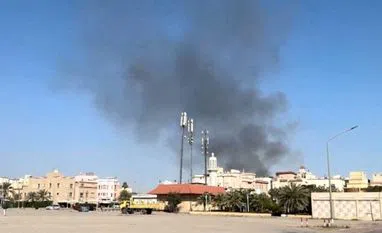 "Middle East tensions threaten oil, trade flows for India as crude jumps 8%")


