
Cardio before or after weights? New study may finally have answer
According to the study, the order of your workout does significantly affect how much fat you lose
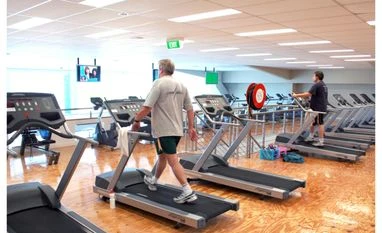 "Cardio before or after weights? New study may finally have answer")
WebinarsNew
Deep DiveNew
Explore Business Standard
According to the study, the order of your workout does significantly affect how much fat you lose
But a new study may have finally answered this long disputed question.
According to the study, the order of your workout does significantly affect how much fat you lose. Participants who performed weight training before cardio lost significantly more fat and became more physically active throughout the day compared to those who did cardio first.
The researchers recruited 45 young men aged 18-30 years who were classified as obese. The researchers split participants into three groups for 12 weeks. One group was a control group. This meant they stuck to their usual lifestyle habits and didn’t make any changes to their exercise regime.
The other two groups exercised for 60 minutes three times weekly. Participants were also given sports watches to objectively track daily movement. This helped the researchers avoid reliance on self-reporting, which can often be inaccurate.Both exercise groups followed identical training programmes, differing only in exercise sequence. Strength training involved actual weights, with participants performing exercises such as the bench press, deadlift, bicep curl and squat. The cardio sessions involved 30 minutes of stationary cycling.
Participants in both groups experienced improvements in their cardiovascular fitness, muscle strength and body composition – specifically, they lost fat mass while gaining lean muscle mass. Interestingly, cardiovascular fitness improvements were similar regardless of sequence – echoing recent findings that exercise order has limited impact on cardiovascular adaptations.
But the real differences emerged when it came to fat loss and muscle performance. Participants who lifted weights first experienced significantly greater reductions in overall body fat and visceral fat – the type of fat most strongly linked to cardiovascular disease risk.
They also increased their daily step count by approximately 3,500 steps compared to just 1,600 steps for the cardio-first group. Additionally, the weights-first approach enhanced muscular endurance and explosive strength.
The reason behind these findings is tied to how your body uses energy.
Resistance training depletes muscle glycogen stores – the sugar that’s stored in the muscles which acts as your body’s quick-access fuel. Imagine glycogen as petrol in your car’s fuel tank. When you lift weights first, you effectively drain this fuel tank, forcing your body to switch energy sources. With glycogen stores already low, when you transition to cardio, your body must rely more heavily on fat reserves for energy. It’s akin to a hybrid car switching to battery power once the petrol runs low. This metabolic shift helps explain the greater fat loss seen in the weights-first group.
This recent study’s findings align with broader research. A comprehensive systematic review published in 2022 found resistance training alone can significantly reduce body fat and visceral fat, the type linked to chronic diseases. Muscles are metabolically active tissues, continuously burning calories even at rest, which amplifies these effects.
Conversely, performing cardio first might compromise your strength training effectiveness. Cardio uses up glycogen stores, leaving muscles partially depleted before you even lift a weight. It also induces fatigue and may reduce your muscles’ ability to produce explosive power and strength.
A recent systematic review on concurrent training (the practice of combining both resistance and aerobic exercise within the same program) supports this – highlighting that explosive strength gains might diminish if aerobic and strength training occur in the same session, especially if cardio is performed first.
These findings align with other research on concurrent training. A systematic review and meta-analysis examining exercise sequence effects found that resistance-first protocols produced significantly superior strength improvements compared to endurance-first training.
The American Heart Association’s 2023 statement on resistance training confirmed resistance exercise significantly improves lean body mass and reduces fat, especially when combined with other exercise types. However, resistance training alone was found less effective in improving cardiovascular health. This underscores the importance of including cardio in your exercise routine.
However, it is worth noting the study’s limitations. As it only involved obese young men, this means we don’t know how the results will apply to women, older adults or those with different body compositions. A 2024 review suggests adaptations may differ by sex, indicating the need for further research involving diverse populations.
The 12-week duration also may not capture long-term changes. Results also specifically only apply to concurrent training – performing both exercises in the same session.
Moreover, the study did not account for nutritional intake, sleep patterns or stress levels, all of which can significantly influence body composition outcomes. Future research should incorporate these factors to offer even more comprehensive guidance.
Whether you prefer to do cardio before or after lifting weights, the message is clear: both will improve overall health. The only difference is that weight training before cardio provides advantages for fat loss, abdominal fat reduction and increased daily physical activity.
Interestingly, resistance training boosts confidence and energy levels, naturally encouraging more movement throughout the day, further aiding fat loss.
If cardiovascular fitness is your primary goal, the sequence matters less, as both ways equally boost aerobic fitness. However, if fat loss and optimising daily activity are your main objectives, evidence strongly supports placing resistance training first.
First Published: Jun 15 2025 | 12:13 PM IST


 Connect with us on WhatsApp