Home / Health / Science meets art: Parkinson's patient plays clarinet during brain surgery
Science meets art: Parkinson's patient plays clarinet during brain surgery
Once unable to play due to tremors, Denise Bacon played her clarinet mid-surgery, showing how music and medicine can work together to restore movement and hope
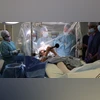
Denise Bacon plays the clarinet during brain surgery at King’s College Hospital, London, as doctors monitor real-time improvements in her movement. (Image: Vimeo | King's College Hospital)
In an extraordinary blend of art and science, a 65-year-old woman with Parkinson’s disease played her clarinet during brain surgery at King’s College Hospital, London. The rare procedure helped surgeons accurately target brain areas controlling movement, allowing real-time testing of motor improvement as electrodes were implanted.
Patient and the challenge
Denise Bacon, from Crowborough in East Sussex, UK, was a speech and language therapist who played clarinet in the East Grinstead Concert Band. However, Parkinson’s gradually robbed her of the ability to walk, swim, dance and, worst of all for her, to play her most loved instrument. The typical symptoms of Parkinson’s like tremors, stiffness, slow movement, had impacted her everyday functioning.
At King’s College Hospital, under the guidance of Professor Keyoumars Ashkan, a four-hour Deep Brain Stimulation operation was performed while the patient remained awake. The reason: during such surgery, a patient’s responses, such as movement, speech, or in this case, music playing, can guide the surgeons to optimise electrode placement.
Small holes were made in her skull to allow access to the targeted areas of the brain. The electrodes were then carefully inserted into regions that control movement and connected via thin wires to a pulse generator implanted in her chest, which works much like a pacemaker.
At one electrode placement, the surgeons switched on stimulation and saw her left-hand fingers, previously stiff and slow, begin moving fluidly. She began to play the clarinet again during the operation. Playing an instrument mid-surgery is unusual, but in this case it served a clear purpose – to monitor functional improvement instantly.
“I remember my right hand being able to move with much more ease once the stimulation was applied, and this in turn improved my ability to play the clarinet, which I was delighted with,” shared Bacon.
What DBS can and cannot do
Ashkan emphasised that while Deep Brain Stimulation is not a cure for Parkinson’s, it serves as a “very effective” surgical option to enhance the quality of life for patients whose symptoms no longer respond well to medication or who experience side effects.
“The first line of treatment for Parkinson’s disease is not surgery; it’s medical management drugs,” he said, explaining that long-term use can sometimes lead to reduced effectiveness. “At that stage surgery could potentially have a real role,” he added.
It highlights how personalised goals matter in treatment - for Denise, playing the clarinet again was more than a hobby, it was central to her identity.
It underscores the advances in neurosurgery and neuroscience that allow live feedback during operations.
It reminds us that movement disorders like Parkinson’s can be managed effectively.
Michael S Okun, co-author of The Parkinson’s Plan and medical adviser for the Parkinson’s Foundation, described moments like Bacon’s surgery as “not just medical feats” but “windows into the resilience of the human brain and spirit.”
He added that such cases bring hope and awareness to the many effective treatments available for Parkinson’s disease. “It’s a myth that Parkinson’s lacks effective treatments. Deep Brain Stimulation, medications and rehabilitation can all dramatically restore function and quality of life,” Okun said.

 "Science meets art: Parkinson's patient plays clarinet during brain surgery")



