Most medicines prescribed in India today are based on clinical trials conducted in Western countries. But Indian bodies, diets, and lifestyles are not the same. Prompted by this, the Indian Council of Medical Research (ICMR), India's apex government body for the formulation, coordination, and promotion of biomedical research under the Ministry of Health and Family Welfare, has issued a mandate to prioritise clinical trials based on Indian body types and health data, according to a report by NDTV.
The report says this move aims to generate homegrown evidence to better tackle the country’s rising burden of lifestyle diseases such as diabetes, heart disease, and obesity. And this could have direct implications for how lifestyle diseases are treated in India.
For decades, much of modern medicine has relied on clinical data generated in Europe and North America. The guidelines, the dosage patterns, even the benchmarks for risk have often come from Western populations. But does a country of 1.4 billion people with unique genetics, diets, and lifestyles fit into that research?
There’s also a uniquely Indian phenomenon often described as “thin-fat”. In simple terms, many Indians may have a normal body mass index (BMI), yet carry higher amounts of visceral fat, which is the fat stored around internal organs. This makes them more vulnerable to insulin resistance and type 2 diabetes, often at a younger age.
This mandate says that if the biological profile is different, the medical evidence should be different too.
India’s lifestyle disease crisis
According to a 2024 ICMR analysis, nearly 56.4 per cent of India’s total disease burden is linked to unhealthy diets and poor lifestyle choices.
Over 101 million Indians are living with diabetes, while another 136 million are in the pre-diabetic stage, according to the ICMR–India Obesity and Overweight study.
Lifestyle diseases, which often appear after 55 in developed nations, are striking Indians at least a decade earlier, frequently in their mid-40s.
Non-communicable diseases such as heart disease and cancer now account for over 61 per cent of all deaths in India.
What will change under the new ICMR mandate?
The mandate encourages multicentre clinical trials across at least five hospitals, says the NDTV report. Each study will be eligible for government funding of up to ₹8 crore. The goal will be to:
identify therapies that are clinically effective for Indian populations
ensure treatments are affordable and accessible through the public health system
reduce out-of-pocket expenditure for families
align prescriptions with the metabolic and hormonal adaptations seen in Indian demographics.
According to the report, if you are living with diabetes, heart disease, obesity or another lifestyle condition, this mandate signals a future where your treatment is guided by data drawn from people with similar genetics, diets, and socio-economic realities. It also opens the door to more precise dosing, better risk prediction, and potentially fewer side effects.

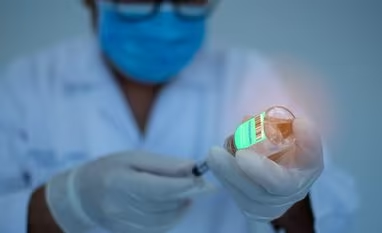 "ICMR mandates clinical trials to focus on Indian demography, lifestyle")


 Connect with us on WhatsApp