


All carbs, little protein: How rice, roti, sugar are hurting India's health
ICMR survey shows 62 per cent of Indian calories come from carbs, linking rice, roti and sugar to rising diabetes, obesity and why adding more protein could reverse the trend
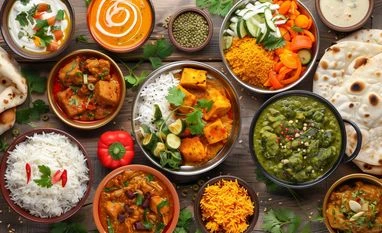 "Indian diet")
Carb-heavy staples like rice and wheat dominate Indian diets, fueling rising risks of diabetes and obesity, the ICMR–INDIAB study shows. (Photo: AdobeStock)
Listen to This Article
Indians are eating diets dominated by carbohydrates, with 62 per cent of daily calories coming from rice, wheat, and sugar, a new nationwide survey by the Indian Council of Medical Research (ICMR) has found. The findings, published in Nature Medicine in the paper titled Dietary profiles and associated metabolic risk factors in India from the ICMR–INDIAB survey-21, show that this carb-heavy and low-protein diet is linked to rising cases of diabetes, prediabetes, and obesity.
However, the researchers say that making modest food swaps could sharply reduce health risks.
Why are Indians eating so many carbs?
The ICMR–INDIAB survey, which covered over 18,000 adults across 30 states and union territories, found that carbs dominate Indian plates mainly in the form of white rice in the South, East, and Northeast, and wheat flour in the North and Central regions. Sugar intake was also alarmingly high, with 19 states and union territories exceeding safe limits.
Millets, despite being rich in nutrients, were staples in only a handful of states such as Karnataka, Gujarat, and Maharashtra.
What is wrong with so many carbs?
Researchers linked high carbohydrate intake to a 15–30 per cent higher risk of type 2 diabetes, prediabetes, general obesity, and abdominal obesity. Importantly, even switching from refined white rice to whole wheat flour or millets did not reduce the risk if total carbohydrate intake stayed high.
Also Read

 "national stock exchange, NSE, markets")
 "Heatwaves")
 "Donald Trump")
 "GLP-1 drugs, weight loss drugs")
 "CSR, corporate social responsibility")
Milling (as in atta and millet flours) raises the glycaemic index, meaning blood sugar spikes almost as much as it would with white rice.
Are Indians eating enough protein?
The survey revealed that on average, only 12 per cent of calories came from protein, falling short of the recommended 15 per cent. Most of this protein is plant-based, coming from cereals, pulses, and legumes. Dairy contributed 2 per cent, while animal protein was just 1 per cent.
The Northeast had the highest protein intake (13.6 per cent), thanks to more fish and meat in local diets, while states such as Kerala and Goa had some of the lowest protein intake levels.
Are fats healthier?
The survey showed that total fat intake in India (25 per cent) was within global recommendations, but saturated fat intake was too high in nearly every state.
Healthier fats, such as monounsaturated fats (from nuts, seeds, and oils) and omega-3 polyunsaturated fats (from fish, walnuts, flaxseeds), were too low nationwide. This imbalance adds to metabolic risks such as high cholesterol and heart disease.
What small changes can make a big difference?
The study modelled what would happen if just 5 per cent of daily calories from carbohydrates were replaced with protein. The results were striking:
- Substituting with plant proteins (pulses, legumes, nuts) or dairy proteins (milk, curd, paneer) significantly lowered the risk of diabetes and prediabetes
- Substituting with egg or fish protein also reduced risk
- Replacing carbohydrates with red meat or fats did not improve outcomes
“Our findings clearly show that Indian diets heavy in carbs and low in quality proteins are putting millions at risk. Reducing total carbohydrate intake and increasing plant and dairy proteins is the way forward. Food subsidies must encourage pulses and dairy over polished rice and wheat. Public health messaging needs to focus on balanced macronutrients, not just calories,” said the researchers.
So, how should you rethink your plate?
- Cut back on refined carbs like white rice and maida
- Do not rely only on wheat or millet flour, try intact whole grains like brown rice or unpolished millets
- Add a daily dose of pulses, beans, lentils, curd, and paneer
- Switch to healthier oils and include more nuts and seeds
- Keep sugar to a minimum, ideally less than 5 per cent of daily calories
For more health updates, follow #HealthWithBS
This content is for informational purposes only and is not a substitute for professional medical advice.
More From This Section
 "social media, social media apps")
 "mRNA vaccines")
 "India heart attack deaths")
 "AI in healthcare, artificial intelligence medical diagnosis, ChatGPT detects cancer, AI and Hodgkin's lymphoma, AI-powered diagnostics, AI in Indian hospitals, Max Hospital AI tools, Apollo Hospitals AI, AI in radiology, Microsoft Azure AI healthcare")
 "Blood tests")
Topics : Diabetes Health with BS BS Web Reports ICMR Obesity diet plan
Don't miss the most important news and views of the day. Get them on our Telegram channel
First Published: Oct 01 2025 | 3:09 PM IST