


Does pollution kill Indians? Inside the government's air death divide
One ministry says there's no proof air pollution kills Indians, another pegs the toll at 1.24 million deaths a year; as Delhi-NCR's air turns hazardous again, the contradiction is back in focus
 "pollution, delhi air quality")
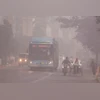
Smog blankets parts of Delhi as commuters navigate hazardous air, even as official estimates differ on how many lives air pollution actually claims.
Listen to This Article
Can air pollution kill you or not? That depends on which government ministry you ask. The question is back in focus after the Ministry of Environment, Forest and Climate Change (MoEFCC) on Thursday told Parliament that there is “no conclusive data” linking deaths exclusively to air pollution, even as air quality in Delhi-NCR slipped into the ‘very poor’ category with an Air Quality Index (AQI) of 321 on Sunday.
The assertion, repeated by the ministry in 2024, 2025 and now again in 2026, stands in stark contrast to findings cited by the health ministry’s own research arm, the Indian Council of Medical Research (ICMR). ICMR has seconded estimates from a landmark Lancet study that found 1.24 million deaths in India in 2017 were attributable to polluted air.
The study in question, The impact of air pollution on deaths, disease burden, and life expectancy across the states of India, was published in The Lancet Planetary Health as part of the Global Burden of Disease (GBD) Study 2017. It concluded that one in every eight deaths in India was linked to air pollution, cutting average life expectancy by nearly two years. So why does this policy contradiction between public health and environmental response persist?
What did MoEFCC tell Parliament?
Replying to a Rajya Sabha question on air pollution as a health crisis, MoEFCC said there is “no conclusive data available in the country to establish direct correlation of deaths exclusively due to air pollution”. The ministry highlighted improvements under the National Clean Air Programme (NCAP), noting that PM10 levels have fallen in many cities since 2017–18 and that several cities now meet national air quality standards.
The ministry made similar assertions in 2024 and again in 2025, effectively reiterating its position that pollution-linked deaths cannot be conclusively established, even as respiratory and cardiovascular deaths continue to rise in cities such as Delhi.
Also Read

 "Budget 2026")
 "PMI")
 "H1B visa, US visa, passport, H-1B")
 "Delhi Winter, New Delhi Winter, Winter, Cold, Smog, Delhi Pollution, Delhi Air Quality, Pollution")
 "BSE, Stock Markets")
What does ICMR say?
Just two days before MoEFCC’s parliamentary reply, ICMR responded to a Right to Information (RTI) query stating that 1.24 million deaths in India in 2017, or 12.5 per cent of all deaths that year, were caused by air pollution. This estimate, ICMR clarified, is not anecdotal. It is derived from modelling-based research conducted with the Public Health Foundation of India (PHFI) and the Institute for Health Metrics and Evaluation (IHME) under the GBD framework.
The findings were published in 2018 in The Lancet Planetary Health and remain among the most comprehensive assessments of air pollution’s health impact in India.
What did the Lancet study actually find?
The GBD 2017 analysis found that air pollution, including ambient particulate matter and household air pollution from solid fuels, was responsible for 1.24 million deaths in a single year. More than half of these deaths occurred in people under seventy, underscoring the premature nature of the toll.
The study also estimated that average life expectancy in India would have been 1.7 years higher if pollution levels were below the minimum threshold known to cause health damage. In northern states, the gains could have exceeded two years. Notably, air pollution was shown to contribute more to India’s overall disease burden than tobacco use, through links to heart disease, stroke, chronic lung disease, diabetes and lung cancer.
If the science is strong, why does the contradiction persist?
At the core of the disagreement is how evidence is defined and interpreted. MoEFCC’s statements hinge on the absence of death certificates that list air pollution as a single, exclusive cause. Public health researchers, however, rarely attribute deaths in this manner. Instead, they use risk-attribution models, which estimate how exposure to a risk factor such as PM2.5 raises the probability of dying from specific diseases.
ICMR and its partners argue that this modelling approach is globally accepted, peer-reviewed and used by governments worldwide to shape health policy. From this perspective, asking for “exclusive” causation sets an almost impossible bar and sidelines well-established epidemiological evidence.
What does this mean for Delhi and other polluted cities?
The policy disconnect comes as official data show rising deaths from respiratory diseases in Delhi: 9,211 deaths in 2024, up from 7,432 in 2022, according to Delhi government mortality statistics compiled by the Directorate of Economics and Statistics. Cardiovascular diseases remain the city’s top killer, claiming over 21,000 lives in 2024. Both disease categories are strongly associated with long-term air pollution exposure in the GBD analysis.
Does cleaner air under NCAP mean fewer deaths?
MoEFCC points to falling PM10 levels in many cities as evidence that NCAP is working. Public health experts caution that reductions in pollution do not immediately translate into lower mortality, especially for chronic diseases that develop over years. Moreover, PM10 improvements do not fully capture exposure to PM2.5, the finer particles most strongly linked to heart and lung disease.
The Lancet study emphasised that 77 per cent of India’s population was exposed to particulate pollution above national safety limits in 2017, suggesting that incremental gains may still leave most Indians breathing unhealthy air.
Why does this debate matter for public health?
When one ministry says pollution-linked deaths cannot be established and another cites peer-reviewed estimates running into lakhs, it sends mixed signals to policymakers, courts and the public.
According to health experts, air pollution works slowly but relentlessly, damaging lungs, hardening arteries and shortening lives.
Without a shared understanding of risk, India’s response to air pollution risks becoming a technical exercise in compliance rather than a health-driven mission to save lives.
More From This Section
 "supplement overuse")
 "WHO Nipah assessment, Nipah cases India")
 "NIPAH, BLOOD, BLOOD TEST")
 "Nipah virus chinese drug")
 "India obesity survey")
Topics : Health with BS BS Web Reports air pollution Delhi Pollution Environment ministry Health Ministry health news
Don't miss the most important news and views of the day. Get them on our Telegram channel
First Published: Feb 02 2026 | 11:29 AM IST