Home / Health / Researchers reprogram natural killer cells to attack cancer faster
Researchers reprogram natural killer cells to attack cancer faster
A new study shows that tweaking natural killer cells and briefly treating them with a cancer drug helped them destroy blood cancer cells more effectively in lab and animal tests
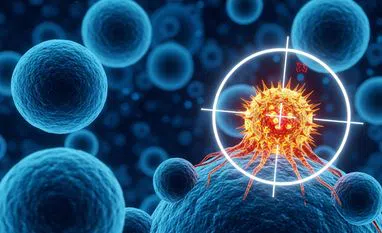
Scientists have redesigned natural killer cells to help them spot and destroy cancer cells more effectively. (Photo: AdobeStock)
Your body already has its own rapid-response force. Natural killer cells, or NK cells, constantly patrol your bloodstream looking for infected or abnormal cells to destroy. They are one of the immune system’s first lines of defence.
But what if these cells could be redesigned to fight cancer more powerfully?
That is what scientists in Brazil set out to test. Researchers at the Ribeirão Preto Blood Center and the Center for Cell-Based Therapy (CTC-USP) have shown that small changes inside NK cells can make them better at attacking blood cancers.
In their study, titled 2B4 co-stimulation and dasatinib modulation enhance anti-CD19 CAR-NK-92 cell cytotoxicity, published in Frontiers in Immunology, the team engineered NK cells with improved internal signalling systems.
What are CAR-NK cells and how do they work?
CAR-NK cells are natural killer cells that have been genetically modified to better recognise cancer. Scientists add a special receptor called a chimeric antigen receptor (CAR). This receptor works like a GPS tag. It helps the immune cell find a specific marker on cancer cells, in this case CD19, which is commonly found on certain blood cancers such as leukaemia and lymphoma.
CAR-T therapies targeting CD19 already exist. However, NK cells may offer advantages. They can be made in advance, stored, and used as “off-the-shelf” treatments. They also appear to cause fewer severe immune reactions.
What changes did researchers make to NK cells?
Most current CAR designs were originally developed for T cells, not NK cells. But NK cells use different internal signalling pathways.
Instead of copying T-cell designs, the researchers added NK-specific signalling parts called 2B4 and DAP12. These act like internal switches that control how strongly the cell responds when it detects cancer.
When tested in the laboratory using an NK cell line called NK-92, cells carrying 2B4 or 2B4-DAP12 showed:
Stronger killing of cancer cells
More release of cancer-destroying proteins such as granzyme
Higher production of immune signalling molecules like IFN-gamma
Gene analysis also showed that these modified cells switched on pathways linked to stronger immune attack. In simple terms, the cells were more battle-ready.
How did the cancer drug dasatinib improve results?
The researchers also tested dasatinib, a drug already used to treat certain leukaemias.
When the engineered NK cells were briefly exposed to dasatinib, their activity temporarily decreased. But once the drug was removed, the cells became more active than before. It was almost like pressing pause and then restarting them with extra energy.
In mouse models of blood cancer, NK cells designed with 2B4, especially when pre-treated with dasatinib, controlled tumour growth better than conventional designs.
Why does this NK cell research matter?
There are currently no approved CAR-NK therapies available for patients. Scientists are still working to improve their strength, safety and reliability.
This study suggests two important things. First, NK cells perform better when they are designed using NK-specific signalling systems rather than borrowed T-cell blueprints. Second, temporary drug treatment may help fine-tune how powerful these cells become.
If confirmed in further studies, these findings could help shape the next generation of cancer immunotherapies, treatments that are not only powerful but also more controllable and potentially safer.
The immune system is already a sophisticated defence network. Scientists are now learning how to upgrade it carefully, precisely, and with greater understanding of its internal wiring.

 "Researchers reprogram natural killer cells to attack cancer faster")


