The US Supreme Court has rejected President Donald Trump’s attempt to restrict birthright citizenship, a landmark ruling that has sparked widespread relief across immigrant communities and been hailed as a “monumental victory” by Indian-American leaders.
The decision ensures that children born in the United States remain citizens even if their parents are undocumented immigrants or are in the country on temporary visas.
According to the Press Trust of India (PTI), the Supreme Court ruled that the 14th Amendment guarantees birthright citizenship to children born in the US, including those whose parents are in the country unlawfully or only temporarily.
The ruling struck down an executive order signed by Trump hours after taking office for his second term in January last year. The order sought to deny automatic citizenship to children unless at least one parent was a US citizen or legally present in the country.
What did the Supreme Court decide?
Chief Justice John Roberts, writing for the majority, said citizenship remains a fundamental right linked to participation in the country’s political system.
“Citizenship, then and now, was the right to have rights — to freely participate in our political community,” Roberts wrote, according to PTI.
The court held that children born in the US to parents who are either unlawfully present or temporarily staying in the country are still “subject to the jurisdiction” of the United States and qualify for citizenship at birth.
Bloomberg reported that the court found Trump’s executive order inconsistent with the Constitution’s 14th Amendment, which has historically been understood to guarantee citizenship to people born on US soil.
The 14th Amendment, ratified in 1868 after the Civil War, states that “all persons born or naturalised in the United States, and subject to the jurisdiction thereof, are citizens of the United States”.
Why was Trump’s order controversial?
Trump had argued that the existing birthright citizenship system was unfair and described it as “a disgrace”. His administration attempted to change the interpretation of the amendment through executive action.
The order would have affected children born in the US to undocumented immigrants as well as those born to parents who were legally present on temporary visas, including students and some workers.
According to the Associated Press, more than one-quarter of a million babies born in the US each year could have been affected if Trump’s order had taken effect.
The administration argued that children of non-citizens were not fully “subject to the jurisdiction” of the US and therefore should not automatically receive citizenship.
However, courts have repeatedly rejected that interpretation, referring to the Supreme Court’s 1898 decision in United States v. Wong Kim Ark, which recognised citizenship for a child born in California to Chinese immigrant parents.
Impact on Indian and immigrant families
The ruling has particular significance for immigrant communities, including Indian-Americans, many of whom face long visa processing timelines and uncertainty around permanent residency.
According to PTI, Chintan Patel, executive director of Indian American Impact, said the decision was an affirmation of belonging for immigrant families.
“Indian and South Asian immigrant families are among those most directly threatened by Trump's executive order - communities navigating long visa backlogs and uncertain immigration timelines, where children are often born here long before their parents have a clear path to permanence,” Patel said.
Ajay Jain Bhutoria, an Indian-American community leader, called the judgement a “monumental victory” for immigrant families, according to PTI.
Khanderao Kand, president and chief of policy and strategy at Foundation for India and Indian Diaspora Studies, said the decision provided certainty to millions of families living in the US.
He noted that the Indian-American community, estimated at nearly 5.2 million people, includes over 1.2 million highly skilled professionals and family members waiting in employment-based green card backlogs.
What happens next?
Trump criticised the decision and said the issue could be addressed through legislation passed by Congress.
Bloomberg reported that the Justice Department said it would continue targeting alleged “birth tourism” schemes, where individuals travel to the US primarily to give birth so their children receive citizenship.
The ruling is another setback for Trump’s second-term policy agenda. According to AP, it follows earlier court challenges against other major administration policies, including tariff measures.
The judgement maintains the existing system that the children born in the US continue to receive citizenship rights, regardless of their parents’ immigration status, except in limited cases such as children of foreign diplomats.

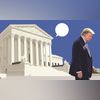 "US SC upholding birthright citizenship is 'historic': Indian-Americans")


 Connect with us on WhatsApp