
201 Indians died during Hajj pilgrimage 2024 due to health issues: Govt
In pursuit of this objective, a number of progressive reforms have been introduced in the last few years, which has led to qualitative improvement in Hajj experience
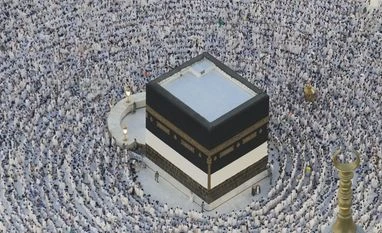 "201 Indians died during Hajj pilgrimage 2024 due to health issues: Govt")
Explore Business Standard
In pursuit of this objective, a number of progressive reforms have been introduced in the last few years, which has led to qualitative improvement in Hajj experience
More than 200 Indian pilgrims died during the Hajj pilgrimage 2024, with a majority of the deaths being attributed to cardio-respiratory and cardio-pulmonary arrests, the government informed the Lok Sabha on Wednesday.
In a written reply to a question in the Lok Sabha, Union Minority Affairs Minister Kiren Rijiju said the government of India has placed significant emphasis on the successful conduct of Hajj operations and on ensuring the safety and well-being of Indian pilgrims.
"As of 21st July 2024, 201 Indian pilgrims have died during Hajj pilgrimage 2024 with a majority of them attributed to cardio-respiratory and cardio-pulmonary arrests," he said.
It is to further state that more than 70 per cent of the total fatalities have occurred among pilgrims aged 60 and above, Rijiju added.
He said the government is committed to improving the overall Hajj experience of Indian Hajj pilgrims.
"In pursuit of this objective, a number of progressive reforms have been introduced in the last few years, which has led to qualitative improvement in Hajj experience," he said.
In Hajj 2024, the number of Khadim-ul-Hujjaj (KuH) deployed by the Hajj Committee of India sent to assist the pilgrims has increased to 641, which is more than double the previous year's number, Rijiju said.
"Even the number of temporary deputationists (administrative and medical) deployed by Government of India for Hajj management and administration was increased to 620 in Hajj 2024 from 461 during Hajj-2023," he said.
Special provisions were made for the 4,558 women who travelled to Saudi Arabia by providing them with dedicated buildings for accommodation as well as dedicated medical services, Rijiju said.
To cope with the inclement and adverse climatic conditions of Saudi Arabia, specific interventions have been introduced, he said.
At Mecca, three medical centres with a capacity of 100 beds were operationalised, along with 14 medical dispensaries, a command control centre, 20 Basic Life Support (BLS) ambulances and a 24-hour helpline were made available 24X7 during the entire Hajj period, he said.
At Madinah, a 20-bed medical centre was established along with two dispensaries, supported by a control command centre, four BLS ambulances and a 24-hour helpline, he said.
A medical dispensary and helpline were also operationalised at the Jeddah Hajj Terminal to cater to the pilgrims' healthcare requirements at the time of arrival or departure, Rijiju said.
"For the first time, emergency teams were deployed at Haramain High-Speed Railway stations, providing on-ground medical assistance. A dedicated task force consisting of six teams provided medical aid during Friday prayers at the Holy Mosque," he said.
First Published: Jul 25 2024 | 12:40 AM IST

