
210 cr trees planted in 8 years, state's forest cover has increased: UP CM
The chief minister said it was a significant accomplishment as Uttar Pradesh is witnessing rapid population growth
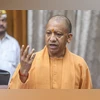 "210 cr trees planted in 8 years, state's forest cover has increased: UP CM")
WebinarsNew
Deep DiveNew
Explore Business Standard
The chief minister said it was a significant accomplishment as Uttar Pradesh is witnessing rapid population growth
Uttar Pradesh Chief Minister Yogi Adityanath on Thursday said 210 crore trees were planted across the state in the last eight years, leading to a significant increase in forest cover despite rapid urbanisation and industrial growth.
Speaking at the National Conference on the National Clean Air Programme here, he emphasised the importance of ensuring the survival of these trees.
The government, he said, has engaged the Forest Research Institute in Dehradun, Uttarakhand and a university in Chhattisgarh for third-party monitoring of plantations. These institutions periodically assess the survival rate and report their findings to the state government.
"In last eight years, 210 crore plantations have taken place in the entire state and also ensure their survival," Adityanath told the gathering.
The chief minister said nearly 70-75 per cent of the trees planted by state government have survived, while the survival rate of plantations done by private and voluntary organisations stands at 65-70 per cent.
"States across the country have undertaken tree plantation efforts, but Uttar Pradesh has made remarkable progress in increasing its forest cover during this period," he said.
The chief minister said it was a significant accomplishment as Uttar Pradesh is witnessing rapid population growth, new industrial projects, and large-scale infrastructure development. He stressed that such efforts must continue to help reduce carbon emissions.
He also expressed concern over the rising pollution and smog in the Delhi-National Capital Region and questioned who should be held accountable for it.
He said the air quality has improved to some extent due to the Ujjwala Yojana launched by Prime Minister Narendra Modi, which has provided free LPG cylinders to 10 crore families.
However, he pointed out that many people still burn wood and coal, contributing to air pollution.
Urging people to switch to cleaner fuels, he said, "When smoke is released, especially from burning coal or wood, those closest to the source suffer the most. It directly affects their health, particularly their lungs and eyes." He called for greater awareness and collective efforts to promote clean energy solutions to combat air pollution effectively.
He also pitched for adopting eco-friendly measures like rainwater harvesting and compressed biogas, keeping the rivers clean from pollution.
(Only the headline and picture of this report may have been reworked by the Business Standard staff; the rest of the content is auto-generated from a syndicated feed.)
First Published: Mar 13 2025 | 2:38 PM IST

