
Delhi records warmest Jan since 2019, air quality sees slight improvement
According to India Meteorological Department (IMD) data, nighttime temperatures were also higher than usua
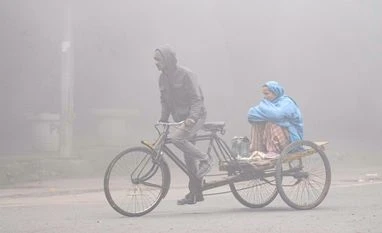 "Delhi records warmest Jan since 2019, air quality sees slight improvement")
Explore Business Standard

Associate Sponsors
Co-sponsor
According to India Meteorological Department (IMD) data, nighttime temperatures were also higher than usua
The national capital wrapped up a rather warm January with Friday's maximum temperature reaching 27 degrees Celsius, making it the city's warmest day in the month since 2019.
The month's average maximum temperature was 21.1 degrees Celsius, a notch above the long-period average of 20.1 degrees Celsius, marking it as Delhi's warmest January since 2019.
According to India Meteorological Department (IMD) data, nighttime temperatures were also higher than usual.
The average minimum temperature for the month settled at 8.5 degrees Celsius, a notch above the LPA of 7.5 degrees Celsius, and the highest since 2017 when it was 8.7 degrees Celsius.
Meteorologists attributed the warmer-than-usual January to the absence of strong western disturbances, which typically bring rain, lowering the temperature.
"This month, while western disturbances did pass through north India, most of them were feeble and did not result in substantial snowfall or rainfall," said Mahesh Palawat, a weather expert. "If we had one or two strong systems, we would have seen colder conditions due to icy winds and cloudiness. Instead, temperatures rose quickly." Palawat added that rainfall in northwest India was 81 per cent below normal, impacting winter chill and also reducing fog formation. "January usually sees dense fog, but this time, particularly in the latter half of the month, fog has been nearly absent," he said.
On Friday, Delhi's minimum temperature stood at 9.5 degrees Celsius, a degree above normal, while the lowest temperature recorded this month was 5.6 degrees Celsius on January 28. The coldest day of the month was January 1, when the maximum temperature was 15 degrees Celsius.
Higher temperatures this month contributed to a slight improvement in air quality, as warmer conditions help disperse pollutants. Delhi's average Air Quality Index (AQI) for January stood at 305, the cleanest January since 2022, when the average was 279.
In comparison, January's AQI was 355 last year and 311 in 2023. However, pollution levels remained high, with Friday's AQI recorded at 351 (very poor).
Forecasts suggest Delhi's air will continue to hover in the 'very poor' category until February 3, with slight improvements expected thereafter.
"From February 1 to 3, Delhi's air quality is likely to remain 'very poor.' It may be 'poor' in the subsequent days," stated the Centre's Early Warning System for Delhi.
(Only the headline and picture of this report may have been reworked by the Business Standard staff; the rest of the content is auto-generated from a syndicated feed.)
First Published: Jan 31 2025 | 10:49 PM IST

