
Farmers hopeful of better paddy cultivation on good monsoon rains
He said the sowing of maize that is mostly cultivated in the rain-fed hilly areas was completed sometime back and the frequent rains over the past week are a blessing for the crop
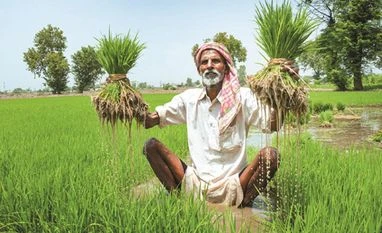 "Farmers hopeful of better paddy cultivation on good monsoon rains")
Explore Business Standard

Associate Sponsors
Co-sponsor
He said the sowing of maize that is mostly cultivated in the rain-fed hilly areas was completed sometime back and the frequent rains over the past week are a blessing for the crop
The paddy cultivation has started gaining momentum over the past week across the Jammu division with farmers expressing satisfaction over the good amount of rainfall under the influence of Monsoon winds and western disturbance over the region.
The farmers are hopeful for better yield this year compared to the previous years.
The cultivation of paddy, especially the world-famous Basmati rice, serves as the sole source of income to a majority of farmers in R S Pura, Marh and parts of Samba and Kathua districts in Jammu region.
"Paddy and maize are main crops of the Jammu region which are dependent on rain waterWe had good pre-monsoon rains. The Monsoon has also set on time which is good, Joint Director, Agriculture Department, A S Reen told PTI.
He said the sowing of maize that is mostly cultivated in the rain-fed hilly areas was completed sometime back and the frequent rains over the past week are a blessing for the crop.
The rice cultivation in Jammu plains and some parts of hilly areas is in progress. Watering of fields from canals and tube wells is insufficient and the rainfall is quite essential for the crop, especially Basmati Rice which needs a lot of water for irrigation.
The Basmati crop takes 160-170 days to reach the harvesting stage and needs a lot of water at crucial stages for a successful crop. Reen said the paddy production of Jammu is around four lakh quintals, while two lakh quintals of rice are procured through Food Corporation of India to meet the local demand.
Maize production is around four lakh quintals and the department facilitates the farmers to sell their surplus produce.
He said the production of paddy and maize can go up by 25 to 30 per cent, depending on various factors including best quality seed, proper fertilization and rain water.
The department is playing its part to ensure availability of best quality seed and fertilizers to the farmers, he said, requesting the farmers to go for crop insurance to avoid losses in case of any calamity.
Rains are beneficial for the growth of the paddy. The success of the crop depends on water availability during the next one month and if we had a good monsoon, we are hopeful of a good yield this time, Darshan Kumar, a farmer from Marh block in the outskirts of Jammu city told PTI.
He said the agriculture department employees are working in close coordination with the farmers to educate them about the newly introduced government schemes.
Thakur Dass said rains have brought relief as earlier there was a shortage of water, also affecting the wheat crop.
The agriculture department last week celebrated crop insurance week to launch a mass awareness campaign for maximum enrolment of the farmers under the scheme for Kharif-2023.
Director Agriculture, Jammu K K Sharma said the Pradhan Mantri Fasal Bima Yojna (PMFBY) will go a long way in mitigating the financial risk of the farmers suffering from the crop losses and aid in stabilizing their income.
Highlighting the achievements under the scheme, Sharma said till date one lakh farmers in Jammu division have benefited from PMFBY with the disbursement of an amount to the tune of Rs 96 crore as settlement of claims to these beneficiaries.
The Director said 50,000 farmers have already enrolled under the scheme in Jammu division well before the cut-off date of July 15.
He urged farmers to enroll under the scheme to avail the benefits against weather-vagaries for the notified crops, including Paddy and Maize in the Kharif season and Wheat in the Rabi season with a minimal premium of two per cent (Kharif) and 1.5 per cent (Rabi season) as per the Scale of Finance.
(Only the headline and picture of this report may have been reworked by the Business Standard staff; the rest of the content is auto-generated from a syndicated feed.)
First Published: Jul 08 2023 | 4:47 PM IST

