
Five cubs born under Vantara's cheetah conservation program in Jamnagar
As per Vantara's objectives, these cubs will soon be rewilded to help restore India's biodiversity
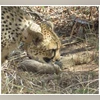 "Five cubs born under Vantara's cheetah conservation program in Jamnagar")
WebinarsNew
Deep DiveNew
Explore Business Standard
As per Vantara's objectives, these cubs will soon be rewilded to help restore India's biodiversity
In a significant boost to the Government of India's in-situ conservation efforts, Vantara, an organisation founded by philanthropic entrepreneur Anant Ambani, has announced the birth of five cheetah cubs at its facility in Jamnagar, according to an official release.
These cubs, born as part of Vantara's Cheetah Conservation Program, represent a significant step toward reintroducing cheetahs into India's wild landscapes.
As per Vantara's objectives, these cubs will soon be rewilded to help restore India's biodiversity. The mother, affectionately named Swara, and her cubs are reported to be healthy and are receiving the best possible care from Vantara's wildlife veterinarians.
Dr. Adrian Tordiffe, a senior veterinarian from South Africa involved in the program, explained the pregnancy and birth process, noting that cheetah pregnancy is difficult to confirm until the late stages due to subtle physical changes.
He further shared that the cubs are now active, walking and running around their habitat. Craig Gouws, head curator of the program, emphasised that hidden cameras were installed throughout the habitat to minimize human contact and stress for the mother and cubs. He also highlighted the importance of the cheetah in India's biodiversity, expressing pride in seeing these cubs born as part of the ongoing conservation efforts, the release stated.
Vantara's Cheetah Conservation Program supports the Government of India's initiative to reintroduce cheetahs into India. This ex-situ effort creates an environment that closely mirrors the cheetahs' natural habitat, helping them acclimatize to India's weather and conditions. Vantara will work in close collaboration with the central government and selected state governments to implement the rewilding program.
As per the release, rewilding cheetahs is a multi-step process, involving adaptation to the environment, training in hunting skills, and reducing human dependency. After their release into the wild, the cheetahs will be closely monitored using Global Positioning System (GPS) collars to track their health and movement.
The program also focuses on engaging local communities, managing ecosystems, and ensuring long-term conservation efforts to establish a sustainable environment where cheetahs can thrive naturally.
Cheetahs, once widespread across Africa, the Middle East, and India, now occupy just 9% of their historical range, making them one of the most endangered big cat species globally. Listed as Vulnerable on the International Union for Conservation of Nature (IUCN) Red List, with the Asiatic subspecies classified as Critically Endangered, they face significant threats from habitat loss, prey depletion, and illegal trade.
With approximately 7,000 adults remaining, primarily in Africa, cheetahs rely on well-managed protected areas for survival. Included under Appendix I of the Convention on International Trade in Endangered Species of Wild Fauna and Flora (CITES), international trade in wild-caught cheetahs is banned, with limited exceptions. Reintroduction initiatives, such as those in India, bring renewed hope for safeguarding this species for future generations, according to the release.
(Only the headline and picture of this report may have been reworked by the Business Standard staff; the rest of the content is auto-generated from a syndicated feed.)
First Published: Dec 08 2024 | 7:39 AM IST


 Connect with us on WhatsApp