
Moon's surface once a magma ocean, suggests Isro's Chandrayaan-3 data
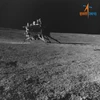
The analysis pertained to measurements of the lunar soil, recorded by the Pragyan rover and taken at multiple points along a 100-metre track on the surface
 "Moon's surface once a magma ocean, suggests Isro's Chandrayaan-3 data")
WebinarsNew
Deep DiveNew
Explore Business Standard
The analysis pertained to measurements of the lunar soil, recorded by the Pragyan rover and taken at multiple points along a 100-metre track on the surface
Data from Isro's Chandrayaan-3 mission supports the theory that the Moon was once covered in an ocean of magma, or a 'magma ocean', an analysis, published in the journal Nature, has suggested.
The analysis pertained to measurements of the lunar soil, recorded by the Pragyan rover and taken at multiple points along a 100-metre track on the surface.
The rover was deployed by the Vikram lander, which made a soft landing near the south pole of the Moon on August 23, 2023. Chandrayaan-3, consisting of the lander and rover, was launched by the Indian Space Research Organisation (Isro), Bengaluru.
The study's authors, including those from the Physical Research Laboratory, Ahmedabad, said that previous missions, such as NASA's Apollo and the Soviet Union's Luna, have mainly relied on samples of soil taken from equitorial and mid-latitude regions of the Moon, respectively.
Analysing Pragyan's data, which came from the Moon's south pole, the researchers found that the samples suggested that the lunar soil was uniformly composed of a single rock type - ferroan anorthosite, or FAN.
The authors said that their results were similar to those from analysis of samples taken from the equatorial and mid-latitude regions.
Further, the similar composition of samples taken from geographically distant locations supports the lunar magma ocean hypothesis, a widely accepted scenario for Moon's early evolution, they said.
The hypothesis provides one of the possible explanations of how the Moon's crust, mantle, and core formed.
According to the hypothesis, Moon was formed as a result of collision between two protoplanets (stage preceding planet formation). While the bigger planet became the Earth, the smaller became the Moon.
As a result, the Moon became very hot, thereby, melting its entire mantle into a 'magma ocean,' the theory suggests.
It further states that as the Moon cooled while it was forming, less dense FAN floated to the surface, whereas heavier minerals sank to form the mantle, which lies underneath the crust. Therefore, the theory posits that the Moon's crust is largely made of FAN.
However, the analysis also revealed that Pragyan detected magnesium in the lunar soil, which the researchers said could not be explained by the lunar magma ocean, or LMO, hypothesis.
They added that the hypothesis has been questioned by some studies based on recent re-analysis of many samples procured during Apollo's mission.
"Although alternative scenarios exist, the APXS-measured composition, its uniformity over regional scales and the geological context support the LMO hypothesis," the authors wrote.
An Alpha Particle X-ray Spectrometer, or APXS, aboard the Pragyan rover was used to collect information about elements in the soil in the vicinity of the Chandrayaan-3 landing site, which was named the 'Shiv Shakti Point' on August 26, 2023.
(Only the headline and picture of this report may have been reworked by the Business Standard staff; the rest of the content is auto-generated from a syndicated feed.)
First Published: Aug 21 2024 | 9:50 PM IST


