
No deputy speaker in eight state assemblies, says think tank report
Article 178 of the Constitution requires state assemblies to choose two members as speaker and deputy speaker as soon as possible, according to the report
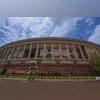 "No deputy speaker in eight state assemblies, says think tank report")
WebinarsNew
Deep DiveNew
Explore Business Standard
Article 178 of the Constitution requires state assemblies to choose two members as speaker and deputy speaker as soon as possible, according to the report
Amid a debate over the absence of a deputy speaker in the Lok Sabha, data compiled by a think tank shows eight state assemblies not having anyone in the position, with Jharkhand not electing one for more than 20 years.
According to a report on the Annual Review of State Laws, 2024, released by PRS Legislative Research, state assemblies sat for an average of 20 days, amounting to an average of 100 hours in total, last year.
Article 178 of the Constitution requires state assemblies to choose two members as speaker and deputy speaker as soon as possible, according to the report.
Assemblies of eight states and Union territories did not have a deputy speaker as of April 2025, the think tank said in the report.
The list includes Jharkhand, which has not elected a deputy speaker for more than 20 years.
While the previous Uttar Pradesh Assembly elected a deputy speaker in its last session, the current assembly, which is three years into its term, has not yet elected one.
"The Constitution assigns some key functions to the deputy speaker. He officiates as the speaker in case of a vacancy (due to death or resignation of the speaker). He also receives notice of no-confidence motion against the speaker and presides over the discussion on that motion," according to the report.
Other state assemblies that do not have a deputy speaker are Chhattisgarh, Jammu and Kashmir, Madhya Pradesh, Rajasthan, Telangana and Uttarakhand.
The Lok Sabha has not had a deputy speaker since June 2019.
According to the report, state assemblies met for an average of 20 days in 2024.
The Odisha Assembly met for the highest number of days at 42, followed by Kerala (38) and West Bengal (36).
In Manipur, where President's Rule was imposed in February, the assembly met for 14 days. The Nagaland Assembly met for six days, the Sikkim Assembly for eight days, and the assemblies of Arunachal Pradesh, Punjab and Uttarakhand for 10 days each.
Among the larger states, the assemblies of Uttar Pradesh and Madhya Pradesh met for 16 days each.
"The Constitution mandates legislatures to meet at least once in six months. Eleven states met this requirement through short sessions that lasted for one or two days," according to the report.
State assemblies with a relatively higher number of average annual sitting days include Kerala at 44 days a year on an average, Odisha (40), and Karnataka and West Bengal (34).
The average duration of a sitting was five hours, with wide variation across states. While sittings of the assemblies of Goa and Rajasthan lasted for an average of seven hours, the average duration of sittings in Bihar, Jharkhand and Punjab was about three hours.
"When assemblies meet for a few days in a year and for a few hours on these days, they have limited time for discussion on laws and government finances," the think tank said in the report.
(Only the headline and picture of this report may have been reworked by the Business Standard staff; the rest of the content is auto-generated from a syndicated feed.)
First Published: May 17 2025 | 4:59 PM IST

