
No nation secure alone, shared defence innovation vital: Army chief Dwivedi
Chief of Army Staff Gen Upendra Dwivedi described strategic partnerships as a 'bridge of opportunity'
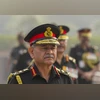 "No nation secure alone, shared defence innovation vital: Army chief Dwivedi")
WebinarsNew
Deep DiveNew
Explore Business Standard
Chief of Army Staff Gen Upendra Dwivedi described strategic partnerships as a 'bridge of opportunity'
In a world of complex threats, no nation stands secure alone and shared defence innovation is the "strongest shield", Chief of Army Staff Gen Upendra Dwivedi said on Tuesday.
In his address at India Defence Conclave 2025, he also said that India's "two-and-a-half front challenge" and "post 'Op Sindoor' empowerment" is giving the armed forces more flexibility for spiral development and induction.
In his 20-minute address to a gathering of senior military officers, defence experts, industry representatives and others, he emphasised on the evolving nature of warfare, and the need to build capabilities, invest in defence research and development (R&D) and leverage emerging technologies.
"The future of warfighting will not be defined by any single domain or doctrine, but by how decisively we convert ideas into enduring capabilities," Gen Dwivedi said.
He asserted that the journey from concept to capability is in truth a journey from "dependence to dominance, from preparing for the future to possessing it".
"For all the leaders in this hall including me, concepts inspire us, capabilities protect us. It is the leadership which ensures that one becomes the other," the Army chief said.
He described strategic partnerships as a "bridge of opportunity".
While R&D builds what one can create, strategic partnership expand what one can access, he said.
"In a world of complex threats, no nation stands secure alone. Shared defence innovation is the strongest shield. Certain technologies will never come to us on a platter. Need is to collaborate under terms of shared benefits and local control," he said.
The Army chief cited instances and said the shining examples are BrahMos and K9 Vajra.
What is more important for any R&D's effort is "from zero to one," he said.
"Once it becomes from zero to one, from one to hundred it becomes that much easier because then it requires replication, modification and upgradation. So that zero to one is something we need to focus, if not then we need to get it from somewhere outside," he added.
Gen Dwivedi said the Army is harnessing dual-use technology and creating convergence by adapting or constantly modifying the technology itself and the TTPs (techniques, tactics and procedures), and drone warfare is a live example to it.
"We are already associated in a big way with national technology missions of quantum, space, 6G etc.. for a very collaborative approach.. So as a military, we are convinced that for us to succeed, it is imperative to help others. That is the imperative to help others to succeed, as in a collaborative environment and whole-of-nation approach, '2+2' must make it to '22'," he added.
Also, he stressed on the importance of military-civil fusion.
The "troika of transformation" -- academia, industry and the military, and if strategic partnership reflects collaboration abroad, military-civil fusion must "anchor it at home," the Army chief said.
He referred to the impact of Operation Sindoor on the Army too.
"Our two-and-a-half front challenge and post 'Op Sindoor' empowerment, in terms of financial empowerment, which we have got, is giving us more flexibility for spiral development and induction," he said.
Gen Dwivedi urged that the industry must invest in emerging technologies, AI, cyber, quantum, unmanned autonomous systems, space and advanced materials.
"Not only to meet future operational needs but also to power India's manufacturing growth and defence exports. The proof is visible in indigenous systems like the Akash AD (air defence), ATAGS guns, and Light Tank Zorawar," he said.
Gen Dwivedi further said the Army is looking at, a "full automation and man-unmanned teams", because that's what the future is.
The manpower will remain constant, but the efficiency of the same manpower with the exploitation of the equipment has to go "1.5 to 2 times" and that is what the army expecting from the industry to help the force out, other than the exact hardware, he added.
He emphasised on boosting defence R&D, saying, "a gap that must close in, if India is to design and deliver its own cutting-edge defence capability".
Gen Dwivedi said while academia innovates, the industry must incubate and the military must imbibe these innovations.
He also underlined that the form of warfare itself today has become "so fluid that a conflict is no longer bound by battlefields, is diffused, dispersed and pervasive." But, amid all the strands of warfare, one factor always remains constant, that is "land remains the currency of victory".
Wars keeps changing in form, the next question is how do nations or militaries translate evolving ideas into real warfighting capabilities. he said.
The actualisation of warfighting capabilities is a complex and cumulative process, a continuum of conceptualisation, experimentation, development, acquisition, and demands 3Ts -- thought, technology and tenacity, Gen Dwivedi said.
(Only the headline and picture of this report may have been reworked by the Business Standard staff; the rest of the content is auto-generated from a syndicated feed.)
First Published: Nov 04 2025 | 11:40 PM IST


 Connect with us on WhatsApp