Developers of undersea cable infrastructure seek easier norms, incentives

Repairing cables, Customs duty among key hurdles for developers
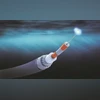
Undersea cables
Representative Picture
Subhayan Chakraborty Delhi
4 min read Last Updated : Mar 25 2025 | 10:23 PM IST
Developers of undersea cable infrastructure, such as Bharti Airtel and Meta, on Tuesday called for incentives, easier regulations and a sustained policy push to quickly bring more subsea cables into India, and create indigenous cable repair vessels at home.
 
Speaking at the first-ever conference on subsea cable systems in India, organised by the Broadband India Forum, industry officials said India has great potential to become a hub for submarine cables connecting it and other countries to Europe, West Asia, Africa, and Southeast Asia, given its strategic geographical position. Partnering with telecom operators, global submarine cable consortiums have outlined plans to land multiple cables in the country.
 
However, the industry faces major hurdles in repairing damaged cables.
 
“The biggest problem for cable landing systems is fishing trawlers which break the cables regularly. The approval needed to get a repair ship to India takes 6 months. It requires officials from the Department of Telecommunications (DoT) to be present on the ship when maintenance is going on,” Bharti Airtel's Chief Regulatory Officer Rahul Vatts said.
 
The industry also faces challenges on customs duty, having to report whether repairs of cables are ongoing within or outside India's Economic Zone, which raises confusion, and escalates costs, he added.
 
In order to further incentivise the sector, he suggested the government reduce the licence fees for cable landing systems and tax incentives on the import of cables. Airtel has 400,000 route kilometres of cable, 10 large data centres and investments in 34 large cable systems globally. It also has large CPaaS partnerships which carry the traffic globally.
 
Submarine telecommunication cables are the backbone of global communication, carrying approximately 99 per cent of internet traffic and supporting critical services such as commerce, finance, government operations, digital health, and education. Physically linking continents, they also connect markets. As of 2024, more than 500 active cable systems are in operation, transmitting vast amounts of data with high efficiency. While India has become the largest data generating nation, and hosts more than 152 data centres, it is fed by only 18 undersea cables.
 
Strategic concerns
 
India also doesn't have in-house repair and cable installation capabilities. “If 4 or 5 cables go down today, the entire internet traffic can go down. We were nearly at that point 2-3 years back since the cable repair ship was not being allowed to enter the country,” Vatts said.
 
On the other hand, 15 of India's 18 undersea cables go through just a single 6 km wide area on the Juhu, Versova beach in Mumbai, pointing out strategic risks, Amajit Gupta, group CEO & managing director of network infrastructure major Lightstorm, said. A small fire in that area brought down 4 cables, he revealed.
 
“About 20 per cent of global internet traffic is consumed or generated in India. To support that, India has only about 3 per cent of global subsea cables, and 2 per cent of global subsea traffic," Gupta said, adding that at least 11 of India's cables are at the end of their average 25-year life today.
 
While data centres can be built within 2 years, a transoceanic cable system takes at least 5 years to build, Scott Cowling, director, Network Investments at Meta said, calling for an attractive policy environment for foreign companies.
 
Meta last month announced India will be a key component of the ambitious 50,000 km Project Waterworth, which will touch the United States, India, Brazil, South Africa, and other key regions.
 
“Meta is the largest investor in digital infrastructure globally. In order to serve 4 billion daily users, we have invested in one of the largest terrestrial and subsea cable networks across the planet,” Cowling said.
   
Industry demands
 
- Declaration of cables as national strategic assets
- Easier rules to bring in foreign repair vessels
- Dedicated routes for subsea cables
- Lower customs duty on cable imports
- Attractive, stable regulatory environment

One subscription. Two world-class reads.

Already subscribed? Log in

Subscribe to read the full story →
*Subscribe to Business Standard digital and get complimentary access to The New York Times

Smart Quarterly

₹900

3 Months

₹300/Month

SAVE 25%

Smart Essential

₹2,700

1 Year

₹225/Month

SAVE 46%
*Complimentary New York Times access for the 2nd year will be given after 12 months

Super Saver

₹3,900

2 Years

₹162/Month

Subscribe

Renews automatically, cancel anytime

Here’s what’s included in our digital subscription plans

Exclusive premium stories online

  • Over 30 premium stories daily, handpicked by our editors

Complimentary Access to The New York Times

  • News, Games, Cooking, Audio, Wirecutter & The Athletic

Business Standard Epaper

  • Digital replica of our daily newspaper — with options to read, save, and share

Curated Newsletters

  • Insights on markets, finance, politics, tech, and more delivered to your inbox

Market Analysis & Investment Insights

  • In-depth market analysis & insights with access to The Smart Investor

Archives

  • Repository of articles and publications dating back to 1997

Ad-free Reading

  • Uninterrupted reading experience with no advertisements

Seamless Access Across All Devices

  • Access Business Standard across devices — mobile, tablet, or PC, via web or app

Topics :Undersea pipeline to IndiaSeaways Shipping & LogisticsSeafood exports

Next Story



