A few weeks ago, Agriculture Minister Shivraj Singh Chouhan, in an interview to Business Standard, said that the focus of the ongoing mass contact programme called ‘Vikshit Krishi Sankalp Abhiyan’ is largely on raising production and productivity of major crops.
This is because, once you raise per hectare yields, it does translate into higher incomes for farmers as expenditure on major inputs such as fertilisers and seeds remains almost the same.
Chouhan was responding to questions over the focus of the mega mass contact programme and whether it should instead concentrate more on raising farm incomes and market linkages, which have been the dark holes for India’s farm sector.
Data sourced from various agencies, including the Commission for Agriculture Costs and Prices (CACP), for the last 10 years from 2013-14 to 2024-25, show that while increasing yields do result in higher per hectare incomes, it is not uniform across all crops.
The availability of markets, prices paid, and assured purchases are some of the factors that seem to guide returns along with yields.
For this analysis, the per hectare incomes are for the triennium ending (TE) 2023-24 for kharif crops and TE 2022-23 for major rabi crops, as compared to the TE ending 2011-12 for both. They have been calculated as gross return over A2+FL cost of production.
The A2+FL cost of production includes all paid-out expenses, both in cash and kind, along with the derived value of unpaid family labour. The yields are for the period between 2013-14 and 2024-25 (as per the second advance estimate), simple average. The annual fluctuation in yields has not been factored into this analysis.
The data show that in the case of maize and sunflower, both the per hectare yields and the gross return over the production costs have increased from 2013-14 to 2024-25, while in the case of groundnut and mustard, the returns have improved but their yields have not risen in the same proportion.
For crops such as urad and cotton, both the yields and returns have not grown in a similar proportion to the other four.
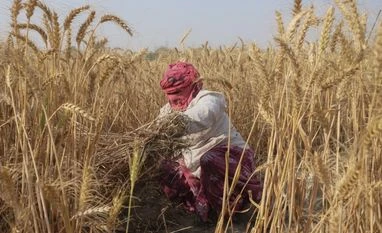
In the case of wheat and paddy, the two main foodgrains grown in India during the rabi and kharif seasons, data show that while the yields have risen by 28 per cent and 18.3 per cent between 2013-14 and 2024-25, the gross returns have grown by 69 per cent and 93 per cent, respectively. This is among the best among major crops.
Therefore, the farmers’ income is not just a factor of yields, but also of markets and prices.
Wheat and paddy have assured procurement mechanisms, while in the case of maize, groundnut, mustard and sunflower, high domestic edible oil prices have meant that farmers have got good returns compared to other crops.
Cotton is a classic example to illustrate what happens when yields plummet.
The data show that the per hectare yield of cotton has dropped by 14.3 per cent between 2013-14 and 2024-25, as a result of which the gross returns have grown by just 12 per cent in 10 years, the lowest among all major crops.
In the case of urad too, the per hectare yields have risen by around 19.5 per cent between 2013-14 and 2024-25, but the gross returns have grown by 12.3 per cent.
Farmers' income
The All India Rural Financial Inclusion Survey (NAFIS) 2021-22 by NABARD, released last year, showed that the average monthly income of rural households increased from ₹8,059 in 2016-17 to ₹12,698 in 2021-22.
The reference period of the survey for most questions was from 1 July 2021 to 30 June 2022 agricultural year.
This meant a nominal compound annual growth rate (CAGR) of 9.5 per cent, which is higher than the average annual nominal GDP growth of 9 per cent during the same period (financial-year basis), the survey said.
The average monthly expenditure of rural households too had increased during the five years, from ₹6,646 in 2016-17 to ₹11,262 in 2021-22.
As per the 77th Situational Assessment Survey (SAS) of NSO, the average monthly income of agricultural households increased from ₹6,426 in 2012-13 to ₹10,218 in 2018-19, which is an increase of 59 per cent in nominal terms—around 10 per cent per annum.
However, both NAFIS and SAS are not strictly comparable in terms of their processes.
The NAFIS 2021-22 once again reinforced the declining share of cultivation in the average monthly income of rural households.
It had dropped from 35 to 20 per cent between the two periods, while that of wages and salary had risen.
The NAFIS survey, conducted among more than a lakh households, collected information on economic and financial indicators of rural India as of 2021-22. The first NAFIS survey was done in 2016-17 (July to June).
Around 56.7 per cent of the households surveyed for the report were agricultural households, while the rest were non-agricultural households.
NABARD defined agricultural households to be those with a value of produce of more than ₹6,500 from agriculture and allied activities, and having at least one member self-employed in agriculture during the reference agricultural year 2021-22.
It defined household income as net income, which is derived by adding income from all sources for a particular household and deducting the expenses incurred towards pursuing income-generating activities.