Late southwest monsoon pulls down urad, arhar, soybean, paddy sowing

Scientists and Centre launches big programme to boost arhar yields by 30 per cent
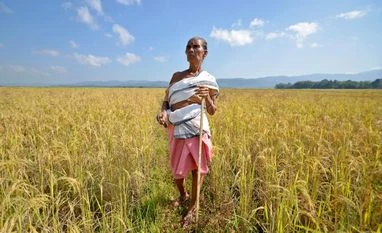
paddy, framer, crop
Sanjeeb Mukherjee New Delhi
3 min read Last Updated : Jun 23 2023 | 9:06 PM IST
Sowing of kharif crops continued to remain below par due to the slow progress of the southwest monsoon. As a result, acreage under key pulses, such as urad, arhar, soybean in oilseeds and rice in cereals, saw a drop till the week ended June 23.

Traders and market sources said that till the ideal sowing window is within reach, any delay in planting crops may not cause a big impact in the per hectare yields.

The rains in July and August will hold the key to getting a good harvest. More than the total quantum, it is the distribution and timeliness of the showers that will matter the most. The India Meteorological Department’s (IMD’s) latest forecast brings some hope.

In its June 23 forecast, the Met department said that conditions are favourable for further advancement of the southwest monsoon over some more parts of Chhattisgarh and remaining parts of Jharkhand and Bihar. It is also progressing to some parts of East Madhya Pradesh, some more parts of Uttar Pradesh and some areas of Uttarakhand during the next two days.

It said that conditions are also becoming favourable for further advance of the monsoon over some more parts of Maharashtra, Karnataka and Telangana during the next 3-4 days.

It added that isolated heavy-to-very-heavy rainfall is likely over East Central and parts of Northwest India during the next five days.

In a significant development, scientists from the International Crops Research Institute for the Semi-Arid Tropics (ICRISAT) along with the Centre’s National Food Security Mission (NFSM) are planning to launch an ambitious project aimed at boosting pigeon pea (arhar) yields across the country. The whole gamut of practices to be adopted as part of the project — that also includes seeds — could push up arhar yields across the country by 30 per cent, the scientists claimed.

Arhar dal is one of the most widely consumed pulses in the country but its production is always less than domestic demand, leading to reliance on imports. 

In the 2022-23 crop year (July to June), India’s arhar dal production was almost 19 per cent less than last year, according to the third advance estimate of agriculture production.

The project, which was launched on May 29, is set to begin in the upcoming cropping season. It will see collaboration with the Indian Institute of Pulses Research (IIPR), Kanpur, and 12 state agricultural universities.

The project will test and promote high-yielding, early-maturing varieties and hybrids across Telangana, Andhra Pradesh, Karnataka, Maharashtra, Madhya Pradesh, Jharkhand, Chhattisgarh, Rajasthan, Bihar, Uttar Pradesh, Punjab, and Haryana.

The key focus areas of the project include combating pod-borer infestation, stabilising hybrid production, integrating genomics, and reintroducing marker-assisted selection in the breeding process.

“By providing farmers a package of agronomy practices alongside new varieties and hybrids, a potential 30 per cent increase in pigeon pea yields can be achieved,” Aditya Pratap, coordinator, All India Coordinated Research Project on kharif pulses, said in a statement.


One subscription. Two world-class reads.

Already subscribed? Log in

Subscribe to read the full story →
*Subscribe to Business Standard digital and get complimentary access to The New York Times

Smart Quarterly

₹900

3 Months

₹300/Month

SAVE 25%

Smart Essential

₹2,700

1 Year

₹225/Month

SAVE 46%
*Complimentary New York Times access for the 2nd year will be given after 12 months

Super Saver

₹3,900

2 Years

₹162/Month

Subscribe

Renews automatically, cancel anytime

Here’s what’s included in our digital subscription plans

Exclusive premium stories online

  • Over 30 premium stories daily, handpicked by our editors

Complimentary Access to The New York Times

  • News, Games, Cooking, Audio, Wirecutter & The Athletic

Business Standard Epaper

  • Digital replica of our daily newspaper — with options to read, save, and share

Curated Newsletters

  • Insights on markets, finance, politics, tech, and more delivered to your inbox

Market Analysis & Investment Insights

  • In-depth market analysis & insights with access to The Smart Investor

Archives

  • Repository of articles and publications dating back to 1997

Ad-free Reading

  • Uninterrupted reading experience with no advertisements

Seamless Access Across All Devices

  • Access Business Standard across devices — mobile, tablet, or PC, via web or app

Topics :Indian monsoonScientistsCrop Yields

Next Story



