The central government’s incentives must be directed at electric vehicles (EVs) rather than hybrid cars, as the latter fundamentally depend on fossil fuels and continue to emit tailpipe pollutants, unlike “true zero-emission vehicles”, a parliamentary standing committee said in a report tabled in the Rajya Sabha on December 12.
What is driving the industry divide on EV and hybrid incentives?
The recommendation comes amid a divide in the auto industry, with companies such as Toyota and Maruti Suzuki pushing for support for strong hybrids, while domestic EV leaders Tata Motors and Mahindra & Mahindra insist incentives should be reserved for EVs.
What has the panel said on ethanol blending and older vehicles?
The parliamentary standing committee, headed by BJP Rajya Sabha MP Bhubaneswar Kalita, also said higher ethanol blends raise concerns for older vehicles, as they lack advanced systems to handle such fuels and may suffer mechanical damage and higher emissions.
“While ethanol blending may form part of a transitional energy strategy, it should not inadvertently divert policy focus or fiscal support from the paramount objective of transitioning to a zero-tailpipe-emission vehicle fleet,” it said.
Which vehicles does the panel want incentives to support?
The committee said the government’s production-linked incentives, purchase subsidies and tax benefits must be “strategically” focused on accelerating the adoption of “genuine” zero-emission vehicles such as battery EVs and fuel cell EVs.
What is the panel’s view on plug-in hybrids?
“Plug-in hybrid vehicles could be considered as a transitional technology due to their capacity for external charging and extended electric-only range,” it added. The committee report was on the topic, “Air Pollution in Delhi NCR and steps taken by various agencies for its mitigation”.
Why does the panel distinguish hybrids from ‘true’ zero-emission vehicles?
The committee said hybrid vehicles “remain fundamentally dependent on fossil fuels and continue to emit tailpipe pollutants, unlike true zero-emission vehicles”.
A strong hybrid’s battery is typically 1-2 kWh in capacity, enough to allow electric-only driving for one to three km at one stretch. The battery mainly assists the petrol engine during acceleration, powers the vehicle at very low speeds, and captures energy through regenerative braking, but it is too small to support long-distance electric driving like plug-in hybrids or full EVs.
How are automakers arguing their case?
India’s auto industry remains divided over whether government incentives should cover strong hybrid vehicles. Automakers such as Toyota Kirloskar Motor and Maruti Suzuki India have lobbied for support, arguing that strong hybrids offer a practical transition technology amid high EV costs and limited charging infrastructure.
This stance has been opposed by domestic EV leaders Tata Motors and Mahindra & Mahindra, who say hybrids still rely on fossil fuels and could divert policy and fiscal support from zero-emission vehicles. They warn that incentivising hybrids may slow EV adoption and undermine investments in electric platforms, battery supply chains and charging networks.
What is the policy signal from states?
At the state level, the withdrawal of hybrid incentives in Uttar Pradesh earlier this year was seen as a setback for hybrid advocates and a policy win for EV-only proponents.
What did the panel say on the E20 rollout?
The committee also addressed the recent E20 controversy. The nationwide rollout of E20 petrol, blended with 20 per cent ethanol, has raised concerns, with many vehicle owners and surveys reporting reduced fuel efficiency and higher maintenance requirements, particularly for older petrol vehicles not designed for higher ethanol content.
The committee said “the compatibility of older vehicles, lacking advanced emission control systems, with higher ethanol blends remains a valid concern, both in terms of potential material damage and elevated emissions”.
“The acknowledged fuel economy penalty associated with these blends further complicates the matter, as it implies a higher volume of fuel consumption to achieve the same mobility, thereby offsetting some of the per-litre environmental advantages,” it added.

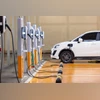 "Govt incentives must prioritise EVs, not hybrids, says Parliament panel")


 Connect with us on WhatsApp