From Kozhikode to Ahmedabad crash: Safety lessons caught in air pocket

The AI171 crash brings into focus the aviation reforms that two major accidents in the past promised to roll out
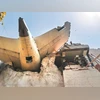
Air India, plane crash
The possibility of decoding the black box abroad raises the same concern flagged in the report after the Kozhikode accident in 2020: India’s lack of self-sufficiency in accident investigation | File: Reuters
Deepak Patel New Delhi
6 min read Last Updated : Jun 22 2025 | 9:58 PM IST

Don't want to miss the best from Business Standard?

One of the key recommendations following the Kozhikode air crash in August 2020 — in which an Air India Express aircraft from Dubai overshot the runway during landing in heavy rain, killing 21 people — was for India to develop its own laboratory to analyse flight data and cockpit voice recorders, commonly known as black boxes. That facility, set up under the Aircraft Accident Investigation Bureau (AAIB), was inaugurated this April, close to five years after the Kozhikode crash. And, its effectiveness is already under scrutiny.
 
After the recent crash of Air India flight AI171 in Ahmedabad on June 12 — which killed 241 passengers and crew members and 34 people on the ground — investigators found that the black boxes were damaged. While the Ministry of Civil Aviation (MoCA) has said no decision has been taken yet on sending them abroad for decoding, the possibility itself raises the same concern flagged in the Kozhikode accident report: India’s lack of self-sufficiency in accident investigation.
 
As authorities wait to see whether data from the AI171 black boxes can be recovered in India, a broader concern looms: how many of the lessons from the last two major commercial aviation accidents — in Mangaluru (2010) and Kozhikode (2020) — in India were actually implemented? And have they made flying any safer? 
 
Action after Mangaluru crash
 
The Mangaluru air crash of May 2010, in which 158 people died, involved another Air India Express flight — then a subsidiary of state-owned Air India. The accident prompted a major introspection across India’s aviation ecosystem.
 
The Court of Inquiry, led by Air Marshal (Retd) B N Gokhale, into the Mangaluru crash spurred action on several fronts: from upgrading airport infrastructure to enhancing cockpit procedures and pilot training.
 
The final report identified the probable cause of the crash as the captain’s failure to discontinue an unstabilised approach and initiate a go-around, despite multiple cues and calls from the co-pilot. Contributory factors included high workload on pilots, poor “crew resource management (CRM)”, and a lack of assertiveness from the first officer.
 
CRM is the training and practice of clear communication, teamwork, and decision-making in the cockpit to avoid errors.
 
The Directorate General of Civil Aviation (DGCA) — India's civil aviation regulator — ramped up its oversight through spot inspections at critical airports, enforcement of maintenance protocols, and issuance of new safety circulars. New rules empowered first officers to act assertively in emergencies, and breath analyser tests for pilots were strictly enforced. A Civil Aviation Safety Advisory Council (CASAC) was created to ensure that lessons from past accidents translated into tangible policy and procedural changes.
 
The MoCA, in a statement issued a year after the Mangaluru crash, said the accident had shaken the industry and prompted a full-scale review of safety across DGCA, airports, airlines, and flight operations. It triggered a reassurance drive involving inspections of critical aerodromes, enforcement of standard operating procedures like ‘go around’ policy, and stricter cockpit discipline including mandatory presence of cabin crew when one pilot exits. DGCA intensified night inspections, implemented assertiveness training for first officers, mandated breath analyser tests before flights, and enforced disciplinary action for violations.
 
Significant efforts were also made to strengthen pilot training and evaluation. The DGCA restricted the validity of instructor roles, tightened norms for training captains, and imposed stronger vetting for foreign pilots. Airports were pushed to upgrade runway safety features, such as friction testing and RESA (Runway End Safety Area — an extended safety zone at the end of a runway designed to minimise risks in case an aircraft overshoots). 
 
Kozhikode aftermath
 
A decade after the Mangalore tragedy, the Kozhikode crash reveal-ed that while some procedural reforms had been put in place, systemic failures remained in the aviation sector. The official investigation identified the probable cause as the captain’s decision to continue an unstabilised approach in heavy rain with a tailwind, resulting in a touchdown beyond the touchdown zone. Despite repeated calls from the first officer to go around, the approach was not discontinued. CRM failure, fatigue, and systemic issues within the airline contributed to the outcome.
 
‘’Unstable approaches’’ were common to both accidents. "If the aircraft is high and/or fast, the landing roll will increase, which can compromise the aircraft's stopping capability,” said Captain Amit Singh, Founder of Safety Matters Foundation. 
 
The emerging threat to aviation, which was first detected as a contributory cause for the Mangaluru incident, is pilot fatigue. “The final investigation recommended the introduction of a long-term measure through a fatigue risk management system (FRMS). However, FRMS has not been implemented despite the Zaidi committee report giving the same recommendation in 2011,” he added. It was a government-appointed panel led by then DGCA chief Nasim Zaidi to review pilot duty hours and recommend reforms.
 
The AAIB report on the Kozhikode crash uncovered troubling organisational patterns within Air India Express including a shortage of experienced captains at key bases like Kozhikode.
 
The pilot in command knew he had another flight scheduled the next day, and if he diverted this flight due to bad weather or technical issues, he would exceed his duty time limits. Since there were no other captains available at that base, he was under pressure to complete the landing at Kozhikode, even though the conditions were poor. He kept trying to land instead of diverting to another airport. Investigators called this a “misplaced motivation” that influenced his judgement. 
 
Gaps and solutions
 
The AAIB's Kozhikode report went beyond identifying human error. It placed equal weight on broader institutional shortcomings. It stated that similar errors and violations continued to happen across Air India Express flights, reinforcing the need for a shift in safety culture.
 
The airline’s training modules, for instance, were found to lack rigour. Simulator exercises often did not reflect real-world complexity, and technical snags were ignored or worked around. The training department itself was under-staffed, and regulatory audits failed to ensure meaningful compliance.
 
Failures in CRM training were also central to the report. The steep authority gradient in the cockpit meant that first officers were reluctant to challenge their captains, even in life-threatening scenarios. This cultural barrier was seen as a repeated cause of accidents.
 
“An accident is the reflection of the safety culture of the aviation sector and the airline. Clearly enough hints were ignored and precursors not given much attention, so we have to see another accident,” said Captain Singh.
 
With the crash of AI171 in Ahmedabad, several unresolved issues are again in focus. The two last major crashes had pushed the system to make changes. But, lots more remain to be done.

One subscription. Two world-class reads.

Already subscribed? Log in

Subscribe to read the full story →
*Subscribe to Business Standard digital and get complimentary access to The New York Times

Smart Quarterly

₹900

3 Months

₹300/Month

SAVE 25%

Smart Essential

₹2,700

1 Year

₹225/Month

SAVE 46%
*Complimentary New York Times access for the 2nd year will be given after 12 months

Super Saver

₹3,900

2 Years

₹162/Month

Subscribe

Renews automatically, cancel anytime

Here’s what’s included in our digital subscription plans

Exclusive premium stories online

  • Over 30 premium stories daily, handpicked by our editors

Complimentary Access to The New York Times

  • News, Games, Cooking, Audio, Wirecutter & The Athletic

Business Standard Epaper

  • Digital replica of our daily newspaper — with options to read, save, and share

Curated Newsletters

  • Insights on markets, finance, politics, tech, and more delivered to your inbox

Market Analysis & Investment Insights

  • In-depth market analysis & insights with access to The Smart Investor

Archives

  • Repository of articles and publications dating back to 1997

Ad-free Reading

  • Uninterrupted reading experience with no advertisements

Seamless Access Across All Devices

  • Access Business Standard across devices — mobile, tablet, or PC, via web or app

Topics :ahmedabad plane crashAir Indiaaviation safetyIndian aviation

Next Story



