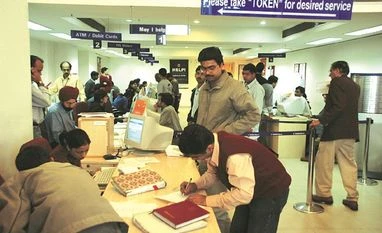
Five-day banking week proposal unlikely to be implemented in FY26

The official further explained that such a change could negatively impact banking services, particularly on Saturdays, which remains a critical day for many customers to complete their banking txns

bank customers, banking, bank branch, bank services, banks
“Many customers prefer to visit branches on Saturdays for their physical banking needs, even with the increasing digital presence,” the official noted, stressing on the importance of maintaining in-branch service.
Harsh Kumar Delhi
3 min read Last Updated : Apr 08 2025 | 8:43 AM IST
The Union finance ministry has indicated that the proposed policy of a five-day banking week will not be implemented in 2025-26 (FY26), citing potential disruptions to banking operations, according to sources.
 
A senior government official said: “While discussions with the Indian Banking Association (IBA) are ongoing, the five-day banking initiative is unlikely to come into effect this year.” 
The official added that such a change could negatively impact banking services, particularly on Saturdays, which is a critical day for many customers to complete their banking transactions.
  “Many customers prefer to visit branches on Saturdays for their physical banking needs, even with the increasing digital presence,” the official noted, stressing on the importance of maintaining in-branch service.
  The issue is compounded by the current challenges in the banking sector, especially the difficulties banks face in acquiring and retaining deposits. The official pointed out that efforts to boost business through door-to-door campaigns and physical presence have become vital to maintaining growth.
  The comments follow calls from bank employees’ unions for the implementation of a five-day work week. 
  In March 2024, the All India Bank Officers’ Confederation (AIBOC) raised concerns, stating that the unions had consistently demanded that the IBA ensure the introduction of a five-day work week as part of the Bipartite Settlement.
  The unions had signed a memorandum of understanding with the IBA in December 2023, calling for Saturdays to be declared holidays under the Negotiable Instruments Act.
  AIBOC said that IBA had recommended the proposed change to the government, which is now awaiting approval from the Reserve Bank of India (RBI) and the Centre.
  A senior official from the IBA said: “We are in continuous talks with both the government and employee unions, but as of now, no final decision has been reached.”
  The demand for a five-day work week comes amid a shift in the banking industry’s staffing pattern. Official data shows public sector banks (PSBs) have seen a drastic reduction in workforce over the past decade.
  The number of clerks has dropped from 398,801 in 2013 to 246, 965 in 2024, a decrease of 151,836 employees. Sub-staff numbers have dropped from 153,628 in 2013 to 94,348 in 2024. Overall, PSBs have seen a reduction of 139,811 employees in this period.
  Conversely, private sector banks have seen a substantial increase in staff, with employee numbers rising from 229,124 in 2013 to 846,530 in 2024 — an increase of 617,406.
  In March, Rajya Sabha member Sandosh Kumar P of the Communist Party of India asked the finance minister to address bank unions’ demands, including filling vacancies in PSBs and five-day work week.
  Raising the issue during the Zero Hour of a Rajya Sabha session, Kumar said the United Forum of Bank Unions — an umbrella organisation of nine unions — had called for a 48-hour bank strike on March 24-25 to press for 
their demands.  
One of the major concerns raised was the shortage of staff in PSBs, he said. 

BEHIND THE SCENE

- The conversation about implementing a five-day work week comes amidst a shift in the banking industry’s staffing levels 
- According to official data, PSBs have seen a drastic reduction in workforce over last decade
  - From 398,801 clerks in 2013, the number dropped to 246,965 in 2024
  - Sub-staff levels declined from 153,628 in 2013 to 94,348 in 2024
 

One subscription. Two world-class reads.

Already subscribed? Log in

Subscribe to read the full story →
*Subscribe to Business Standard digital and get complimentary access to The New York Times

Smart Quarterly

₹900

3 Months

₹300/Month

SAVE 25%

Smart Essential

₹2,700

1 Year

₹225/Month

SAVE 46%
*Complimentary New York Times access for the 2nd year will be given after 12 months

Super Saver

₹3,900

2 Years

₹162/Month

Subscribe

Renews automatically, cancel anytime

Here’s what’s included in our digital subscription plans

Exclusive premium stories online

  • Over 30 premium stories daily, handpicked by our editors

Complimentary Access to The New York Times

  • News, Games, Cooking, Audio, Wirecutter & The Athletic

Business Standard Epaper

  • Digital replica of our daily newspaper — with options to read, save, and share

Curated Newsletters

  • Insights on markets, finance, politics, tech, and more delivered to your inbox

Market Analysis & Investment Insights

  • In-depth market analysis & insights with access to The Smart Investor

Archives

  • Repository of articles and publications dating back to 1997

Ad-free Reading

  • Uninterrupted reading experience with no advertisements

Seamless Access Across All Devices

  • Access Business Standard across devices — mobile, tablet, or PC, via web or app

Topics :Banking sectorBanksFinance Ministry

Next Story