
India, US to hold sectoral talks under trade pact in coming weeks: Govt
Sectoral expert-level engagements under the BTA will start virtually in the coming weeks and pave the path for an early negotiating round in person
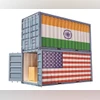 "India, US to hold sectoral talks under trade pact in coming weeks: Govt")
Explore Business Standard

Associate Sponsors
Sectoral expert-level engagements under the BTA will start virtually in the coming weeks and pave the path for an early negotiating round in person
India and the US have decided to hold sectoral talks under the proposed bilateral trade agreement (BTA) in the coming weeks, the commerce ministry said on Saturday.
It was decided after the four-day negotiations of senior officers from India and the US. These negotiations ended on Saturday here.
"Sectoral expert-level engagements under the BTA will start virtually in the coming weeks and pave the path for an early negotiating round in person," the ministry said. ALSO READ: India, US officials conclude round of talks on proposed trade pact: Report
In order to realise the shared objective of promoting growth that ensures fairness, national security and job creation, both sides have through four days of discussions here broadly come to an understanding on the next steps towards a mutually beneficial, multi-sector BTA, with the goal to finalise its first tranche by fall 2025, it said.
During these discussions, the two sides held a productive exchange of views on deepening bilateral cooperation in priority areas, including increasing market access, reducing tariff and non-tariff barriers and deepening supply chain integration in a mutually beneficial manner, it added.
A team of US officials, headed by Assistant US Trade Representative for South and Central Asia Brendan Lynch, was here for the negotiations.
The meeting follows the visit of Commerce and Industries Minister Piyush Goyal to Washington from March 4-6 during which he met his US Trade Representative Jamieson Greer and Commerce Secretary Howard Lutnick and subsequent video conferences between the two sides.
"The successful conclusion of the discussions reflects progress in efforts to expand India-US bilateral trade and investment relations to promote prosperity, security and innovation in both the countries," the ministry said.
These steps are designed to unlock new opportunities for businesses, drive bilateral economic integration, and reinforce the economic partnership between the two trading partners.
"India and the US expressed satisfaction with the outcomes of the meeting and reaffirmed their dedication to ongoing collaboration. Both sides look forward to building on this milestone in the coming months to finalise the BTA, ensuring it aligns with the shared goals of prosperity, resilience, and mutual benefit," it added.
On Friday, US President Donald Trump described Prime Minister Narendra Modi as a "very smart man" and a "great friend of mine" while emphasising that tariff talks would "work out very well between India and our country".
The remarks assume significance since Trump has repeatedly criticised the alleged high tariffs charged by India and other countries on American goods. He has announced plans to impose reciprocal tariffs on its key trading partners, including India, on April 2.
"India is one of the highest tariffing nations in the world. It's brutal, it's brutal. They're very smart. He (Modi) is a very smart man and a great friend of mine. We had very good talks. I think it's going to work out very well between India and our country," Trump said.
India and the US are aiming to conclude the first phase of the agreement by the fall of 2025 (September-October). They have also set a target to more than double bilateral trade to $500 billion by 2030 from the current over $190 billion.
While the US has demanded duty concessions in sectors like certain industrial goods, automobiles, wines, petrochemical products, dairy, agriculture items such as apples, tree nuts, and alfalfa hay; India may look at duty cuts for labour-intensive sectors like textiles.
Indian industry and exporters have asked the government to protect them against the USA's reciprocal tariffs. They have sought exemption from those tariffs as it would hurt them severely as the US is India's largest trading partner.
The US is pushing India to negotiate a large and grand bilateral trade agreement while seeking to open the agriculture sector for American businesses.
According to experts, India is unlikely to include dairy and agriculture in trade negotiations as it is a politically sensitive sector.
The US agri exports to India was $1.6 billion in 2024. Key exports include almonds (in shell -- $868 million); pistachios ($121 million), apples ($21 million), ethanol (ethyl alcohol $266 million).
In June 2023, India announced removal of retaliatory import duties on eight US products, including chickpeas, lentils, and apples, which were imposed in 2019 in response to America's measure to increase tariffs on certain steel and aluminium products.
In 2024, India's main exports to the US included drug formulations, biological ($8.1 billion), telecom instruments ($6.5 billion), precious and semi-precious stones ($5.3 billion), petroleum products ($4.1 billion), gold and other precious metal jewellery ($3.2 billion), ready-made garments of cotton including accessories ($2.8 billion), and products of iron and steel ($2.7 billion).
Imports included crude oil ($4.5 billion), petroleum products ($3.6 billion), coal, coke ($3.4 billion), cut and polished diamonds ($2.6 billion), electric machinery ($1.4 billion), aircraft, space crafts and parts ($1.3 billion), and gold ($1.3 billion). In 2023-24, the US was the largest trading partner of India with $119.71 billion bilateral trade in goods ($77.51 billion worth of exports, $42.19 billion of imports, with $35.31 billion trade surplus).
India has received $67.8 billion in foreign direct investments from America during April 2000 and September 2024.
(Only the headline and picture of this report may have been reworked by the Business Standard staff; the rest of the content is auto-generated from a syndicated feed.)
First Published: Mar 29 2025 | 6:19 PM IST

