Low base, safeguard duty to prop steel output this financial year

Exports are also expected to grow 28-30 per cent this fiscal due to better realisation opportunities in key markets, particularly the European Union
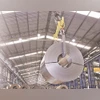
Steel
Though key user segments, such as construction and infrastructure, are expected to cool off, we maintain a stable outlook for the sector, supported by better operating margin for flat-steel players, range-bound raw material prices and healthy financial metrics across the board.
Crisil Intelligence
4 min read Last Updated : Dec 30 2025 | 11:16 PM IST
Domestic steel production is slated to grow 10.5-11.5 per cent this fiscal, driven by a low base and the government’s protective trade measures, even as demand growth moderates to 7-8 per cent, after recording a double-digit rise over the past four years, and global markets remain flat. 
Though key user segments, such as construction and infrastructure, are expected to cool off, we maintain a stable outlook for the sector, supported by better operating margin for flat-steel players, range-bound raw material prices and healthy financial metrics across the board. 
Implementation of the safeguard duty on non-alloy flat-steel products shrank imports 30-32 per cent this fiscal, resulting in a derived domestic demand. This significantly boosted production with domestic players stepping in to meet this demand. 
Exports are also expected to grow 28-30 per cent this fiscal due to better realisation opportunities in key markets, particularly the European Union. Traders are rushing to utilise regional import quotas as free allocation under the Carbon Border Adjustment Mechanism may be reduced from January. 
Domestic steel demand rose 7.8 per cent in the first eight months of this fiscal and is seen steady for rest of the year, led by moderation in key steel-consuming segments such as urban housing, infrastructure, engineering goods and fabrication. 
Growth in the building and construction segment has slowed this fiscal, with fewer project launches over the past few years.
As estimated construction period in real estate is two-three years from the date of launch of a project on average, steel demand from the segment may remain muted over the next fiscal too. 
Growth in demand from the infrastructure segment is estimated to have slowed to 9-10 per cent this fiscal from 14 per cent last fiscal, while the engineering goods and fabrication segment also showed signs of cooling off. On a positive note, demand from the auto sector has improved with the rationalisation of Goods and Services Tax rates boosting vehicle demand. 
Worldwide, steel demand has been sh­aky and is estimated to have remained flat in 2025, pulled down by trade uncertainties.
For instance, China, the largest producer and consumer of steel, saw demand shrink 2.5-3.5 per cent in 2025. In 2026, global steel demand is expected to grow 1-2 per cent, supported by better economic growth. 
However, slower growth in demand does not indicate that performance of the domestic steel sector will be weak. The market remains optimistic, underpinned by investment in infrastructure and expectation of easy financing conditions. The global economy has shown resilience, as evident in upward revision of gross domestic product (GDP) estimates by multilateral organisations and rating agencies. 
Momentum in domestic demand is likely to continue across segments next fiscal with steel demand seen up 7.5-8.5 per cent.
However, growth in production could slow to 7-9 per cent next fiscal with the rate and timeline for safeguard duty levy likely to impact production estimates. Government spending on infrastructure, private capex, and tariff and trade uncertainties remain monitorable. 
Nonetheless, domestic prices of flat steel are expected to remain steady this fiscal and rise to 2 per cent next fiscal, owing to the projected global price revival and India’s resilient growth amid trade uncertainties. Long-steel prices, meanwhile, are likely to decline 6-8 per cent and a further 3-5 per cent, as competition intensifies amid moderating demand growth. 
Despite these headwinds, credit outlook for domestic steelmakers remains stable, supported by robust balance sheets and timely government intervention. Profitability of flat-steel players, impacted by cheaper imports in fiscal 2025, may rise by ₹1,000-1,300 per tonne this fiscal, driven by safeguard duties and healthy export volume. 
Meanwhile, the long-steel players have remained largely insulated from the trade dynamics, and the fully integrated and br­a­nded long-steel players will be able to maintain stable profitability even as competition intensifies. The sector will continue to benefit from the range-bound raw material prices, primarily iron ore and coking coal. 
The financial metrics of steelmakers are poised to improve as well. Overall net leverage peaked at a five-year high of 2.8 times last fiscal on account of suppressed profitability and an intensive capex cycle. It is projected to moderate to a healthier 2.4-2.6 times over this fiscal and the next, driven by better profitability and stable debt, as new capacities start generating cash flow and internal accruals fund majority of the planned capex. 
Any sharper-than-expected decline in global steel prices or spurt in imports will bear watching.

One subscription. Two world-class reads.

Already subscribed? Log in

Subscribe to read the full story →
*Subscribe to Business Standard digital and get complimentary access to The New York Times

Smart Quarterly

₹900

3 Months

₹300/Month

SAVE 25%

Smart Essential

₹2,700

1 Year

₹225/Month

SAVE 46%
*Complimentary New York Times access for the 2nd year will be given after 12 months

Super Saver

₹3,900

2 Years

₹162/Month

Subscribe

Renews automatically, cancel anytime

Here’s what’s included in our digital subscription plans

Exclusive premium stories online

  • Over 30 premium stories daily, handpicked by our editors

Complimentary Access to The New York Times

  • News, Games, Cooking, Audio, Wirecutter & The Athletic

Business Standard Epaper

  • Digital replica of our daily newspaper — with options to read, save, and share

Curated Newsletters

  • Insights on markets, finance, politics, tech, and more delivered to your inbox

Market Analysis & Investment Insights

  • In-depth market analysis & insights with access to The Smart Investor

Archives

  • Repository of articles and publications dating back to 1997

Ad-free Reading

  • Uninterrupted reading experience with no advertisements

Seamless Access Across All Devices

  • Access Business Standard across devices — mobile, tablet, or PC, via web or app

Topics :Industry NewsSteel producersSteel Industry

Next Story


