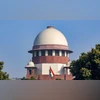
The Supreme Court on Friday held that spectrum cannot be treated as a corporate asset capable of being restructured under the Insolvency and Bankruptcy Code (IBC), placing it beyond the insolvency asset pool.
“We hold that Spectrum allocated to TSPs (Telecom Service Providers) and shown in their books of account as an ‘asset’ cannot be subjected to proceedings under Insolvency and Bankruptcy Code, 2016," a bench of Justice PS Narasimha and Justice AS Chandurkar said in their ruling.
Framing the constitutional context, the court observed, “We could demystify the legal challenge by first understanding spectrum as a material resource, precisely as what our Constitution refers to as the material resource of the community.”
The judgment arose from the insolvency of Aircel Limited, Aircel Cellular Limited and Dishnet Wireless Limited. After defaulting on licence fee and spectrum usage charges, the companies entered voluntary insolvency in 2018. The Department of Telecommunications (DoT) filed claims of nearly ₹9,900 crore towards unpaid dues. Lenders led by State Bank of India argued that spectrum usage rights, reflected as intangible assets, could be dealt with under the IBC framework.
The SC judgement has cleared the path for DoT to take back airwaves allocated to Aircel and Reliance Communications and Videocon, said sources aware of the development, who added that the DoT was examining the apex court's order and would begin proceedings of taking the spectrum back soon.
The DoT would take a legal opinion before issuing official communication for terminating the licences and spectrum assignments to the companies.
"Since they haven't paid any dues and there are other non-compliances, the grounds for termination will be determined, after which licences will be cancelled and spectrum will be taken back," one of the sources said, asking not to be named. One or more conditions may be taken into account for cancelling the licences. Licences in some circles that had earlier expired were extended by the courts, so those would now be formally cancelled.
However, the spectrum returning to the government will not be put up for auction in the upcoming round, the sources said, as the process for the next round had already begun. While the spectrum locked in litigation has been freed, the resolution of the legal entity will continue to be decided by the IRP, and the DoT will not interfere in that issue, the sources added.
Insolvency law cannot override telecom regime
In its ruling on Friday, the Supreme Court Bench cautioned against allowing the IBC to recast sovereign resource governance, and said that the statutory regime under IBC cannot be permitted to make inroads into the telecom sector and rewrite and restructure the rights and liabilities arising out of administration, usage, and transfers of spectrum, which operate under an exclusive legal regime concerning telecommunications.
"The disharmony caused by applying IBC to the telecom sector, which operates under a different legal regime, was never intended by the Parliament," the bench added.
Referring to Section 4 of the Indian Telegraph Act, 1885, the court reiterated that the Union retains exclusive privilege over telecommunication systems.
The court clarified that the grant of a telecom licence, including the right to use spectrum, does not affect a transfer of ownership or proprietary interest.
"What is conferred is a limited, conditional and revocable privilege to use spectrum," it said.
Accounting treatment does not determine legal character, the Bench said.
“Recognition of spectrum licencing rights as an intangible asset in the balance sheet is not determinative of recognition/transfer of ownership of the spectrum to TSPs," the bench said.
What it means
The ruling cements the position that spectrum, described by the court as a “material resource of the community”, belongs to the public, with the government acting as trustee. Insolvency proceedings cannot be used to reorganise ownership or control of such a resource to avoid statutory dues.
Telecom companies in insolvency cannot invoke the Section 14 moratorium of IBC to stall licence fee, spectrum usage charge or AGR dues. Resolution plans must comply with telecom statutes and obtain government approval before any transfer of usage rights.
Stakeholder impact
Legal experts said the decision will materially reshape telecom resolution strategy.
Ankit Rajgarhia, designate partner, Bahuguna Law Associates, said the ruling reinforces sovereign control over spectrum and affirms that public-resource regulation cannot be overridden by insolvency law. Resolution plans must now be structured strictly in line with telecom statutes and DoT approval requirements, he noted.
Lenders should stop underwriting recoveries on spectrum, said Shri Venkatesh, founding partner, SKV Law Offices. Banks are likely to face deeper haircuts in distressed telecom cases as spectrum recoveries are now off the table, he said, adding that future lending to the sector may carry higher risk premia, tighter covenants and stronger regulatory compliance triggers.
According to B. Shravanth Shanker, managing partner at B. Shanker Advocates LLP, the ruling makes clear that spectrum is not private property but a licenced right of use. “The insolvency process cannot override the government’s statutory control over natural resources. Since telcos do not own spectrum, they cannot pass it on to creditors to settle private debts if licence conditions and government dues are not met,” he said.
Red line on the spectrum
- The Bench held that IBC cannot override the telecom regime, reaffirming the Union’s exclusive privilege over spectrum
- The SC ruled that spectrum is a public resource
- The apex court Bench cautioned against allowing the IBC to recast sovereign resource governance
- The SC judgment has cleared the path for DoT to take back airwaves allocated to Aircel and Reliance Communications and Videocon

 "Telecom spectrum can't be treated as asset under IBC: Supreme Court")



