Steelmakers rework production, strengthen compliance as CBAM kicks in

Companies secure emissions verification, shift to low carbon routes even as lawyers flag risks for small exporters
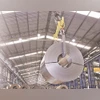
Steel
Under CBAM, exporters must report verified emissions data for steel and aluminium sold into the EU.
Saket Kumar New Delhi
4 min read Last Updated : Jan 06 2026 | 8:29 PM IST
Indian steel exporters supplying to the European Union (EU) are already reworking production processes, certification systems, and supply chains to deal with the EU’s Carbon Border Adjustment Mechanism (CBAM), even as lawyers warn that legal, compliance, and commercial risks could intensify sharply now that the levy has entered its payment phase from January 1, 2026.
 
A senior executive at a top Indian steelmaker told Business Standard that the company has already secured EU-recognised plant-level emissions verification and begun exporting lower-emission steel to Europe, aligning shipments in advance with CBAM requirements.
 
“Our company has tied up with an international certification body to issue environmental product declarations (EPDs), documents that disclose the embedded carbon, or total greenhouse gas emissions generated during steel production,” said the executive, who did not wish to be identified. “EU customers had started pushing much earlier. We did not want to wait till 2026,” he added.
 
Under CBAM, exporters must report verified emissions data for steel and aluminium sold into the EU. If data is not verified by EU-accredited agencies, authorities apply default values based on the worst-performing producers in Europe, significantly raising the payable carbon levy. “If verified emissions data is not available, default values get applied and that can make exports unviable. That risk ultimately gets passed back to the exporters,” the executive said.
 
To limit exposure, the company is segmenting production based on destination markets. It is exporting steel produced through electric arc furnaces (EAFs), which use steel scrap and emit less carbon, to Europe while using traditional blast furnace routes for other regions. The firm has also invested in rooftop solar installations and coal gasification units to reduce emissions intensity, and is designing new plants as low-emission facilities.
 
However, the executive acknowledged that CBAM compliance will raise costs, particularly for EAF-based steel. “There will definitely be an increase in production costs, particularly when steel is made through EAFs, although it is difficult to quantify the impact at this stage,” he said.
 
Executives at Tata Steel echoed similar pressures in an analyst call recently following the company’s results for the second quarter of 2025-26 (Q2FY26), highlighting that carbon costs are already becoming a material factor in European steelmaking. “There is already a carbon cost coming in, and as carbon prices rise, the economic case for electric arc furnaces becomes stronger. Typically, the cost difference between an EAF route and a blast furnace route is about $100 per tonne,” said T V Narendran, managing director and chief executive officer (MD&CEO) of Tata Steel.
 
Legal experts advising exporters on CBAM warn that not all companies are equally prepared and that compliance involves significant complexity. “From the companies we are advising, determining ‘embedded carbon’ is far from straightforward. We are seeing that differences in ‘accounting boundaries’ — what is included versus excluded — can lead to divergent numbers between the exporter, the importer, and the EU verifier,” said Ankur Arora, partner at Argus Partners.
 
Stress is already visible among exporters, prompting a rise in legal consultations. “We have seen an increased number of queries from clients. Contract renegotiation is becoming imperative as CBAM’s payment phase fundamentally alters the economics of EU-India trade,” said Shashi Mathews, partner at CMS INDUSLAW. Without protective pricing and indemnity clauses, exporters, particularly smaller firms, may be forced to absorb carbon costs, squeezing margins, Mathews added.
 
Arora also flagged what he described as a looming “verification vacuum”, citing a severe shortage of EU-accredited emissions verifiers in India. Once CBAM enters its definitive phase, self-reported emissions data will no longer be accepted.
 
“If exporters cannot secure a verification slot, their data gets rejected, triggering default values that make exports commercially unviable,” he said. If actual data is not verified, the EU applies punitive default values based on the worst-performing European producers, legally binding importers to pay higher taxes that are inevitably passed down to Indian exporters.
 
India, along with Brazil and South Africa, has challenged the compatibility of CBAM with World Trade Organisation (WTO) rules, arguing that it violates non-discrimination principles and the concept of common but differentiated responsibilities under the Paris Agreement. However, experts say near-term relief is unlikely given WTO’s weakened dispute-resolution system. “In the meantime, exporters should assume CBAM will remain operational, and focus on compliance and constructive engagement with EU authorities rather than awaiting litigation outcomes,” Mathews said.

One subscription. Two world-class reads.

Already subscribed? Log in

Subscribe to read the full story →
*Subscribe to Business Standard digital and get complimentary access to The New York Times

Smart Quarterly

₹900

3 Months

₹300/Month

SAVE 25%

Smart Essential

₹2,700

1 Year

₹225/Month

SAVE 46%
*Complimentary New York Times access for the 2nd year will be given after 12 months

Super Saver

₹3,900

2 Years

₹162/Month

Subscribe

Renews automatically, cancel anytime

Here’s what’s included in our digital subscription plans

Exclusive premium stories online

  • Over 30 premium stories daily, handpicked by our editors

Complimentary Access to The New York Times

  • News, Games, Cooking, Audio, Wirecutter & The Athletic

Business Standard Epaper

  • Digital replica of our daily newspaper — with options to read, save, and share

Curated Newsletters

  • Insights on markets, finance, politics, tech, and more delivered to your inbox

Market Analysis & Investment Insights

  • In-depth market analysis & insights with access to The Smart Investor

Archives

  • Repository of articles and publications dating back to 1997

Ad-free Reading

  • Uninterrupted reading experience with no advertisements

Seamless Access Across All Devices

  • Access Business Standard across devices — mobile, tablet, or PC, via web or app

Topics :Industry NewsSteel IndustrysteelSteel exportssteelmakers

Next Story



