4 min read Last Updated : Feb 18 2026 | 10:21 AM IST
Steel stocks price movement today
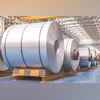
Shares of steel companies were in demand and trading higher by up to 2 per cent on the BSE in Wednesday’s intra-day trade on a healthy business outlook.
Tata Steel, Steel Authority of India (SAIL), JSW Steel and Jindal Steel were up in the range of 1 to 2 per cent. Most of these stocks are trading close to their respective 52-week highs. In comparison, the BSE Sensex was trading flat or up 0.01 per cent at 83,461 at 09:41 AM.
In the past one month, these four stocks have outperformed the market, surging between 7 per cent and 16 per cent on the BSE. In comparison, the benchmark Sensex was up 0.25 per cent, while the BSE Metal index gained 3.5 per cent during the same period.
Among individual stocks, Jindal Steel stock hit an all-time high of ₹1,230, gaining 2 per cent on the BSE in Wednesday’s intra-day trade. In the past one month, the stock has rallied 16 per cent. READ STOCK MARKET UPDATES TODAY LIVE
What’s driving steel stocks?
Steel is a strategic commodity because it underpins core sectors of the economy - construction, infrastructure, transportation, energy, and defence. It is essential for building roads, bridges, railways, power plants, automobiles, ships, and military equipment, making it fundamental to both economic development and national security.
Countries with strong domestic steel capacity are better positioned to manage supply chain disruptions, geopolitical tensions, and large scale infrastructure programs. As a result, governments often treat steel not merely as a cyclical industrial product, but as a critical pillar of industrial policy and strategic autonomy.
Steel remains a strategic commodity, and rising protectionism is insulating domestic producers globally. In India, policy support, safeguard measures, and the likelihood of regulatory adjustments are improving industry visibility, while long-term demand growth and protected downside in prices are driving a structural rerating, like past commodity cycles like that of cement, according to analysts at InCred Equities.
The global steel industry is shifting towards policy-driven protection, with major economies erecting trade barriers to counter Chinese overcapacity, thereby insulating domestic producers and structurally supporting prices. India reflects this trend through safeguard duties, quality controls, and anti-dumping measures, justifying a sector upgrade despite initial scepticism driven by the absence of near-term earnings revisions, the brokerage firm said in its metals & mining sector update.
With long-term demand growth requiring massive capacity expansion, sustainable steel pricing and policy support are essential, and expectations of amendments to The Mines and Minerals (Development and Regulation Act), or MMDR Act, to preserve captive iron ore linkages further reinforces the structural rerating thesis—similar to how cement stocks rerated once the price downside was protected, analysts said. ALSO READ | Easy Trip Planners shares zoom 11% in trade; up over 40% in two days
Steel sector Q3 results review
The domestic steel players reported a sequential decline in realizations of ~₹2,500-3,000/ton in Q3FY26 due to steel oversupply and higher low-cost steel imports, impacting domestic steel price. Moreover, operating performance was further impacted by higher coking coal cost of $4-5 per ton. Despite this, most steel companies limited EBITDA/ton decline to ~₹1,800 QoQ through better product mix and cost optimization. However, Jindal Steel saw a sharper ~₹4,000/ton QoQ decline due to adverse mix, lower by-product sales, and one-time blast furnace commissioning costs, ICICI Securities said in its special report.
Going ahead, the government imposing 12 per cent safeguard duty in mid-December 2025 has supported domestic steel prices, which have risen ~₹3,500/ton QoQ. However, a $15-20/ton QoQ increase in coking coal prices may cap margin gains. Overall, the brokerage firm expects EBITDA/ton improvement of ~₹1,500-₹2,000 per ton for domestic steel players in Q4FY26. Disclaimer: View and outlook shared on the stock belong to the respective brokerages and are not endorsed by Business Standard. Readers discretion is advised.

 "Steel stocks SAIL, Tata, JSL, JSW, Jindal gain up to 2%; here's why")


