Strong growth and margin expansion ahead for Hindustan Aeronautics

The aircraft will have indigenous content of over 64 per cent, and this is over and above a previous contract for 83 LCA Mk-1A aircraft signed in January 2021
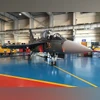
HAL, Tejas, Hindustan Aeronautics Ltd
HAL's revenue booking for the Tejas Mk-1A should begin from October 2026, and it should see a sharp improvement once the engine supply from GE normalises.
Devangshu Datta Mumbai
4 min read Last Updated : Sep 26 2025 | 10:43 PM IST
The Ministry of Defence (MoD) has signed a contract with Hindustan Aeronautics Ltd (HAL) for the procurement of 97 LCA (Light Combat Aircraft) Mk-1A aircraft worth ₹62,400 crore (excluding taxes). As part of the contract, 68 fighters and 29 twin seaters and associated equipment will be procured. The delivery will start in the financial year 2028 (FY28) and would be completed in over six years. 
The acquisition was approved by the Cabinet Committee on Security in August 2025. The aircraft will have indigenous content of over 64 per cent, and it is over and above a previous contract for 83 LCA Mk-1A aircraft signed in January 2021. Furthermore, advanced, indigenously developed systems such as the UTTAM Active Electronically Scanned Array (AESA) Radar, Swayam Raksha Kavach, and control surface actuators will also be integrated, bolstering the indigenisation policy. 
The project will be supported by a vendor base of close to 105 Indian firms directly engaged in the manufacturing of components and an additional 67 key components are being indigenised. 
HAL’s earlier order for 83 LCA Mk1A aircraft has faced significant delays owing to the delays in supply of F404-IN20 engines by General Electric. However, GE has now started supplying engines. GE has supplied three engines so far and is likely to deliver seven more by December 2025. Two LCA Mk1A aircraft are currently undergoing weapon trials. Additionally, 13 LCA Mk1A aircraft have already completed their first trial flight using CAT-B F-404 engines. 
HAL’s order book amounts to ₹2.45 trillion by end of Q2FY26, implying a book-to-bill ratio of 32 times based on FY25 revenue. Given the positive development of supply of engines by GE, the delivery of LCA Mk1A aircraft should speed up. 
IAF plans to have a fleet of at least 42 squadrons (currently 31). With the retirement of Mig-21 fighter jets, the IAF combat strength will drop to 29 squadrons. The requirement of 11 additional squadrons and replacement of existing squadrons of Mirage 2000, Jaguar & MiG-21 provides HAL with an opportunity to produce 300-plus aircrafts, including Tejas Mk-1A, Tejas Mk II, and AMCA (5th Gen), over the next 10-15 years. As a monopoly play in aerospace, HAL is a key beneficiary. HAL’s revenue booking for Tejas MK-IA should begin from Oct 2026 and it should see a sharp improvement once the engine supply from GE normalises. HAL is scaling up its capacity to 24 aircraft annually. HAL has also entered into a MoU with GE for setting up a manufacturing facility in India to manufacture F414 engines for LCA Tejas MK II aircraft. 
Post-signing, HAL will receive 80 per cent transfer of technology (ToT) for the F414 engine with the potential to reach 100 per cent over the next decade. This ToT is estimated to be worth $1billion and will result in the new fighters having an indigenous content of around 75 per cent. Additionally, HAL is also working on a JV with Safran to co-develop and co-produce turboshaft engines in India with focus on Indian Multi Role Helicopter (IMRH) and Deck-Based Multi-Role Helicopters (DBMRH). The contract for 97 additional jets will also lead into a related order of $ for 113 new F404 engines with GE to be finalised in a few weeks. 
As volumes rise, HAL should get margin expansion. Net-net, order book expansion and progress on Tejas deliveries significantly improve HAL’s growth trajectory.  Some 28 private sector firms have expressed interest in collaborating with HAL for development of a fifth-generation stealth fighter (AMCA project). The ambitious ₹60,000 crore Su-30 avionics upgrade project is in the approval phase, with aircraft orders likely by FY31. HAL has a clear roadmap for future defense platforms, enabling it to align its R&D, production, and development efforts, with steady order inflows and long-term revenue visibility. Revenue growth should be well over 20 per cent until FY28 while operating profit margin would be between 28-29 per cent. 
 

One subscription. Two world-class reads.

Already subscribed? Log in

Subscribe to read the full story →
*Subscribe to Business Standard digital and get complimentary access to The New York Times

Smart Quarterly

₹900

3 Months

₹300/Month

SAVE 25%

Smart Essential

₹2,700

1 Year

₹225/Month

SAVE 46%
*Complimentary New York Times access for the 2nd year will be given after 12 months

Super Saver

₹3,900

2 Years

₹162/Month

Subscribe

Renews automatically, cancel anytime

Here’s what’s included in our digital subscription plans

Exclusive premium stories online

  • Over 30 premium stories daily, handpicked by our editors

Complimentary Access to The New York Times

  • News, Games, Cooking, Audio, Wirecutter & The Athletic

Business Standard Epaper

  • Digital replica of our daily newspaper — with options to read, save, and share

Curated Newsletters

  • Insights on markets, finance, politics, tech, and more delivered to your inbox

Market Analysis & Investment Insights

  • In-depth market analysis & insights with access to The Smart Investor

Archives

  • Repository of articles and publications dating back to 1997

Ad-free Reading

  • Uninterrupted reading experience with no advertisements

Seamless Access Across All Devices

  • Access Business Standard across devices — mobile, tablet, or PC, via web or app

Topics :The CompassHindustan AeronauticsHindustan Aeronautics LtdMarkets

Next Story



