Flexible, wearable: the era of anywhere and everywhere battery is upon us

They have applications in several fields, including wearable medical devices and biomedical sensors
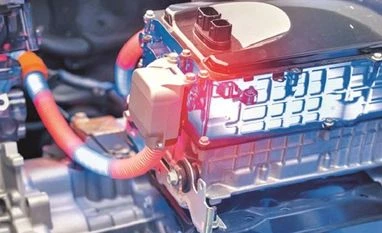
battery
Pranjal Sharma
4 min read Last Updated : Jul 24 2023 | 8:31 AM IST
Remember the time when consumers could detach batteries from mobile phones? If the phone was old or overused, the battery was simply replaced. 

Later, phone makers sealed the batteries, but the concept of battery swapping has been reinvented. Now, battery swapping and changing have emerged as a popular concept for electric passenger cars and two-wheelers.

From phones to wearables, batteries have become an integral part of our daily lives. Batteries are becoming flexible to widen their usage in unprecedented ways. 
 
A recent World Economic Forum (WEF) report on Emerging Technologies of 2023 put flexible batteries on top of the list. 

“Flexible batteries have applications in a growing number of fields, including wearable medical devices and biomedical sensors, flexible displays and smartwatches. Health-related applications powered by these batteries could transmit data wirelessly to healthcare providers, facilitating remote patient monitoring,” said the report.

“Flexible batteries that can be integrated into the fabric of jackets, shirts or other apparel will be required to power emerging textile-based electronics with capabilities ranging from built-in heating systems to health monitoring,” it said.

Several companies are developing and commercialising flexible-battery technology, including LG Chem, Samsung SDI, Apple, Nokia, Front Edge Technology, STMicroelectronics, Fullriver Battery New Technology, and Blue Spark Technologies. Samsung SDI produces flat and curved batteries in various sizes to enable a variety of wearable device designs. The company is experimenting with various sizes and shapes to fit new wearable consumer electronics. 

There are reports that Apple has filed a new patent for a flexible battery pack and a display that wraps around the wrist. 

Flexible batteries can take many forms. The Massachusetts Institute of Technology (MIT) said it had developed innovative new batteries. Its researchers developed a rechargeable lithium-ion battery in the form of an ultra-long fibre that can be woven into fabrics. 

The battery can enable a wide variety of wearable electronic devices. It might even be used to make 3D-printed batteries in almost any shape. 
 
“In a proof of concept, the team behind the new battery technology has produced the world’s longest flexible fibre battery, 140 metres long, to demonstrate that the material can be manufactured to arbitrarily long lengths,” MIT said.

The thin films and printed batteries market is worth $180.78 million in 2023 and will rise to $1.13 billion by 2033, it is predicted. The market size is expected to increase at a compound annual growth rate (CAGR) of 20.2 per cent from 2023 to 2033, according to the Future Market Insights report.

“Thin film and printed batteries have advanced in terms of their density, longevity, and better safety. The key players are driven towards technical improvement by the increased demand for these batteries in electronic gadgets and medical devices, allowing the batteries to become thinner or more flexible,” said the report. 
 
The wearable market is growing rapidly amid a strong trend towards miniaturisation of electronic devices. Wireless earphones and speakers will need lightweight batteries. Sensors are being placed for agriculture use where steady flexible and sturdy batteries will be of utility. 

Experts have said that batteries woven into fibre will warm up clothes. This could be useful in extreme weather conditions. Such clothing can reduce heating bills in cold countries. Home heating is an important factor in the per capita energy demand in many countries. 

A battery for wearables has to be flexible and washable. University of British Columbia researchers have created what could be the first battery that does both. It works even when stretched to twice its normal length, or after being tossed in the laundry.

The era of anywhere and everywhere battery is upon us.


One subscription. Two world-class reads.

Already subscribed? Log in

Subscribe to read the full story →
*Subscribe to Business Standard digital and get complimentary access to The New York Times

Smart Quarterly

₹900

3 Months

₹300/Month

SAVE 25%

Smart Essential

₹2,700

1 Year

₹225/Month

SAVE 46%
*Complimentary New York Times access for the 2nd year will be given after 12 months

Super Saver

₹3,900

2 Years

₹162/Month

Subscribe

Renews automatically, cancel anytime

Here’s what’s included in our digital subscription plans

Exclusive premium stories online

  • Over 30 premium stories daily, handpicked by our editors

Complimentary Access to The New York Times

  • News, Games, Cooking, Audio, Wirecutter & The Athletic

Business Standard Epaper

  • Digital replica of our daily newspaper — with options to read, save, and share

Curated Newsletters

  • Insights on markets, finance, politics, tech, and more delivered to your inbox

Market Analysis & Investment Insights

  • In-depth market analysis & insights with access to The Smart Investor

Archives

  • Repository of articles and publications dating back to 1997

Ad-free Reading

  • Uninterrupted reading experience with no advertisements

Seamless Access Across All Devices

  • Access Business Standard across devices — mobile, tablet, or PC, via web or app

More From This Section

Disclaimer: These are personal views of the writer. They do not necessarily reflect the opinion of www.business-standard.com or the Business Standard newspaper

Topics :electric carbattery technology

Next Story


