Henry Kissinger: An era-defining failure

Nobody who handed the Chinese Communist Party a century of dominance can possibly be remembered as a strategic genius
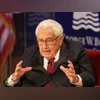
Henry Kissinger
Henry Kissinger
Mihir S Sharma
5 min read Last Updated : Dec 01 2023 | 10:38 PM IST
Much discussion of Henry Kissinger’s life and impact has focused on the evil he committed or enabled — from Cambodia, to Vietnam, to Chile, to Bangladesh. This is understandable. But what it ignores or downplays is how he was also bad at his job. Kissinger had a long life, and eventually survived to see all his big calls shown up as era-defining errors. Oddly, however, this seems to have had no effect on his reputation as a strategic visionary.

It is easy to forget that Kissinger possessed real power, as a senior official, only for six years between 1969 and 1975. United States foreign policy in the 1970s had far more failures than successes, and none of its successes came in that period. Its greatest success of the 1970s, the rapprochement between Egypt and Israel that has survived to this day, happened under Jimmy Carter (who, unlike Kissinger, has survived to see his big call stay a success).

Other than that, even when questions of morality are set aside, there was little that can at this remove be pointed to as a success. The US’ ignominious exit from Vietnam was years too late, came after an unnecessary expansion of its war in Southeast Asia, and gave us in this part of the world an enduring image of what it means to be dependent on the whims of Washington: The line of terrified people looking to get on to the last helicopter out of Saigon as it fell.

Other big calls included the decision to tie the US closely to the Shah of Iran and his increasingly unpopular regime, which ensured America would be the target of the Ayatollahs’ ire for decades to come. In Africa, Kissinger backed a string of white supremacist losers from Angola to Rhodesia, and was recorded complaining, with Richard Nixon, that the US State Department was “anti-white in Africa”. It’s easy to focus on the immorality of this call, as most have done — the real question is how, precisely, a great strategist could have thought it was a winning strategy in the long run. Angola was overrun by Cubans shortly after Kissinger left office, and the white rump state of Southern Rhodesia did not survive the decade. Nor is it the case that, elsewhere in the world — whether in Latin America (where the memory of Allende and Pinochet is still divisive) or in South Asia, which still remembers the “tilt” towards Pakistan of 1971 — can Kissinger have been said to have had any particular insight at all.

And yet he somehow managed to build up a reputation. The late William Pfaff wrote a stinging op-ed in The New York Times after Kissinger released his first book of memoirs in 1979. It begins thus: “No one has said what one might think obvious: that Mr Kissinger was ultimately a failure as Secretary of State. He left Washington with the United States weakened, its prestige and authority diminished. The Vietnam War was lost while he was Secretary of State, as the outcome of policies he conceived or carried out. There were no balancing successes. There were curiously few successes at all. Yet Mr Kissinger is thought a success.”

Thus Kissinger’s unearned status as a diplomatic genius is not a product purely of his longevity. He began to construct it assiduously during and immediately after his time in office.

Kissinger should be remembered not as a diplomat — something he did briefly and badly — but as a consultant and self-promoter. (Two activities that have a very great overlap.) And here he was, indeed, a genius. He recognised early that, once out of power, he would need to pose as a genius about wielding power so those still in power would continue to engage with him; and that such engagement was necessary for Kissinger Associates to drum up business. We still do not know which companies have paid Kissinger Associates for access and advice in the four decades it has been in existence: Its boss has famously refused to serve the US government in any capacity since then because such an appointment might require a full disclosure of his interests and those of his firm.

In the end, Kissinger’s reputation will fall alongside public perception of his biggest ever call: China. He bet the future of the free world on the belief that the Chinese Communist Party (CCP) was a lesser threat than the Communist Party of the Soviet Union. No worse call could have been made. It is one that profited Kissinger and his firm enormously: No other American had the access in the People’s Republic that he had, and companies lined up to benefit from it. But the rest of us lost. Nobody who handed the CCP a century of dominance can possibly be remembered as a strategic genius.

One subscription. Two world-class reads.

Already subscribed? Log in

Subscribe to read the full story →
*Subscribe to Business Standard digital and get complimentary access to The New York Times

Smart Quarterly

₹900

3 Months

₹300/Month

SAVE 25%

Smart Essential

₹2,700

1 Year

₹225/Month

SAVE 46%
*Complimentary New York Times access for the 2nd year will be given after 12 months

Super Saver

₹3,900

2 Years

₹162/Month

Subscribe

Renews automatically, cancel anytime

Here’s what’s included in our digital subscription plans

Exclusive premium stories online

  • Over 30 premium stories daily, handpicked by our editors

Complimentary Access to The New York Times

  • News, Games, Cooking, Audio, Wirecutter & The Athletic

Business Standard Epaper

  • Digital replica of our daily newspaper — with options to read, save, and share

Curated Newsletters

  • Insights on markets, finance, politics, tech, and more delivered to your inbox

Market Analysis & Investment Insights

  • In-depth market analysis & insights with access to The Smart Investor

Archives

  • Repository of articles and publications dating back to 1997

Ad-free Reading

  • Uninterrupted reading experience with no advertisements

Seamless Access Across All Devices

  • Access Business Standard across devices — mobile, tablet, or PC, via web or app

More From This Section

Disclaimer: These are personal views of the writer. They do not necessarily reflect the opinion of www.business-standard.com or the Business Standard newspaper

Topics :BS OpinionObituaryUS politicsInternational Relations

Next Story



