India faces a world of lower growth

In a shifting global landscape marked by tepid growth prospects, India will find it challenging to grow at over 7 per cent
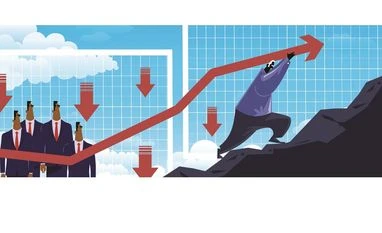
lower growth
Illustration: Binay Sinha
T T Ram Mohan
6 min read Last Updated : Sep 07 2023 | 9:47 PM IST
The growth outlook for India has brightened after the pandemic. There is a sense here and abroad that India’s moment has come. The Reserve Bank of India (RBI) and the chief economic advisor (CEA) are both confident that the economy will grow at 6.5 per cent in FY24. (Some private sector forecasters demur). There is also optimism about the medium-term growth prospects. The CEA believes that a growth rate of 6.5 per cent in the coming decade is possible.

What about the long term? The RBI estimates the economy must grow at an average growth rate of 7.6 per cent for the next 25 years if India is to attain the per capita income level of a developed economy by 2048. How realistic is this goal? 

In 2008, the World Bank published a study on the post-World War II growth experience. The study was conducted by a team led by Nobel Laureate Michael Spence. Three points made in the study are worth highlighting:

* Growth of over 7 per cent, sustained over 25 years, was unheard of until the latter half of the 20th century.

* Only 13 economies managed this feat after WWII. (Of these, about half were small economies whose experiences are not particularly relevant to India).

* Growth of 7 per cent became possible because the world economy was open and integrated and offered a large market for exports.

Clearly, sustaining high growth over a long period is a tall order, and this happens only when global conditions are favourable. The problem for India is that world economic conditions have turned distinctly unfavourable, as the annual Symposium at Jackson Hole last month made clear. There are several trends in the world economy that should worry growth optimists.

First, there is the retreat from globalisation and the open economic environment of the post-War era. The trend began after the global financial crisis of 2007, was accentuated during the pandemic, and has been further reinforced by the conflict in Ukraine. The signs of protectionism are everywhere. Nations are becoming more choosy about who they want to trade with (“friend-shoring”) and are seeking greater self-reliance in items of national security importance (“reshoring”).

Global fragmentation of this sort will exact a toll on world economic growth. The World Trade Organization estimates that if the world economy decouples into two self-contained trading blocs, it would lower the long-run level of real global gross domestic product (GDP) by at least 5 per cent. The International Monetary Fund’s (IMF’s) World Economic Outlook (April 2023) estimates that fragmentation of foreign direct investment (FDI) flows into particular blocs will cause global output to drop by 1 per cent in the medium term and up to 2 per cent in the long term.

Second, public debt levels are higher than before. A paper presented at the Jackson Hole conference estimates that global public debt has risen from 40 per cent a decade ago to 60 per cent today. In the advanced economies, the ratio has gone up from 50 per cent to 85 per cent. The paper contends that these levels of public debt are here to stay in the foreseeable future.

High levels of public debt limit the capacity of governments to react effectively to shocks that cause growth rates to fall — and such shocks are inevitable over the long term. They also limit government ability to finance physical and social infrastructure at levels necessary to sustain long-term growth. Lower-income countries will be impacted more by high debt burdens.

A third factor, flagged by a professor at Stanford in a paper presented at the conference, is especially disconcerting. It appears that mankind is running out of new ideas. It is new ideas, the production of knowledge, that ultimately drive growth. Despite the ever-increasing investments in research, however, growth has not accelerated in the advanced economies. America’s trend growth rate, for instance, is stuck at 2 per cent. Clearly, research productivity is falling.

Moreover, the long-run component of growth, namely, population growth, is falling. Total factor productivity in the US has grown at 1.3 per cent per annum. Of this, population growth accounts for a mere 0.3 percentage points, thanks to low growth in population. There is every prospect of population growth turning negative in many parts of the world. In simple terms, a lower population means that the pool of talent that can produce ideas will shrink.

Optimists think artificial intelligence (AI) will provide a breakthrough by substituting machines that think for people. The author of the paper suggests that we should be cautious about expecting AI to produce a miracle. Automation has been going on for 200 years, but growth has remained stable. He indicates that AI may just help the US sustain a growth rate of 2 per cent for a little longer. 

So much for the long-term outlook. The medium-term outlook is hardly better. Christine Lagarde, the president of the European Central Bank, made the point that inflation is likely to stay at an elevated level for quite some time, thanks to changes in the labour and energy markets.

The supply of labour in the West has fallen after the pandemic. This is because some workers have chosen not to return and others work fewer hours. In the energy market, supplies have fallen as shale oil producers restrict growth and oil producers cut back on production.

At the same time, nations face growing investment needs on account of climate change and defence. Producers are less reluctant than before to raise prices as all face common supply shocks. Reduced supply of labour and energy, greater investment demand and firm behaviour all feed inflation, which, in turn, spells higher interest rates and lower growth.

The international agencies are equally sombre in their medium-term assessments. The IMF sees the world economy growing at 3 per cent over the next five years, well below the average of 3.8 per cent for the past two decades. The World Bank sees global growth falling to a three-decade low in 2030.

Pessimism about global growth in the coming years may be proved wrong. Technological breakthroughs may lift growth. Peace may erupt worldwide. Globalisation may resume its march. As things stand, however, sustaining growth at over 7 per cent over 25 years will be quite a challenge for India.

ttrammohan28@gmail.com

One subscription. Two world-class reads.

Already subscribed? Log in

Subscribe to read the full story →
*Subscribe to Business Standard digital and get complimentary access to The New York Times

Smart Quarterly

₹900

3 Months

₹300/Month

SAVE 25%

Smart Essential

₹2,700

1 Year

₹225/Month

SAVE 46%
*Complimentary New York Times access for the 2nd year will be given after 12 months

Super Saver

₹3,900

2 Years

₹162/Month

Subscribe

Renews automatically, cancel anytime

Here’s what’s included in our digital subscription plans

Exclusive premium stories online

  • Over 30 premium stories daily, handpicked by our editors

Complimentary Access to The New York Times

  • News, Games, Cooking, Audio, Wirecutter & The Athletic

Business Standard Epaper

  • Digital replica of our daily newspaper — with options to read, save, and share

Curated Newsletters

  • Insights on markets, finance, politics, tech, and more delivered to your inbox

Market Analysis & Investment Insights

  • In-depth market analysis & insights with access to The Smart Investor

Archives

  • Repository of articles and publications dating back to 1997

Ad-free Reading

  • Uninterrupted reading experience with no advertisements

Seamless Access Across All Devices

  • Access Business Standard across devices — mobile, tablet, or PC, via web or app

Topics :BS OpinionRBICEAIndian Economy

Next Story



