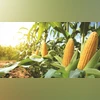
The 'maize revolution' could be India's next productivity-led farm success

Maize has emerged as India's fastest-growing field crop, boosting productivity, sustainability and farmer incomes while offering an alternative to surplus rice cultivation

maize
India’s maize production increased from 22.57 million tonnes in 2015-16 to 55.09 million tonnes in 2025-26, registering a compound annual growth rate of about 9.3 per cent.
Ramesh Chand
5 min read Last Updated : Jun 23 2026 | 10:30 PM IST
Indian agriculture has significantly transformed over the past decade. The average annual growth rate of gross value added in agriculture has reached a historically high level of 4.68 per cent. Growth in farmers’ income has surpassed that of producers in manufacturing and the broader non-agricultural economy. However, this growth story has not been uniform across all segments of agriculture, and there are serious concerns about growth driven by prices instead of technology. 
The acceleration in growth is mainly driven by high-value sectors such as horticulture, dairy, poultry and fisheries. In contrast, the growth performance of field crops — including cereals, pulses, oilseeds, cotton, sugarcane and fibres — has remained relatively sluggish. This is particularly important because field crops occupy about 85 per cent of the gross cropped area and represent a much larger segment of the agriculture and farming population. 
A major reason for the sluggish growth of field crops in recent years is the absence of a major technological breakthrough capable of significantly raising yield potential. Some important crops, such as soybean and cotton, have experienced yield stagnation or even decline in recent years. Against this backdrop, maize is an exception — it has achieved remarkable productivity gains and emerged as the fastest-growing field crop in India. 
India’s maize production increased from 22.57 million tonnes in 2015-16 to 55.09 million tonnes in 2025-26, registering a compound annual growth rate of about 9.3 per cent. This growth resulted from yield improvement, which also attracted expansion in acreage. The pace of maize growth has been more than double that of cereals, pulses and rice, and more than three times the growth achieved in wheat. 
Globally, the breakthrough in maize productivity began much before the Green Revolution. However, India’s maize transformation came relatively late. A turning point occurred in 2007-08 when maize yield increased by nearly 22 per cent in a single year, resulting in a production increase of over 25 per cent. This marked a clear break from the earlier growth trajectory and established maize as a dynamic crop with a promising future. With productivity approaching 4 tonne per hectare, India is catching up with the world. 
An important feature of maize growth is that it has occurred without the kind of price support ecosystem historically provided to rice and wheat. Despite the absence of comparable policy incentives, maize has outperformed both crops in growth. The success reflects the inherent advantages of modern maize hybrids, which have much wider geographical and seasonal adaptability. Unlike many crops, maize can be cultivated in all agriculture zones of the country and during kharif, rabi and summer seasons. 
While productivity has doubled and production has more than tripled in the last two decades, a wide gap in yield still exists between India and global leaders. 
Looking ahead, experts say that maize yield at the national level can be easily doubled to 8 tonne per hectare by adopting varieties already available with public and private sectors. This is evident from state-wise yield data. West Bengal records maize yields close to 7 tonnes per hectare, followed by Andhra Pradesh at around 6.5 tonnes and Bihar at 6.1 tonnes. Telangana and Tamil Nadu are also approaching these levels. Together, these five states account for about 22 per cent of maize acreage but contribute nearly 38 per cent of total production. In contrast, Madhya Pradesh, Maharashtra and Karnataka, which account for a large share of maize acreage, continue to have yields around 3 tonnes per hectare. Uttar Pradesh, despite having 70 per cent maize area under irrigation, records relatively lower productivity compared to states with similar or even lower irrigation coverage. Wider adoption of single-cross hybrid seeds is essential to break this low-productivity barrier. 
Beyond its growth potential, maize also offers significant sustainability advantages. The dominance of rice, particularly in low-rainfall areas and the northwest region, has contributed to groundwater depletion, soil degradation and environmental stress. Kharif maize requires substantially less water, has a shorter duration and its root system helps maintain better soil conditions compared to paddy cultivation. 
A shift from rice to maize, particularly in northwest India, could help address some of the sustainability and environmental challenges associated with the rice-wheat system. However, this transition requires a reorientation of policy priorities. India currently produces about 30 per cent more rice than its domestic requirements. A significant part of this surplus is the rice procured by the government to meet minimum support price obligations. This quantity exceeds the requirements of the Public Distribution System and buffer stocks, resulting in excessive accumulation of rice stocks with public agencies. 
The surplus rice cannot be effectively disposed of through normal market channels and is often diverted for bio-ethanol production, resulting in substantial financial losses to the exchequer. These losses can be reduced by encouraging a gradual shift of some rice area towards maize, which can provide profitability comparable to rice. 
Such a transition requires a supportive ecosystem for maize-based bioenergy, including policies that ensure remunerative and stable prices for maize producers. Expanding maize production in this manner will not create significant food-feedstock competition. Rather, it will promote agricultural growth, generate rural employment, strengthen value chains, reduce pressure on natural resources, and contribute to long-term environmental sustainability. The emerging maize revolution also offers an important lesson for Indian agriculture: Sustainable growth will not come from increasing input use, but from unlocking productivity through technology and diversification. 
  The author is distinguished professor, ICRIER, and former member, NITI Aayog
   

One subscription. Two world-class reads.

Already subscribed? Log in

Subscribe to read the full story →
*Subscribe to Business Standard digital and get complimentary access to The New York Times

Smart Quarterly

₹900

3 Months

₹300/Month

SAVE 25%

Smart Essential

₹2,700

1 Year

₹225/Month

SAVE 46%
*Complimentary New York Times access for the 2nd year will be given after 12 months

Super Saver

₹3,900

2 Years

₹162/Month

Subscribe

Renews automatically, cancel anytime

Here’s what’s included in our digital subscription plans

Exclusive premium stories online

  • Over 30 premium stories daily, handpicked by our editors

Complimentary Access to The New York Times

  • News, Games, Cooking, Audio, Wirecutter & The Athletic

Business Standard Epaper

  • Digital replica of our daily newspaper — with options to read, save, and share

Curated Newsletters

  • Insights on markets, finance, politics, tech, and more delivered to your inbox

Market Analysis & Investment Insights

  • In-depth market analysis & insights with access to The Smart Investor

Archives

  • Repository of articles and publications dating back to 1997

Ad-free Reading

  • Uninterrupted reading experience with no advertisements

Seamless Access Across All Devices

  • Access Business Standard across devices — mobile, tablet, or PC, via web or app

Topics :Indian agricultureMaizeAgricultural growthFarmingBS Opinion

Next Story