Twenty-eight years after its inception, member-countries of the Bay of Bengal Initiative for Multi-Sectoral Technical and Economic Cooperation, or Bimstec, appear to have attempted to instil a greater sense of purpose by adopting a Bangkok Vision 2030, outlining a road map for regional prosperity. The aim is to build a “prosperous, resilient and open” or “PRO” Bimstec by 2030 and create a zone of peace, stability, and economic sustainability in line with the United Nations’ Sustainable Development Goals and Thailand’s bio-circular-green economic model, which focuses on creating a low-carbon eco-system. This sixth summit, hosted by Thailand under its chairmanship, saw some energetic interventions by India as part of the “PRO” agenda. The initiatives unveiled by Prime Minister Narendra Modi in Bangkok ranged from Bimstec Centres of Excellence, focusing on disaster management, sustainable maritime transport, traditional medicine, and agri-research, to a “Bodhi Programme” for skill development, a pilot study for digital public infrastructure, a Bimstec chamber of commerce and greater people-to-people linkages.
India’s drive for greater strategic cohesion within a group comprising Bangladesh, Bhutan, India, Myanmar, Nepal, Sri Lanka, and Thailand aligns with New Delhi’s “Act East” policy, balance growing Chinese influence in the Bay of Bengal and to act as a counter-balance to the South Asian Association for Regional Cooperation (Saarc), which tensions with Pakistan have rendered virtually moribund. The question is whether Bimstec can fulfil these multiple agendas. First, intra-group political tensions have expanded. Indo-Bangladesh ties have weakened. Though the summit offered Mr Modi and Bangladesh’s Chief Advisor Mohammad Yunus an opportunity to exchange views on issues of mutual concern on the side-lines, it is far from clear that the agendas correspond to each other. Bangladesh has problematic relations with Myanmar since it hosts over 900,000 Rohingya refugees. Myanmar’s civil war, where the military has lost its grip on most of the country, means it can make little productive contribution to the grouping.
Second, the grouping has been characterised by inertia. Bimstec meetings were supposed to take place every two years but there have been only six summits so far. A secretariat in Dhaka was established in 2014 but remains chronically under-resourced. A charter, outlining an institutional framework for the organisation, was adopted in the fifth summit in 2022. Bimstec appears to be galvanised whenever Saarc fails, while Thailand and Myanmar have been focused on the more dynamic Asean (Association of Southeast Asian Nations). Part of the reason for inactivity under Bimstec is its wide-ranging agenda covering 14 areas — from trade and investment to health, climate change, tourism, counter-terrorism, among others — that dissipates energies towards a meaningful alliance. A free-trade agreement, which was agreed on in 2004, has made no headway. Meanwhile, infrastructure and connectivity via coastal shipping, road transport, and an intra-regional energy grid — all of which have the potential to transform the region — are largely incomplete, the major obstacles here being finalising legal agreements. Much of this can change if Bimstec injects greater dynamism into its functioning. No doubt the growing power of China in the region and the need to build greater intra-group economic ties following the US tariffs are concentrating minds in seven regional capitals now. As the largest economy in the bloc, much will depend on how India manages the process of cooperation.

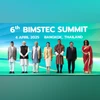 "Bloc development: Bimstec needs faster progress; India's role is key")












 Connect with us on WhatsApp