On Sunday, results were announced for elections to the Indian Ocean nation of the Maldives, and the outcome would not have been viewed with favour in New Delhi. The People’s National Congress (PNC) of President Mohamed Muizzu won a landslide victory, bagging considerably more seats than were earlier hoped. Of the 93 seats in the Maldivian Parliament, the PNC won 70. The Maldives Democratic Party, which previously held a majority in the legislature, saw its share drop to 15 seats. Importantly, even progressive areas like parts of the capital Male, which were less likely to vote for the Islamic traditionalism of Mr Muizzu, this time went over to the PNC. Two former Presidents, Mohamed Nasheed and Abdulla Yameen, formed new parties that failed to trouble the scorers. The PNC now has complete control of the country’s establishment, and can make institutional and strategic changes it desires.
Mr Muizzu, who was elected President in November 2023, has made anti-Indian and anti-West rhetoric a cornerstone of his appeal. The slogan that Mr Muizzu’s party has put forward is “India out”, crafted in fact by Mr Yameen when he held power in the past. The claim — buttressed by ample disinformation on social media — is that India is militarily interfering in the country, in part through the presence of a handful of Indian soldiers on Maldivian soil. These were there to maintain equipment, including helicopters, given by India for largely civilian purposes. Since Mr Muizzu’s assumption of the role of President last year, many of the soldiers have been replaced by civilian personnel. Such a trend by itself is not entirely alarming; it is not unusual in democratic politics for resentment against larger neighbours to become a method of mobilising voters. The complication for New Delhi is that Mr Muizzu has added to his anti-Indian rhetoric with pro-Chinese messaging. A new Maldivian President’s first visit is traditionally to India; Mr Muizzu instead went to Turkey. Recently, however, he made a high-profile visit to China, following which it was announced that a new security agreement would be signed. While this focuses on internal security, the training of local security forces and the gift of “non-lethal” equipment like teargas — and therefore cannot be called military cooperation — it nevertheless demonstrates that New Delhi may have miscalculated in failing to manage Maldivian discontent. Losing a strategically vital archipelago in its backyard to Beijing should be a concern for New Delhi.
However, far from being placatory in response to Mr Muizzu’s provocations, the Indian response has been counter-productive. An anti-Maldivian social media campaign, the obvious promotion of Lakshadweep as an alternative tourist destination, and the refusal to provide an alternative proposition to Beijing’s were miscalculations by the Indian government. The notion that the Maldives would collapse without Indian tourism — India is now only the sixth-largest provider of tourists to the islands, with China and Russia on top — is clearly not tenable. New Delhi cannot compete with Beijing’s deep pockets even in its own backyard. Instead it must focus on answering the very real development and security aspirations of the country. Pro-Chinese sentiment could be a passing phase; it must not be allowed to become a permanent feature of one of India’s close maritime neighbours.

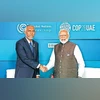 "Divided Maldivian polity")












 Connect with us on WhatsApp