HCES shows some reassuring trends, urging CPI and policy overhaul

Shifting household consumption patterns and evolving priorities call for updates to inflation indices and a rethink of food and subsidy policies in India
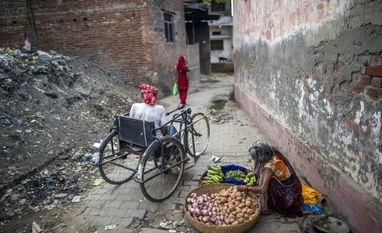
Villagers, rural area, locals
Photographer: Prashanth Vishwanathan/Bloomberg
Business Standard Editorial Comment Mumbai
3 min read Last Updated : Dec 30 2024 | 10:46 PM IST
The 2023-24 iteration of the Household Consumption Expenditure Survey, or HCES, was released by the Ministry of Statistics and Programme Implementation last week. This survey was keenly anticipated, given that many concerns have been raised in recent months about the status of consumer demand in the Indian economy — particularly in metropolitan cities — and what that says about the direction of the broader economy. The data provides some comfort when compared to historical increases. The HCES has been issued for the past two years after an 11-year gap. When household monthly per capita expenditure is compared between the last two years, it seems to have risen in urban and rural areas by approximately 3.5 per cent. This is in line with historical averages for rural areas, while being significantly higher than the 3 per cent compound annual growth rate seen in urban households’ monthly per capita expenditure over the 11-year gap prior to 2022-23. The ministry has stressed that the gap in consumption between urban and rural areas has declined. But, given concerns about growth-supporting demand, it is perhaps more important to note that average expenditure in urban areas does not appear to be slowing, according to this large-scale survey.
 
There is at least one major policy implication, however, that emerges from the HCES — and was, in fact, visible in last year’s edition as well: Household expenditure on food items as described in the HCES is not properly reflected in the official consumer price index (CPI). The survey has found that urban households spend 60 per cent of their budget on items other than food, and for rural households it is just over half their expenditure. While this is high compared to more developed countries, the long-term downward trend of food shares in budgets — as predicted by Engel’s law, formulated in 1857 — appears undeniable. Within this spending on food, there is a further shift, also predicted by economists, away from foodgrain to vegetables and also processed foods. The latter, in fact, is now the largest part of the food budget for most people. A recent report from the Economic Advisory Council to the Prime Minister pointed out that this share had declined fastest for the poorest 20 per cent of Indians surveyed, and linked this decline to the availability of free foodgrain from the public distribution system. The same report also underlined the fact that seasonal fluctuations in food prices appeared to have reduced since 2011-12, which might be a product of better supply chain infrastructure.
 
It is important to recognise these shifting patterns of expenditure and revise inflation indices, food security policies, and agricultural subsidies in the light of the new reality. The government has had to retreat from past reform to the farm sector, but given these changes in consumption even among the poorest, it cannot stay away from the subject for long. A better approach to farm subsidies is overdue. Consumer price indices also should not over-stress food, and particularly cereals consumption, given that it is a declining proportion of intake. There has been some criticism of the Reserve Bank of India’s interest rate-setting in that it has been forced to respond stringently to food price changes even when there is a limited amount that monetary policy can do to affect such prices. A more rational weighting for food in the CPI would help ameliorate this tension and allow monetary policy greater room to react to expectations and other macro issues.
 

One subscription. Two world-class reads.

Already subscribed? Log in

Subscribe to read the full story →
*Subscribe to Business Standard digital and get complimentary access to The New York Times

Smart Quarterly

₹900

3 Months

₹300/Month

SAVE 25%

Smart Essential

₹2,700

1 Year

₹225/Month

SAVE 46%
*Complimentary New York Times access for the 2nd year will be given after 12 months

Super Saver

₹3,900

2 Years

₹162/Month

Subscribe

Renews automatically, cancel anytime

Here’s what’s included in our digital subscription plans

Exclusive premium stories online

  • Over 30 premium stories daily, handpicked by our editors

Complimentary Access to The New York Times

  • News, Games, Cooking, Audio, Wirecutter & The Athletic

Business Standard Epaper

  • Digital replica of our daily newspaper — with options to read, save, and share

Curated Newsletters

  • Insights on markets, finance, politics, tech, and more delivered to your inbox

Market Analysis & Investment Insights

  • In-depth market analysis & insights with access to The Smart Investor

Archives

  • Repository of articles and publications dating back to 1997

Ad-free Reading

  • Uninterrupted reading experience with no advertisements

Seamless Access Across All Devices

  • Access Business Standard across devices — mobile, tablet, or PC, via web or app

Topics :InflationIndian EconomyConsumer Price IndexBusiness Standard Editorial CommentEditorial CommentBS Opinion

Next Story



