Cabinet clearance for the Atomic Energy Bill marks a significant step in India’s nuclear-energy programme. The Bill, to be introduced in the current session of Parliament, reportedly seeks to enable the private sector’s participation in operating nuclear-power plants for the first time and address the issue of liability. The Bill, labelled Sustainable Harnessing of Advancement of Nuclear Energy for Transforming India, or SHANTI, which is likely to amend the Atomic Energy Act, 1962, and the Civil Liability for Nuclear Damage (CLND) Act, 2010, attempts to bridge regulatory gaps and create an enabling legal framework for the flow of private, especially foreign, investment in the sector — up to 49 per cent. The strategy is to enable the expansion of nuclear power at scale and create a reliable low-carbon alternative to India’s overwhelming dependence on coal, which renewable-energy technologies cannot sustainably achieve at the present moment.
To move closer to net-zero goals, India is betting big on small modular reactors (SMRs), which generate up to 300 Mw and are easier, cheaper, and faster to install than traditional large reactors. The government has announced a Nuclear Energy Mission for research & development on SMRs at an outlay of ₹20,000 crore. The mission has targeted at least five SMRs to be operationalised by 2033. Greater cooperation with Russia, the terms of which were concluded during President Vladimir Putin’s recent visit, is a vital element of this strategy, given that country’s significant expertise in this field. India’s nuclear ambitions are understandably expansive and meeting them will require a sustained focus to create a vibrant enabling environment for private players.
Finance could be one challenge. India’s goal is to boost its installed nuclear-power capacity to 100 Gw from the current 8.8 Gw by 2047. According to a power-ministry report, this scale-up would require $214 billion of cumulative capital. Accessing relatively low-cost finance, therefore, would be vital. The Department of Economic Affairs, under the finance ministry, had earlier proposed including nuclear energy in its climate-finance taxonomy. But it is unclear whether domestic finance would be sufficient to achieve the scale the government is hoping to achieve. Globally, there is considerable ambivalence on nuclear finance, with regions and even institutions within them varying in their approach to include nuclear energy in green taxonomies. Many large American financial players, for instance, exclude nuclear power from green taxonomies, whereas the European Union and China allow it with conditions such as waste disposal and safety protocols.
Amendment to the nuclear-liability law, which extended compensation liabilities to victims of nuclear accidents to suppliers as well as operators, will also be important. This single clause has been cited as a deterrent by some of the largest manufacturers of foreign reactors such as America’s Westinghouse and France’s EDF from participating in India’s nuclear programme. The sector will closely watch how India addresses this issue. Although nuclear power is considered one of the safest sources of energy, accidents, Chernobyl or Fukushima, can have far more catastrophic long-term impacts than conventional industrial disasters. In India, the long-drawn fallout from the Union Carbide disaster in Bhopal is seared in public memory. Managing public perception and implementing workable compensation mechanisms would, therefore, be as critical as accessing technology and finance.

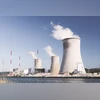 "Nuclear energy for growth: Sustaining a vibrant enabling environment is key")












 Connect with us on WhatsApp