The US and Europe have hailed Taiwan’s recent elections, but a closer look at the results suggests that global diplomacy has become much more complicated. These elections took place against the backdrop of Beijing’s aggressive reiteration of its One China Policy. On January 13, Taiwan’s anti-China ruling party, the Democratic Progressive Party (DPP), registered a historic third consecutive victory, with voters defying warnings from Beijing in the form of military escalation across the Taiwan Straits, spy balloons, economic coercion and disinformation. There are two points of concern for countries that seek to balance relations between China, the world’s manufacturing powerhouse, and Taiwan, the global technology powerhouse. First, DPP’s Lai Ching-te has won 40 per cent of the vote, compared with the 57 per cent that the former president from his party won in the last elections. A third party, the Taiwan People’s Party (TPP), split the vote with the traditional Opposition, the Kuomintang (KMT). Significantly, both the TPP and the KMT seek closer engagement with China within the rubric of a separate identity for Taiwan (the differences on this issue are those of degree). Second, for the first time in 20 years, there is no clear majority in the Legislative Assembly, adding a further problematic dimension not just to domestic policy but also to Taipei’s relations with China.
Beijing has, predictably, rejected the results of Taiwan’s elections as being unrepresentative of the island’s mainstream opinion. The major world powers, all of whom have strong economic ties and unofficial diplomatic relations with Taipei, are preparing to recalibrate the delicate balancing act they maintain between the two countries. The US, France, Germany and the UK were careful to praise the outcome of the democratic process in Taiwan, while at the same time underwriting their diplomatic posture of support for the One China policy by expressing the hope that Taiwan and People’s Republic of China would resolve their differences amicably. These positions reflect the effort to seek balance between two facts of global economic life: The world’s continuing dependence on China as a global factory, and Taiwan’s dominance of the semiconductor industry. The latter produces almost 70 per cent of the world’s semiconductors and over 90 per cent of the advanced chips that power everything from defence equipment and artificial intelligence technologies to smartphones.
For India, the engagement with post-election Taiwan is likely to stretch the diplomatic tightrope. In light of New Delhi’s traditional support of the One China policy, India does not have formal diplomatic relations with Taiwan, but the country maintains people-to-people and trade ties. These relations have gathered momentum under the present government — both as a response to intensified Chinese aggression on India’s northern and eastern borders and Taiwan’s desire to explore India as an investment destination under the global impetus for a China-Plus-One strategy. Under the production-linked incentive scheme, Apple Inc’s key Taiwanese vendors already assemble smartphones in India. New Delhi is keen to expand on this by getting Taiwan Semiconductor Manufacturing Corporation, the world’s largest manufacturer, to set up a plant. Taiwan on its part has indicated that it is keen to conclude a free trade agreement. With the latest elections appearing to weaken China-scepticism in Taiwan, and given signs of Beijing-Washington rapprochement, these nascent moves by New Delhi and Taipei are likely to be tested in new ways too.

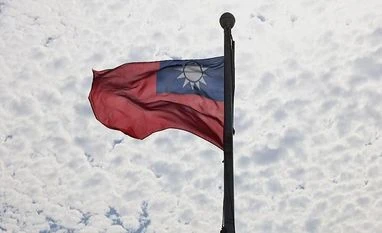 "Taiwan in the balance")












 Connect with us on WhatsApp